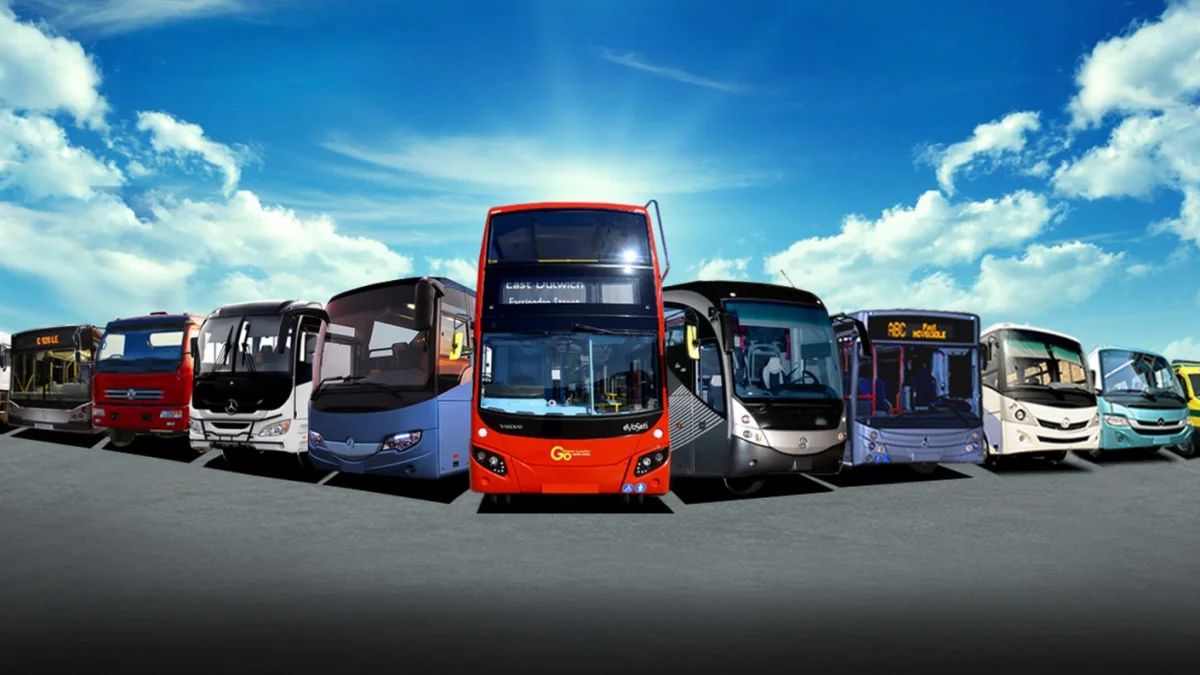
Bus Sales in Egypt Surge 89.8% Driven by Local Assembly
Remarkable Growth in Bus Sales Over Four Months
Egypt's bus market has witnessed a significant surge during the first four months of this year, with sales jumping 89.8% compared to the same period last year. According to the latest report from the Automotive Market Information Council (AMIC), total sales reached 5,013 vehicles, up from just 2,641 units in the corresponding period of the previous year. This robust growth reflects a clear improvement in demand for public transportation, driven by multiple factors, most notably the expansion of local manufacturing.
Locally Assembled Buses Lead the Charge
The bulk of this increase is attributed to rising demand for locally assembled buses, which recorded a 74.5% growth, reaching 4,155 vehicles during the mentioned period, compared to 2,381 units in the same period last year. This figure underscores the success of the industrial localization strategy in the automotive sector, as local factories help meet market needs with competitive prices and improving quality. Moreover, reliance on local components reduces the impact of exchange rate fluctuations, making locally assembled buses a preferred choice for operators and public transport authorities.
Imported Buses Achieve Record Growth
The increase was not limited to local buses alone; imported buses also achieved a massive 230% jump, with sales reaching 858 vehicles compared to just 260 units in the corresponding period last year. This sharp rise in demand for imported buses indicates the market's need for specialized models or higher-end variants not available locally, or possibly deliveries for government tenders and major projects. However, the relative weight of locally assembled buses remains the largest, reinforcing the state's direction toward deepening local manufacturing and reducing the import bill.
Future Outlook for the Bus Market
With the growth momentum continuing through the first four months, analysts expect the bus market to maintain its strong performance for the rest of the year, especially with the expansion of public transport projects and urban development. The biggest challenge remains maintaining the pace of local manufacturing while ensuring quality and cost reduction, along with the availability of spare parts and maintenance. Given the current figures, Egypt's bus sector appears to be on the right track, achieving a balance between local production and imports to meet the growing market needs.
Related News
View All News
Egypt Bus Sales Surge 62% in July to 1,835 Units
Bus sales in Egypt grew 62% in July to 1,835 units, up from 1,133 in the same month last year. King Long topped the brand rankings with 664 vehicles, followed…
Locally Assembled Passenger Car Sales Rise 9.5% in Egypt's First 7 Months of 2026
Locally assembled passenger car sales in Egypt grew 9.5% in the first seven months of 2026, reaching 37,943 units. Imported vehicle sales surged 40% to 49,197 units. Data from the…
Local 60% Component Equals Full Manufacturing, Says Automotive Traders Association
Mahmoud Hammad, Vice President of the Automotive Traders Association, said a local component ratio of 60% to 70% is equivalent to full manufacturing globally. He explained that the engine and…
Automobile Club Launches 'On the Road' Campaign to Boost Traffic Safety
The Egyptian Automobile and Touring Club, in cooperation with the FIA, has launched a new awareness campaign called 'On the Road' to raise awareness about the dangers of distracted driving.…

Used Car Market Bounces Back Ahead of School Year: Dealer Reveals Top-Selling Models
Egypt's used car market saw a rebound ahead of the new school year, with strong demand for Chinese cars used by ride-hailing drivers, priced between 250,000 and 800,000 Egyptian pounds.…