Technology and AI Redefine the Future of Global Automotive Business Models
The global automotive industry is undergoing an unprecedented radical transformation, where economic, regulatory, and technological factors intersect simultaneously, pushing major companies to reconsider their traditional business models that have remained stable for decades. It is no longer just about competition in production and marketing; the arena has shifted to a complex battle centered on technology, software, artificial intelligence, and deep financial restructuring.
Porsche Adjusts Its Luxury Model Under Profitability Pressure
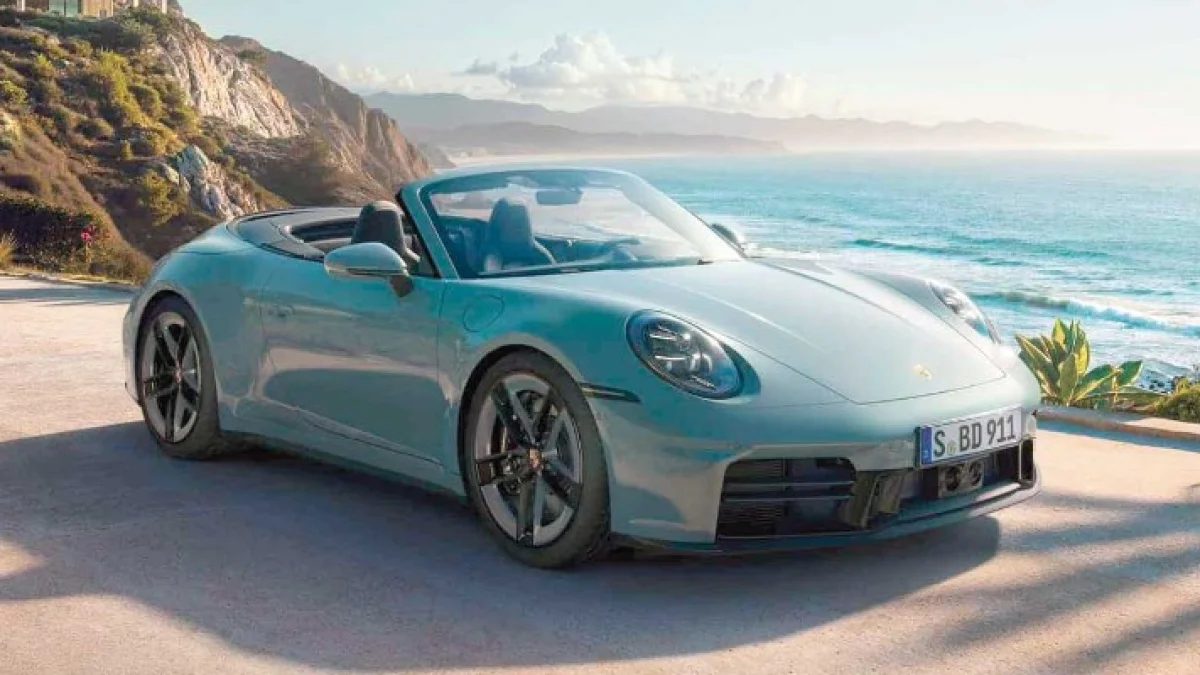
German automaker Porsche is moving to implement a new cost-cutting package by next July, as part of a broader strategy to recalibrate its operational structure. This comes amid slowing demand for luxury vehicles, rising costs of electrification, and intensifying global competition. The company's plans indicate a reduction in production capacity compared to last year, which recorded around 280,000 vehicles—a strategic shift from volume expansion to maximizing returns per production unit.
The plan also includes a major workforce restructuring that could affect up to 1,900 jobs in the coming years, following previous rounds of temporary staff reductions. This reflects a broader industry trend toward lowering fixed costs and enhancing operational flexibility. Porsche is also deepening its industrial collaboration with Audi within the Volkswagen Group, aiming to share technical platforms and reduce development costs amid the significantly higher expense of developing electric vehicles compared to traditional ones. These developments highlight a structural challenge for luxury automakers, where brand name alone is no longer sufficient to guarantee growth.
Hyundai's Strategic Shift Toward Software and AI
In contrast, Hyundai is moving to completely restructure its business model, focusing on transforming from a mere car manufacturer into a provider of smart mobility solutions. The Korean group is heavily investing in developing software platforms and artificial intelligence, launching data-driven services such as predictive maintenance and autonomous driving systems. Hyundai is also strengthening its partnerships with global technology companies to accelerate innovation in batteries and hydrogen fuel cells.
On the other side, Tesla continues to lead the software revolution in the industry, heavily relying on over-the-air software updates to improve vehicle performance and add new features. Tesla is also investing in advanced AI systems for full self-driving capabilities, further solidifying its position as a technology company rather than a traditional automaker. Analysts point out that Tesla's software-and-data-driven model has become a benchmark for many traditional companies seeking digital transformation.
The Future of the Automotive Industry Between Challenges and Opportunities
This transformation cannot be viewed as merely a cyclical evolution within the industry; it represents a comprehensive reshaping of the very concept of an automotive company. Today, companies are closer to multi-field industrial technology firms than traditional vehicle manufacturing plants. Recent developments within companies like Maserati and the Hyundai Motor Group indicate that the industry is heading toward a more complex phase, where the ability to innovate technologically and adapt to market changes will be the decisive factor in determining winners and losers in the coming years.
Related News
View All News
Signs of Spark Plug Failure in Your Car Engine — When to Replace Them
Spark plugs are essential engine components, and their failure causes difficulty starting, engine vibration, poor acceleration, and increased fuel consumption. Other signs include an illuminated check engine light and exhaust…

Your Complete Guide to Maintaining Car Tires as Winter Temperatures Drop
As winter approaches and temperatures fall, car tires need extra care to maintain grip and safety. Regular pressure checks, tread depth inspection, crack monitoring, and wheel alignment are essential steps.…
From Paper to Pavement: Inside the Making of a New Car
Developing a new car begins in the design studio with initial sketches that become a 3D digital model and then a full-size clay model. Engineering teams work in parallel to…
Tesla Drops 'Self-Driving' Name in Europe, Calls It 'Driver Assistant'
Tesla has renamed its 'Autopilot' system to 'Tesla Driver Assistant' in Europe after misleading claims. This change follows legal disputes and a retreat from full self-driving promises. In the U.S.,…
Chery Tiggo 9 CSH Survives Brutal Safety Tests: Saltwater Immersion and Underbody Impacts
Chery conducted extreme safety tests on the Tiggo 9 CSH, including a 24-hour saltwater immersion of its high-voltage battery and an underbody scraping test against a solid obstacle. Results showed…