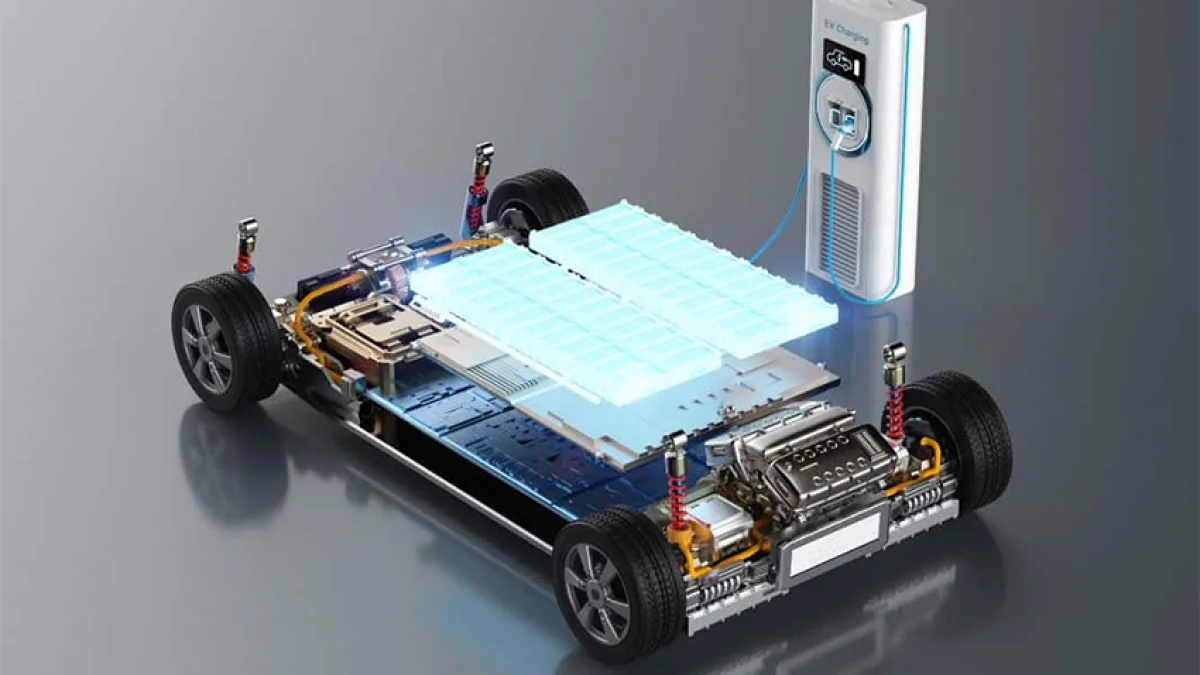
Pure Lithium Breaks China's Grip with Lighter, Stronger EV Battery Passing 9,000 Charge Cycles
Pure Lithium announced a new metallic lithium battery that eliminates graphite entirely and survived 9,315 charge-discharge cycles at a 1C rate, more than triple conventional longevity. Based on LFP chemistry with a lithium metal anode, the cell promises half the weight and double the energy density of current packs. The breakthrough challenges China's dominance over graphite processing and could enable lighter, longer-lasting EVs and stationary storage systems.
American startup Pure Lithium has unveiled a new metallic lithium battery that ditches graphite entirely, surviving 9,315 full charge-discharge cycles at a 1C rate. That's more than triple the cycle life of conventional batteries, a result the company calls unprecedented among metallic lithium cells under similar testing.
A New Chemistry Without the Graphite Bottleneck
The new cell from Pure Lithium uses LFP (lithium iron phosphate) chemistry but replaces the traditional graphite anode with one made of pure metallic lithium. Graphite takes up valuable space and weight inside the cell without directly participating in the core electrochemical reaction — it mainly acts as a host for lithium ions during charging and discharging. Pure Lithium believes removing it frees interior space for more energy-dense materials. That partially explains the remarkable test results achieved so far.
Brutal Test, Impressive Retention
The evaluation ran at a demanding 1C rate, meaning the battery was fully charged in one hour and fully discharged in the next, repeated thousands of times. Even under this punishing regime, the cell retained nearly all of its discharge capacity after crossing the 9,000-cycle threshold. That's a dramatic improvement over standard LFP packs, opening the door for heavy-duty applications like electric trucks and stationary energy storage where longevity is critical.
Half the Weight, Double the Energy Density
Over 90% of the world's graphite is processed in China, making it a strategic vulnerability in the global battery supply chain. The new Pure Lithium battery doesn't just remove that dependency — CEO Emily Baudouin says the cell could weigh half as much as current batteries while doubling energy density. A shift that significant would give electric vehicles greater range with less weight, potentially reshaping manufacturer calculations in the years ahead. Perhaps the next big breakthrough in EVs won't come from solid-state cells as many assume, but from this new approach that eliminates one of the most problematic components in traditional lithium-ion chemistry.
Frequently Asked Questions
3 questions answered
Related News
View All News
From Paper to Pavement: Inside the Making of a New Car
Developing a new car begins in the design studio with initial sketches that become a 3D digital model and then a full-size clay model. Engineering teams work in parallel to…

Tesla Drops 'Self-Driving' Name in Europe, Calls It 'Driver Assistant'
Tesla has renamed its 'Autopilot' system to 'Tesla Driver Assistant' in Europe after misleading claims. This change follows legal disputes and a retreat from full self-driving promises. In the U.S.,…
Chery Tiggo 9 CSH Survives Brutal Safety Tests: Saltwater Immersion and Underbody Impacts
Chery conducted extreme safety tests on the Tiggo 9 CSH, including a 24-hour saltwater immersion of its high-voltage battery and an underbody scraping test against a solid obstacle. Results showed…
How a New Car Is Born: The Journey from Digital Sketches to the Production Line
Every new car undergoes a three-to-five-year development journey starting with segment definition and 3D digital design concepts. Engineers specify structural, powertrain, suspension, steering, and braking solutions during this phase. Prototypes…
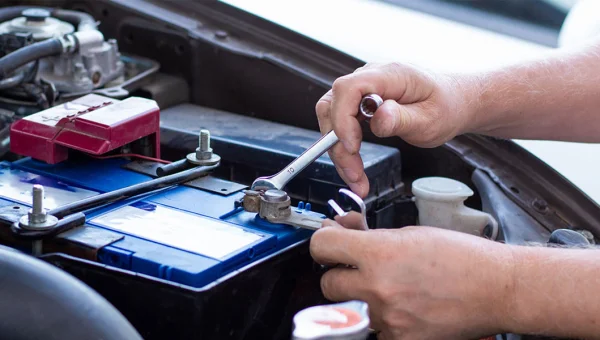
Before Replacing Your Car Battery: What Do CCA, CA, RC, and Ah Mean?
Choosing a car battery isn't just about size or price. It requires understanding the codes on the label, such as CCA, CA, RC, and Ah. CCA measures the battery's ability…