


New Cars Can Now Recognize Speed Limits and Automatically Reduce Acceleration
Speed monitoring is no longer solely the driver's responsibility in a growing number of modern vehicles. New models can now read the maximum allowed speed on the road, alert the driver when exceeding it, and even intervene in some systems to reduce acceleration and prevent further speed increases. This technology redefines the concept of safe driving and sets new standards for intelligent vehicle speed control.
What is Intelligent Speed Assistance?
These functions rely on a technology known as Intelligent Speed Assistance, or ISA, which has been mandatory equipment in all new cars sold within the European Union since July 2024. This regulation has led to its rapid spread among European, Asian, and American models destined for those markets. The ISA system uses a front-facing camera to read traffic signs, along with GPS data and digital map information, to determine the maximum speed limit on the road the vehicle is traveling on.
Despite being commonly described as a speed limiter, the technology does not work the same way in every car, nor does it always prevent the driver from exceeding the set limit. The level of intervention varies from simply displaying the legal speed and issuing warnings to resisting pressure on the accelerator pedal or temporarily reducing engine power. More advanced systems can handle changing speed limits between different road types, such as transitioning from a highway to a residential area or approaching a school, provided the camera reads the sign correctly or updated map data is available.
How Does the Car Know the Legal Speed and Can It Actually Prevent Speeding?
After comparing the actual speed with the recorded limit, a warning appears on the dashboard or screen, and an audible alert or vibration in the accelerator pedal may occur when the driver begins to exceed the speed. Not all cars offer the same level of intervention. Simpler versions are content with displaying the maximum limit and issuing warnings, while other systems make the accelerator pedal more resistant after speeding. Active systems can limit engine torque or stop the increase in acceleration once the legal speed is reached, especially when the adaptive cruise control is activated.
However, current European regulations require the system to be overridable, allowing the driver to press the accelerator pedal harder when necessary. It can also be disabled during a trip, though it will automatically reactivate when the car is restarted. The goal is to keep the final decision in the driver's hands, particularly in situations that may require sudden acceleration to avoid danger or overtake a slow vehicle. This technology represents a significant leap forward in safety systems, making modern cars smarter in dealing with traffic laws without sacrificing the driver's primary control.
Related News
View All News
From Paper to Pavement: Inside the Making of a New Car
Developing a new car begins in the design studio with initial sketches that become a 3D digital model and then a full-size clay model. Engineering teams work in parallel to…

Tesla Drops 'Self-Driving' Name in Europe, Calls It 'Driver Assistant'
Tesla has renamed its 'Autopilot' system to 'Tesla Driver Assistant' in Europe after misleading claims. This change follows legal disputes and a retreat from full self-driving promises. In the U.S.,…
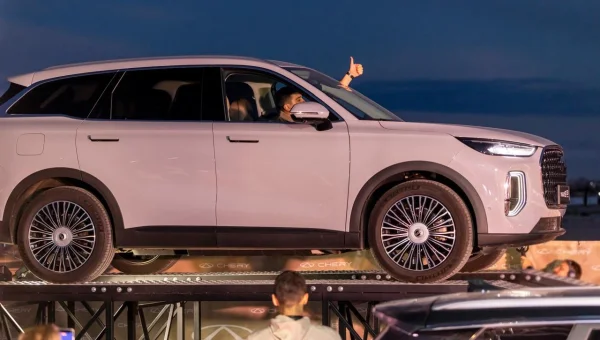
Chery Tiggo 9 CSH Survives Brutal Safety Tests: Saltwater Immersion and Underbody Impacts
Chery conducted extreme safety tests on the Tiggo 9 CSH, including a 24-hour saltwater immersion of its high-voltage battery and an underbody scraping test against a solid obstacle. Results showed…

How a New Car Is Born: The Journey from Digital Sketches to the Production Line
Every new car undergoes a three-to-five-year development journey starting with segment definition and 3D digital design concepts. Engineers specify structural, powertrain, suspension, steering, and braking solutions during this phase. Prototypes…
Before Replacing Your Car Battery: What Do CCA, CA, RC, and Ah Mean?
Choosing a car battery isn't just about size or price. It requires understanding the codes on the label, such as CCA, CA, RC, and Ah. CCA measures the battery's ability…

