Google Built-in Enters Honda 2026: What Changes in the Driving Experience?
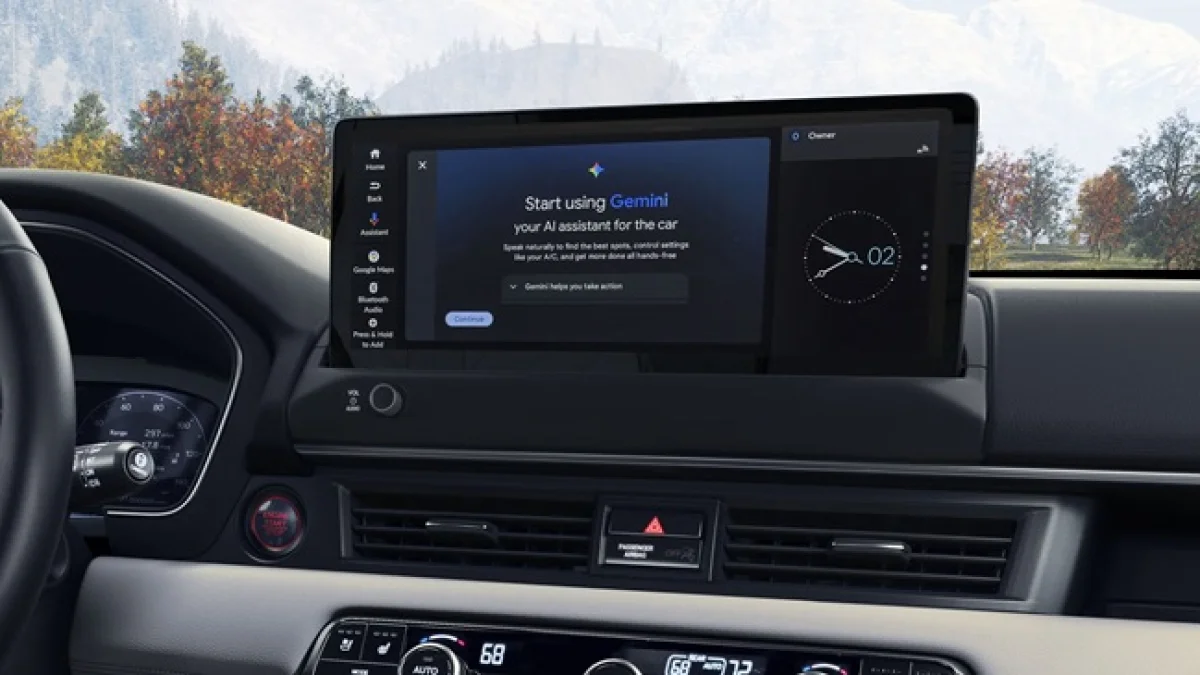
The central screen inside a car is no longer just a tool for playing music or displaying the rearview camera, as Honda begins expanding the use of 'Google built-in' technology across several of its 2026 model year vehicles. Google services become a direct part of the vehicle's system without needing to connect a phone each time. This shift marks a fundamental change in how drivers interact with their cars, as cloud-based apps and services integrate directly into the core infotainment and information system.
Models Equipped with the New Technology
The technology appears in a growing list of Honda 2026 vehicles, including certain trims of the 'CR-V,' 'Passport,' 'Accord,' and 'Civic,' alongside the electric 'Prologue' and the 'Prelude Hybrid,' according to data published on the company's official US website. This variety across models reflects Honda's intention to make the technology available across different vehicle categories, from family sedans to SUVs and electric vehicles.
How It Works and the Difference from Android Auto
The core idea is that the car comes pre-equipped with services like Google Maps, Google Play Store, and Google Assistant, operating directly through the vehicle's screen and infotainment system instead of merely mirroring apps from a phone. While the technology may seem similar to 'Android Auto,' there is a key difference. In 'Android Auto,' the system heavily depends on the connected phone, whereas 'Google built-in' operates from within the car itself and does not require an Android phone to function.
Honda explains that the driver can use the integrated maps and apps without a phone, with the option to connect any phone via Bluetooth for calls or messages. Some vehicles also retain support for 'Apple CarPlay' and 'Android Auto' alongside the built-in Google services, giving users flexibility based on their preferences.
Built-in Google Maps: A Practical Benefit for Drivers
The most significant practical benefit appears in running Google Maps directly from the car's screen, allowing the driver to search for a destination, follow the route, and access saved places from their personal account without mounting the phone or dealing with cables. Some map data can work offline after being downloaded in advance, and certain vehicles use map data to support driver assistance functions such as road sign recognition or adaptive cruise control, depending on each vehicle's equipment.
For the Egyptian driver, this feature may be particularly useful on long trips or in areas with poor mobile network coverage, provided the maps are downloaded and updated beforehand. This integration between maps and safety systems adds a new layer of intelligence to the driving experience, enabling the vehicle to adapt to road conditions based on data extracted from the maps.
Voice Commands and Reduced Distraction
The system allows the driver to use voice commands to perform various tasks, such as searching for a route, playing music, making calls, or even adjusting vehicle settings, reducing the need for manual interaction with the screen. This feature helps minimize distraction while driving, as the driver can stay focused on the road while benefiting from Google's integrated services without having to touch the screen repeatedly.
Related News
View All News
From Paper to Pavement: Inside the Making of a New Car
Developing a new car begins in the design studio with initial sketches that become a 3D digital model and then a full-size clay model. Engineering teams work in parallel to…
Tesla Drops 'Self-Driving' Name in Europe, Calls It 'Driver Assistant'
Tesla has renamed its 'Autopilot' system to 'Tesla Driver Assistant' in Europe after misleading claims. This change follows legal disputes and a retreat from full self-driving promises. In the U.S.,…

Chery Tiggo 9 CSH Survives Brutal Safety Tests: Saltwater Immersion and Underbody Impacts
Chery conducted extreme safety tests on the Tiggo 9 CSH, including a 24-hour saltwater immersion of its high-voltage battery and an underbody scraping test against a solid obstacle. Results showed…

How a New Car Is Born: The Journey from Digital Sketches to the Production Line
Every new car undergoes a three-to-five-year development journey starting with segment definition and 3D digital design concepts. Engineers specify structural, powertrain, suspension, steering, and braking solutions during this phase. Prototypes…

Before Replacing Your Car Battery: What Do CCA, CA, RC, and Ah Mean?
Choosing a car battery isn't just about size or price. It requires understanding the codes on the label, such as CCA, CA, RC, and Ah. CCA measures the battery's ability…