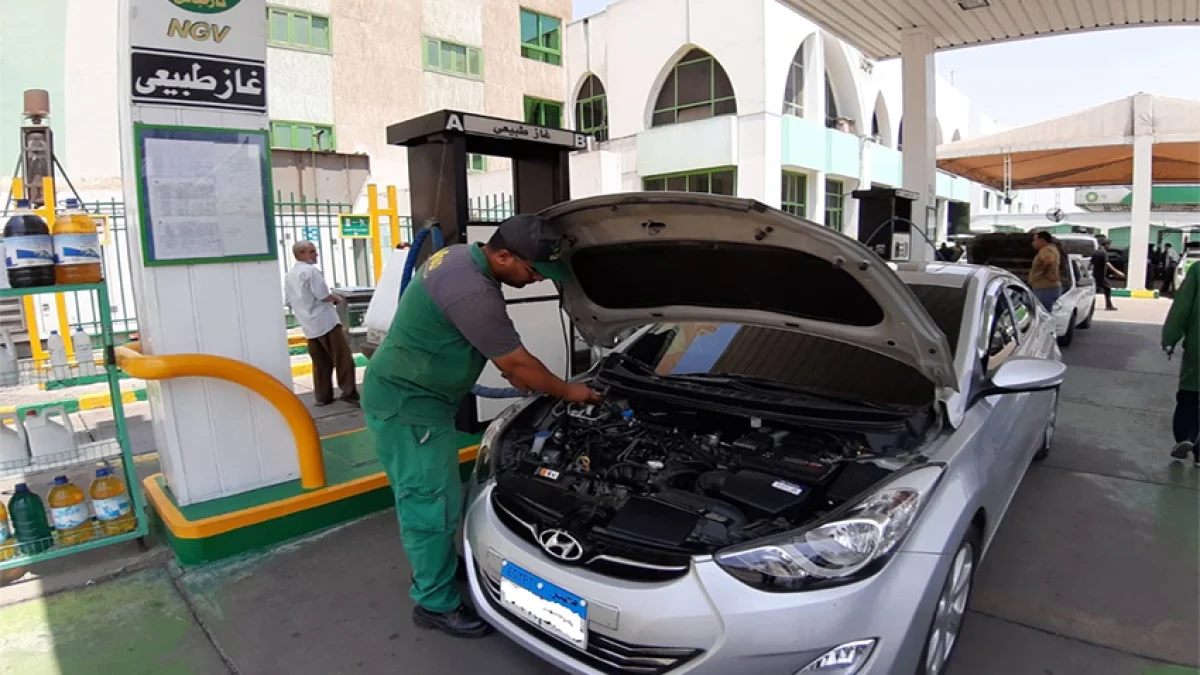
Experts Reveal the Truth About Car Power and Performance After CNG Conversion
The process of converting cars to run on compressed natural gas (CNG) continues to raise numerous questions among vehicle owners in Egypt, particularly regarding its impact on engine torque and overall vehicle performance. With a growing number of drivers opting for conversion recently, understanding the technical realities behind this process has become essential, especially concerning its success rate and influence on daily driving efficiency.
Engine Inspection is a Prerequisite for Successful Conversion
Specialized experts in car CNG conversion systems have confirmed that the success of the conversion process begins long before installing any components, through a comprehensive technical inspection of the engine to verify its condition and operational efficiency. Experts explained that a vehicle will not undergo conversion unless its engine efficiency exceeds 70%, a fundamental requirement to ensure acceptable performance after conversion and to avoid potential technical issues that may arise later due to a weak base engine. This step guarantees that the engine can handle the different combustion nature of natural gas without experiencing breakdowns or premature wear.
Impact of Natural Gas on Acceleration and Power Loss
Regarding the effect of natural gas on vehicle performance, experts clarified that using CNG does not lead to a noticeable loss in car power as some believe. They pointed out that the reduction in acceleration capability does not exceed 6% under maximum operating conditions, a very limited and largely insignificant percentage for daily driving experience. This slight decrease is attributed to the different combustion characteristics of gas compared to gasoline, where gas has distinct combustion properties that mildly affect the engine's peak torque, but remains within acceptable limits that most drivers do not notice under normal conditions.
Combustion Enhancement Technologies Compensate for Loss
To address this minor performance difference, experts confirmed that modern conversion systems include the installation of a specialized device to provide spark timing when the car operates on natural gas. This device works to improve the combustion process inside the engine chambers, helping to maintain performance efficiency and reduce any potential impact on torque or driving responsiveness. Thanks to these advanced technologies, drivers can enjoy a smooth driving experience while achieving significant fuel cost savings, especially amid rising gasoline prices, making CNG conversion an attractive economic option for many car owners in Egypt.
Related News
View All News
From Paper to Pavement: Inside the Making of a New Car
Developing a new car begins in the design studio with initial sketches that become a 3D digital model and then a full-size clay model. Engineering teams work in parallel to…

Tesla Drops 'Self-Driving' Name in Europe, Calls It 'Driver Assistant'
Tesla has renamed its 'Autopilot' system to 'Tesla Driver Assistant' in Europe after misleading claims. This change follows legal disputes and a retreat from full self-driving promises. In the U.S.,…

Chery Tiggo 9 CSH Survives Brutal Safety Tests: Saltwater Immersion and Underbody Impacts
Chery conducted extreme safety tests on the Tiggo 9 CSH, including a 24-hour saltwater immersion of its high-voltage battery and an underbody scraping test against a solid obstacle. Results showed…

How a New Car Is Born: The Journey from Digital Sketches to the Production Line
Every new car undergoes a three-to-five-year development journey starting with segment definition and 3D digital design concepts. Engineers specify structural, powertrain, suspension, steering, and braking solutions during this phase. Prototypes…

Before Replacing Your Car Battery: What Do CCA, CA, RC, and Ah Mean?
Choosing a car battery isn't just about size or price. It requires understanding the codes on the label, such as CCA, CA, RC, and Ah. CCA measures the battery's ability…