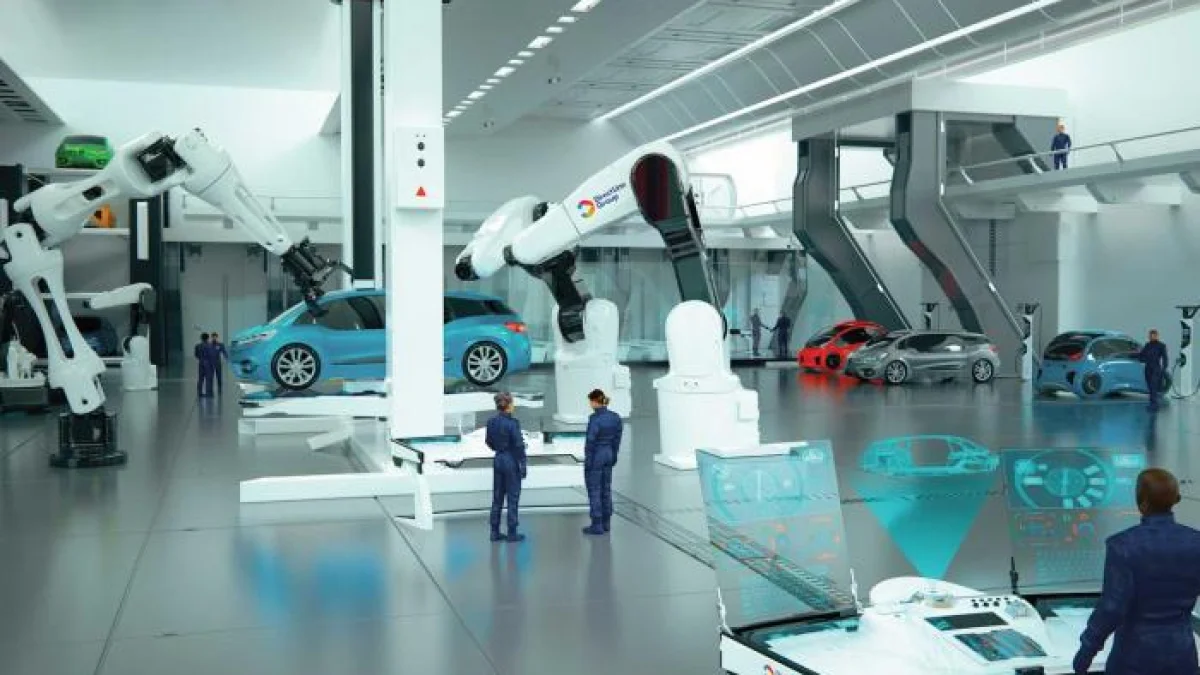
AI Transforms Car Maintenance: Tesla, BMW, and Mercedes Lead the Revolution
Gone are the days when visiting a service center was only tied to a warning light on the dashboard. With artificial intelligence entering the automotive industry, major manufacturers like Tesla, BMW, and Mercedes are now deploying systems capable of detecting issues before the driver even notices them. This shift is gradually reshaping how service centers operate and raises a critical question: Is the role of the mechanic fading into history?
AI Detects Faults Before They Happen
Modern vehicles rely on hundreds of sensors that constantly monitor engine performance, battery health, brakes, steering systems, and more. AI algorithms analyze this data in real-time to detect any abnormal changes that may signal an impending failure. According to McKinsey & Company, predictive maintenance has become one of the most important AI applications in the automotive sector, helping companies reduce unexpected breakdowns, lower repair costs, and minimize vehicle downtime.
This is not just theoretical. Fortune Business Insights forecasts that the AI in the automotive market will grow at an annual rate exceeding 20% through the early 2030s, driven by the expansion of predictive maintenance systems, intelligent driving, and connected vehicles. Capgemini also noted that companies adopting data-driven maintenance strategies can significantly cut unplanned failures and operating expenses, particularly in fleet operations and electric vehicles.
From Diagnosis to Faster Repairs
AI's role now goes beyond simply alerting drivers to a problem; it helps technicians pinpoint the exact cause of a fault within minutes, replacing manual checks that could take hours. IBM states that machine learning algorithms can analyze millions of data points from a vehicle, compare them with similar historical cases, and deliver highly accurate diagnostics along with recommended repair steps. This saves time and boosts the efficiency of service centers.
Service Centers Become Data Hubs
Workshops are no longer solely dependent on the technician's experience—they increasingly rely on software and data analysis. In electric and smart vehicles, fault data can be sent directly to the manufacturer over the internet, and in some cases, issues are resolved through over-the-air (OTA) software updates without any visit to a service center. This transformation means that service centers are gradually evolving into advanced data centers, where technicians work alongside AI systems to provide faster and more precise service.
As Tesla, BMW, and Mercedes continue to advance predictive maintenance and remote update technologies, the future of the traditional mechanic remains uncertain amid the growing reliance on software and artificial intelligence for diagnosing and repairing faults.
Related News
View All News
Your Complete Guide to Maintaining Car Tires as Winter Temperatures Drop
As winter approaches and temperatures fall, car tires need extra care to maintain grip and safety. Regular pressure checks, tread depth inspection, crack monitoring, and wheel alignment are essential steps.…
From Paper to Pavement: Inside the Making of a New Car
Developing a new car begins in the design studio with initial sketches that become a 3D digital model and then a full-size clay model. Engineering teams work in parallel to…
Tesla Drops 'Self-Driving' Name in Europe, Calls It 'Driver Assistant'
Tesla has renamed its 'Autopilot' system to 'Tesla Driver Assistant' in Europe after misleading claims. This change follows legal disputes and a retreat from full self-driving promises. In the U.S.,…
Chery Tiggo 9 CSH Survives Brutal Safety Tests: Saltwater Immersion and Underbody Impacts
Chery conducted extreme safety tests on the Tiggo 9 CSH, including a 24-hour saltwater immersion of its high-voltage battery and an underbody scraping test against a solid obstacle. Results showed…
How a New Car Is Born: The Journey from Digital Sketches to the Production Line
Every new car undergoes a three-to-five-year development journey starting with segment definition and 3D digital design concepts. Engineers specify structural, powertrain, suspension, steering, and braking solutions during this phase. Prototypes…