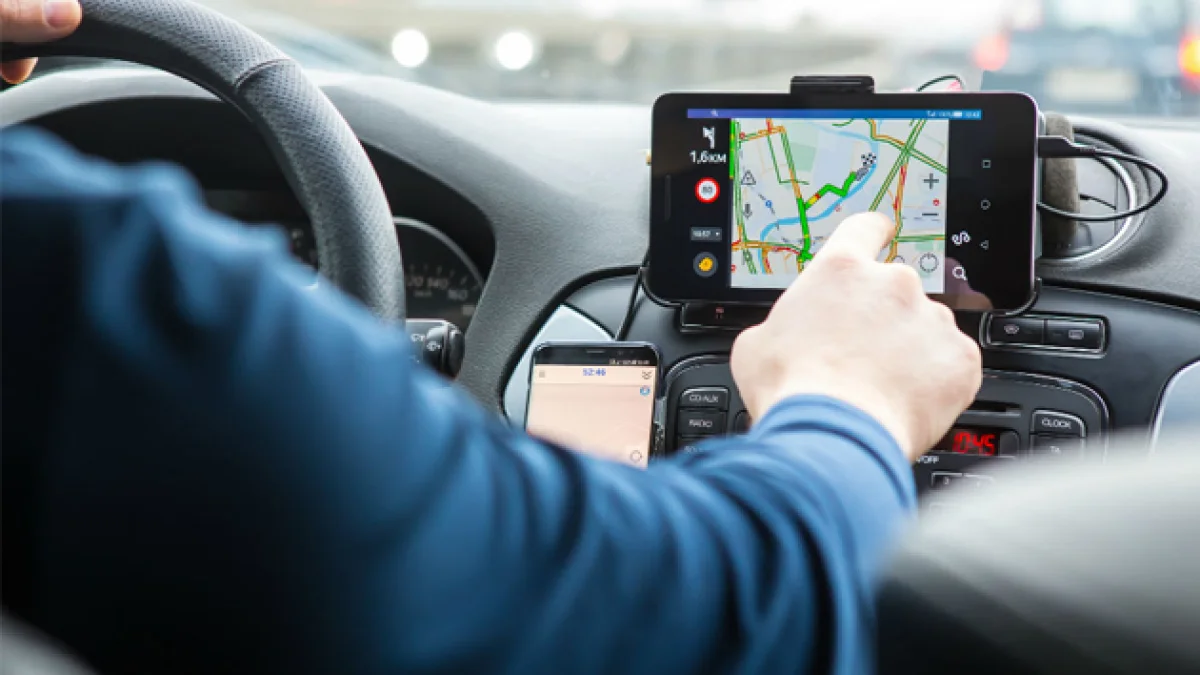
AI Is Redefining Navigation: Your Car Predicts Traffic Before It Happens
Artificial intelligence is transforming car navigation from static map-reading to proactive route prediction. A 2025 Physica A study introduced a dynamic model that recalculates paths in real time based on traffic changes. Connected cars act as moving sensors, feeding machine learning algorithms that anticipate congestion before it occurs. Advances like Waymo's EMMA model integrate behavior prediction into driving decisions, reducing travel time and energy consumption.
Artificial intelligence is rewriting the rules of the road. Modern cars are no longer just following a static map — they analyze live traffic conditions, predict congestion. Plan the most efficient route before you even reach the bottleneck. A 2025 study published in Physica A introduced a dynamic routing model that recalculates paths in real time based on changing road conditions.
From Static Maps to Real-Time Predictions
The shift is fundamental. Traditional GPS waits for a destination then draws the shortest path, but new systems treat the road as a living entity. The model processes traffic density, lane movements, and turn patterns to determine which route will actually be fastest when you arrive — not just on the map.
Cars as Moving Sensors
Connected vehicles are now acting as mobile sensors, feeding real-time data about road conditions to AI algorithms. Research published in Scientific Reports in 2026 applied machine learning and graph neural networks to improve routing in connected vehicle networks. The system leverages instant data streams from cars and roadside infrastructure to build a richer picture of traffic flow.
Over time, navigation transforms from "Where is traffic now?" to "Where will traffic be when I get there?" That evolution is the core promise of predictive routing technology.
Understanding the Surroundings
This isn't just about maps. Automated driving systems use cameras, radar. Lidar to identify vehicles, pedestrians, and lanes, then attempt to anticipate their movements and plan the next maneuver. Waymo's research shows that self-driving systems rely on AI for object detection, behavior prediction, and motion planning. The company's multimodal model, EMMA, processes sensor data to help generate future paths for the vehicle — blurring the line between navigation and decision-making.
The result is a car that thinks before it moves.
Frequently Asked Questions
3 questions answered
Related News
View All News
Porsche Explores Manual Feel in EV Era: Patent Reveals Real Gearbox with Electric Motor
Porsche has filed a patent for a mechanical gearbox designed for electric motors, featuring two mechanical gear ratios and a real clutch. The original filing dates back to March 2013,…
Not Fully Electric: What Does the PHEV Badge on Some Cars Really Mean?
PHEV cars are plug-in hybrids that combine a petrol engine with an electric motor and a larger battery than traditional hybrids. They can drive on electricity for a set distance…
How to Keep Your Car Battery Alive in Winter: 7 Practical Tips to Avoid Breakdowns
Car batteries are affected by cold winter temperatures, reducing their ability to start the engine. Tips include avoiding short trips, reducing electrical loads, cleaning terminals, turning off devices before leaving,…
Before Changing Your Car Oil: 5 Steps to Choose the Right Type for Your Engine
Choosing the right engine oil depends on the manufacturer's recommendations in the owner's manual, not on price or brand. Viscosity numbers like 5W-30 determine oil performance at different temperatures, and…

Do Egyptian Cars Really Need Winter Tires During Weather Shifts?
As winter approaches, many wonder whether winter tires are needed in Egypt. The mild climate in most regions makes summer or all-season tires sufficient. But in mountainous areas or those…