

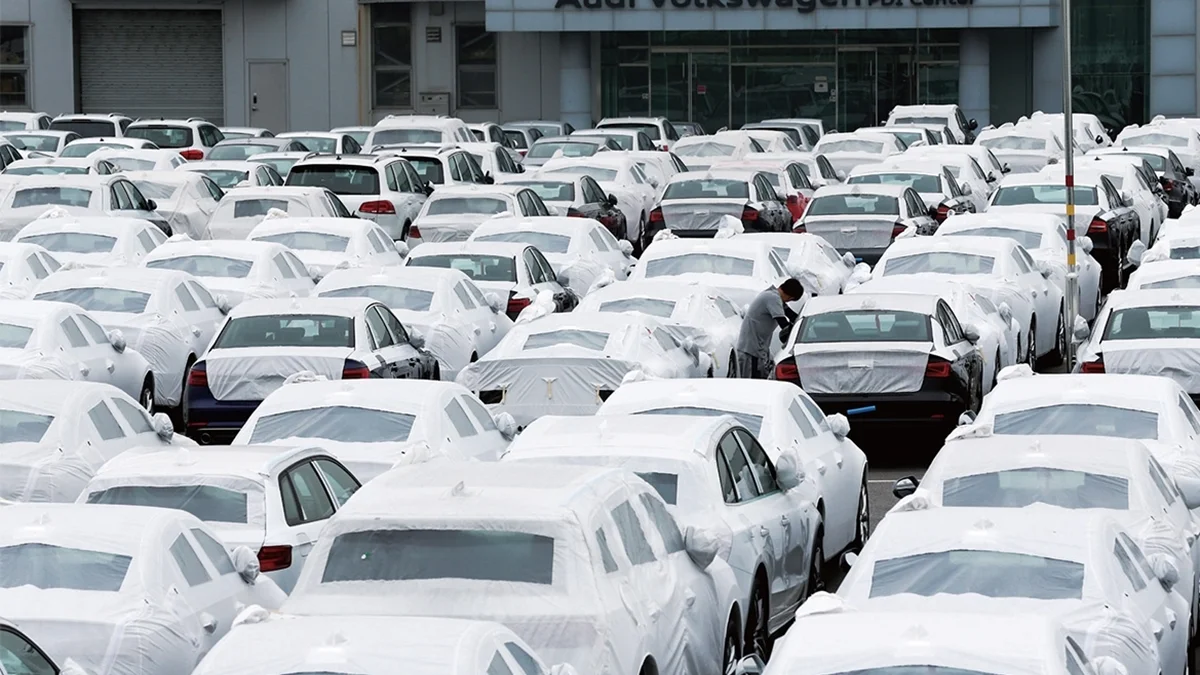
Imported Cars Account for Over a Quarter of New Registrations in South Korea for the First Time
Recent data released by the Korea Automobile Importers & Distributors Association (KAIDA) and the Korea Automotive & Mobility Association (KAMA) has revealed a significant surge in the market share of imported vehicles in South Korea. For the first time, imported cars accounted for more than 25% of all newly registered vehicles in the country during May, indicating a notable shift in consumer preferences towards foreign brands.
Detailed Figures and Market Share
The total number of newly registered vehicles in South Korea reached 115,680 units in May. Of these, 29,860 were imported cars, while 85,820 were domestically produced vehicles. This gave imported cars a market share of 25.8%, breaching the 25% threshold for the first time in the history of the Korean automotive market. The upward trend continued into June, with the number of newly registered imported cars exceeding 38,000 units, pushing the market share even higher to 25.9%.
Sustained Growth and Record-Breaking Performance
The data showed that the market share of imported cars has remained above the 20% mark for the fifth consecutive month since February of this year. Furthermore, the number of newly registered imported vehicles in June rose by 37% year-on-year, marking the highest monthly figure ever recorded. The cumulative number of newly registered imported cars in the first half of this year reached 184,000 units, also an all-time high, highlighting the strong momentum behind this segment.
The Role of Leading Brands in the Growth
Tesla played a pivotal role in driving this growth, capturing a 30.5% share of all newly registered cars in the first half of the year, with sales reaching 56,139 units during the period. Chinese manufacturer BYD secured the second position among imported brands, selling 11,675 units, ahead of Lexus and Audi. This performance reflects the growing popularity of electric vehicles and Chinese brands in a market traditionally dominated by local giants such as Hyundai and Kia.
South Korea has long been considered one of the most challenging markets for imported cars due to strong local competition and consumer loyalty. However, these latest figures suggest a gradual but clear transformation in buyer behavior. Industry observers expect the share of imported vehicles to continue climbing in the coming months, driven by an expanding lineup of electric and hybrid models from foreign manufacturers, along with improved after-sales services and a growing network of authorized service centers across the country.
Related News
View All News
BYD Launches Electric Truck Offensive Against Volvo and Mercedes in Europe
BYD has unveiled a heavy-duty electric truck with a range of 600 kilometers and 20% to 80% charging in 20 minutes, targeting Europe's truck market. Volvo and Mercedes-Benz together controlled…

LUXEED Prepares for Global Launch on October 21 in Wuhu, China
LUXEED is preparing to hold its global launch event on October 21 in Wuhu, Anhui Province, China, under the theme 'Intelligence, Enlightened.' The event will feature the world premiere of…

Avatr CONCEPT T09 with 1000+ HP Challenges Maybach and Rolls-Royce at Paris Show
Avatr unveils the CONCEPT T09 at the 2026 Paris Motor Show, a large luxury SUV with over 1000 horsepower and massive dimensions (5285 mm length). It features a hybrid powertrain…

Morocco Produces 700,000 Cars Annually, Surpassing Italy with $16 Billion in Export Revenue
Morocco has solidified its position as an African manufacturing power, producing 700,000 vehicles annually and generating over $16 billion in automotive export revenue, outpacing Italy. Industrial activity spans 150 zones…

Opel CEO: Adam Small Car Out of Plans Until 2030 Due to EU Regulations
Opel CEO Florian Huettl has confirmed the Adam small car is not in the company's product plans until 2030 due to stringent European regulatory requirements. Speaking at the 2026 Paris…

