

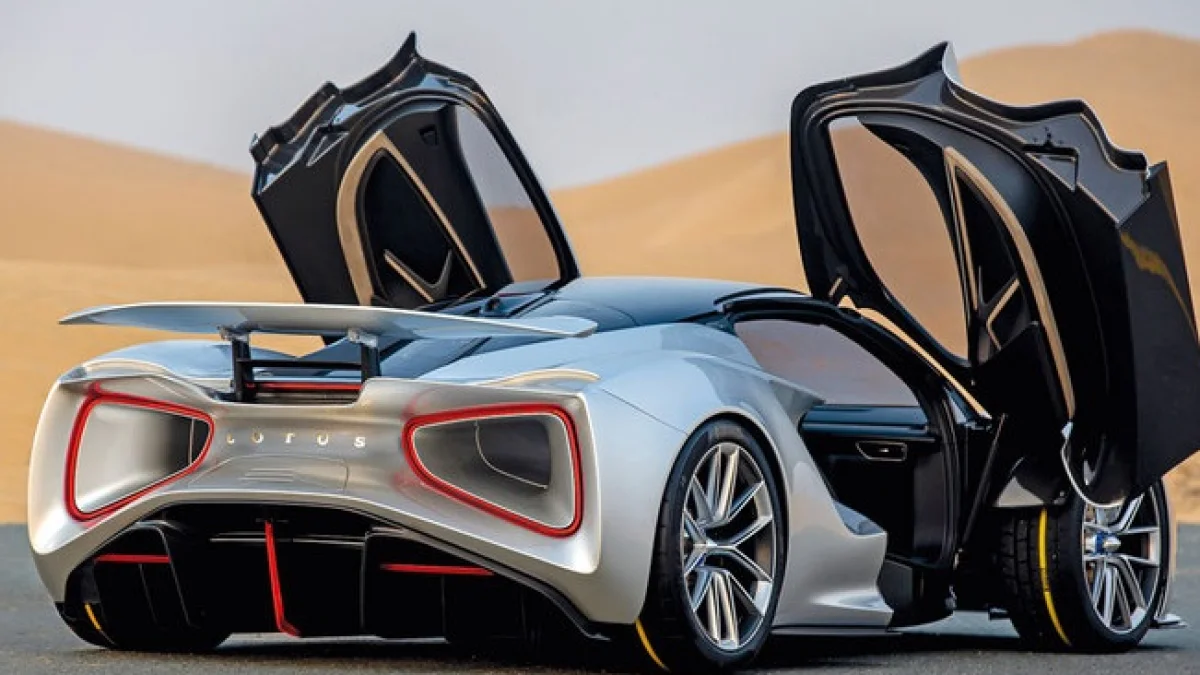
Chinese Electric Cars Knock on Canada's Door: Lotus Leads the First Wave in July
Canada is preparing to receive a new wave of Chinese-made electric vehicles this July, marking a notable shift in the North American auto market after years of strict tariff barriers that kept most Chinese models away from Canadian consumers. Chinese giant Geely is leading this charge by shipping the first batch of Lotus electric cars to Canada, under a new trade agreement between Ottawa and Beijing that allows a limited number of Chinese-made EVs to enter at significantly reduced duties.
Agreement Opens the Door for China
The move follows a understanding between Canadian Prime Minister Mark Carney and Chinese President Xi Jinping, which allows Canada to import up to 49,000 Chinese electric vehicles within 12 months under a quota system with reduced tariffs. Previously, tariffs on Chinese EVs in Canada exceeded 100%, making their commercial entry virtually impossible. Under the new quota, duties have dropped to around 6% only. This shift gives Chinese manufacturers a unique opportunity to test a market close to the United States in terms of consumer taste, usage patterns, safety requirements, and dealer and service networks.
Lotus Arrives First
According to statements from the Chinese ambassador to Canada, Geely is scheduled to begin shipping Lotus electric vehicles to the Canadian market in July, making them among the first Chinese-owned and manufactured cars to arrive officially under the new arrangements. Lotus holds special significance in this step: it is a historic British brand now owned by Geely Group, currently offering luxury and sports EVs targeting a different segment than low-cost Chinese economy cars. This means China's debut in Canada will not necessarily be through the cheapest EVs, but through premium models capable of presenting a more advanced image of modern Chinese manufacturing.
BYD and Chery Prepare to Enter
The Chinese plan does not stop at Geely and Lotus. Other companies like BYD and Chery are working to complete the necessary regulatory requirements to begin sales in Canada. BYD is one of the most anticipated brands in the Canadian market, following its rapid global rise and its success in surpassing major competitors in several EV and hybrid markets. Chery, which has a growing presence in the Middle East and Europe, is also seeking to expand its geographic footprint to include North America through this new agreement.
This development marks a milestone in trade relations between China and Canada in the automotive sector and could potentially shift the balance of power in the North American EV market. With tariffs reduced to just 6%, Chinese EVs become highly competitive in terms of price-to-value ratio, especially amid growing demand for eco-friendly vehicles in Canada. The coming months will be crucial to test Canadian consumer acceptance of these new models and the ability of Chinese companies to build a service and dealer network that can compete with established traditional brands in the market.
Related News
View All News
LUXEED Prepares for Global Launch on October 21 in Wuhu, China
LUXEED is preparing to hold its global launch event on October 21 in Wuhu, Anhui Province, China, under the theme 'Intelligence, Enlightened.' The event will feature the world premiere of…

Avatr CONCEPT T09 with 1000+ HP Challenges Maybach and Rolls-Royce at Paris Show
Avatr unveils the CONCEPT T09 at the 2026 Paris Motor Show, a large luxury SUV with over 1000 horsepower and massive dimensions (5285 mm length). It features a hybrid powertrain…

Morocco Produces 700,000 Cars Annually, Surpassing Italy with $16 Billion in Export Revenue
Morocco has solidified its position as an African manufacturing power, producing 700,000 vehicles annually and generating over $16 billion in automotive export revenue, outpacing Italy. Industrial activity spans 150 zones…

Opel CEO: Adam Small Car Out of Plans Until 2030 Due to EU Regulations
Opel CEO Florian Huettl has confirmed the Adam small car is not in the company's product plans until 2030 due to stringent European regulatory requirements. Speaking at the 2026 Paris…
Tesla Roadster Jumps Mid-Air with SpaceX-Inspired Rocket Technology
Tesla has revealed the next-generation Roadster in a Texas demonstration where the car jumped into the air and rotated before landing, using thrusters inspired by SpaceX rockets. The system relies…

