

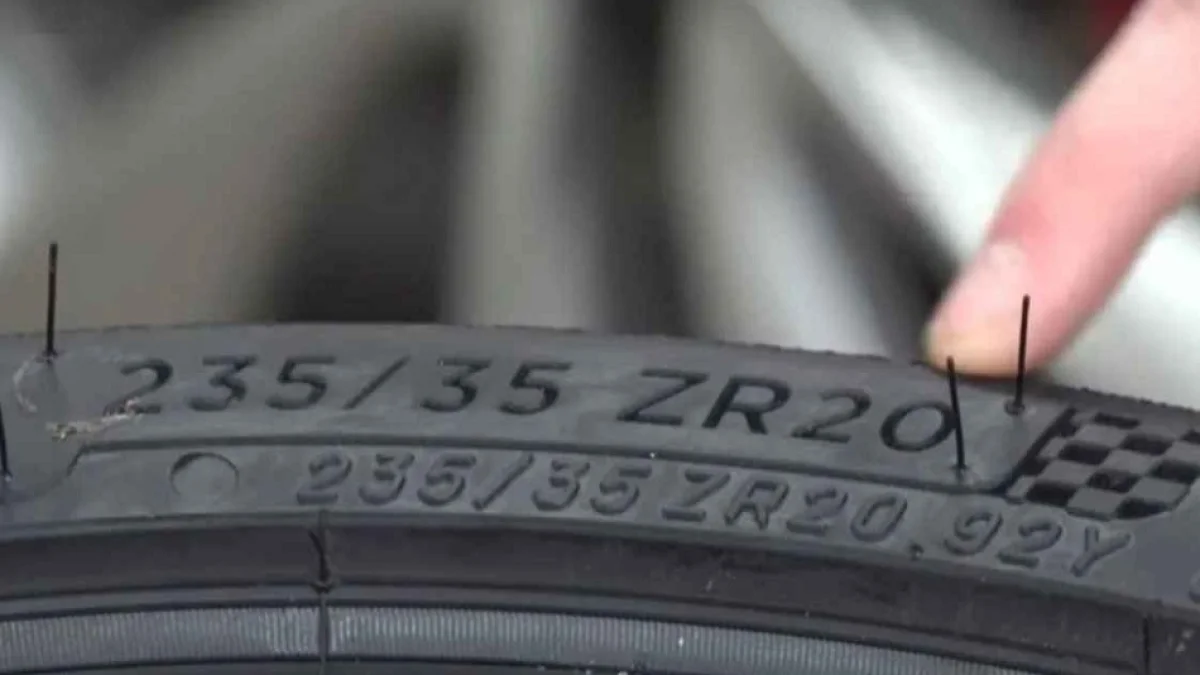
What Does ZR Mean on Your Tires? Not Just a Decoration But a Critical Performance Indicator
Many drivers believe the codes printed on the sidewall of a tire are just technical details not worth paying attention to. However, these letters and numbers can determine the tire's speed capability, construction method, and the level of safety it provides on the road. Among the most confusing codes for car owners is the ZR symbol. Some assume it simply refers to a special type of performance tire, or that it is always superior to regular tires. In reality, this code is fundamentally linked to the tire's ability to withstand high speeds.
What Do the Letters R and Z Stand For?
The letter R in a tire size designation stands for Radial, meaning the tire is of radial construction, the most widely used design in modern vehicles. In this type, the internal layers extend radially from one side to the other, which helps improve stability, increase tire lifespan, and provide more balanced performance compared to older bias-ply tires, which are now rare in passenger cars. When the ZR code appears, the R still indicates radial construction, while the Z signifies that the tire is designed for high-speed operation. According to standard tire classifications, the ZR code can be used for tires capable of exceeding 240 kilometers per hour. Higher-performance tires are associated with speed ratings such as W, Y, and (Y), which can reach 270 or 300 km/h or more.
Not Every ZR Tire Is Right for Your Car
A common mistake many drivers make is believing that choosing a tire with a higher speed rating automatically means it is the best option, even if the vehicle does not require it. A high-performance tire may offer better stability, quicker cornering response, and shorter braking distances under certain conditions. However, it can also be less comfortable, noisier, more expensive, and may negatively impact fuel consumption due to the stiffer rubber compound used in its construction.
When Do You Actually Need ZR Tires?
The importance of ZR tires becomes evident in high-performance sports cars and luxury vehicles, which are fundamentally designed for high-speed driving and require tires capable of handling the stress and heat generated at such speeds. In contrast, family sedans, hatchbacks, and crossover SUVs used daily in cities and on regular roads typically do not need this type of tire. Speed ratings such as T, H, or V are often more than sufficient to meet everyday driving needs, while offering better ride comfort and lower cost. Understanding the true meaning of the ZR code empowers drivers to make more informed decisions when purchasing tires, ensuring the ideal balance between performance, safety, and cost.
Related News
View All News
3 Valves That Protect Your Gas-Converted Car From Leaks and Overpressure
Specialists at Gastec explained that the natural gas conversion system relies on 3 main valves. The gas solenoid prevents flow when the engine stops, the filling valve secures refueling and…

NVIDIA Launches Halos SAFE Framework to Test Autonomous Driving Safety Before Trust
NVIDIA announced on October 21, 2026, the Halos SAFE framework to evaluate autonomous driving safety by combining virtual simulation, real-world testing, and fleet data analysis. The framework aims to produce…

Rivian Acquires Third Dimension AI to Accelerate Self-Driving Development
Rivian has acquired UK-based Third Dimension AI, a startup that uses AI to turn images and video into controllable 3D environments. The technology allows engineers to simulate rare and dangerous…

Agentic AI Set to Dominate Automotive Engineering: 68% of Carmakers Target Expansion Within 3 Years
A Capgemini Research Institute report reveals that 68% of automotive companies aim to increase reliance on agentic AI for non-core engineering activities to 68% within two to three years, up…

68% of Carmakers Adopt Agentic AI in Vehicle Development, Capgemini Report Finds
A Capgemini Research Institute report found that 68% of automotive companies are using or testing agentic AI in product development, with 33% in active use and 35% in pilot phases.…

