


NVIDIA Launches Halos SAFE Framework to Test Autonomous Driving Safety Before Trust
NVIDIA announced on October 21, 2026, the Halos SAFE framework to evaluate autonomous driving safety by combining virtual simulation, real-world testing, and fleet data analysis. The framework aims to produce measurable evidence instead of relying on limited test trips. But the announcement is not an automatic safety certificate — evaluation depends on data quality and simulation accuracy. The system paves the way for stricter standards in assessing electric and hybrid autonomous vehicles.
NVIDIA announced on October 21, 2026, a new framework called Halos SAFE, designed to evaluate the safety of autonomous driving systems by linking virtual testing with real-world trials and monitoring vehicle performance during operation. The framework goes beyond measuring a car's ability to move without human input — it focuses on whether the system makes safe decisions in complex, unpredictable road scenarios. The real challenge starts here.
What Halos SAFE brings to Tesla and rival test methods
The framework combines traffic scenario simulation, software and hardware testing, on-road driving, and fleet data analysis. NVIDIA says the system helps developers produce measurable, traceable evidence for evaluating autonomous driving performance, instead of relying on a single test or a limited set of trips. It opens the door to objective comparisons between different systems. This shift in testing methodology could redefine safety standards for new cars.
Why thousands of hours behind the wheel aren't enough
Cars can face rare situations that are difficult to test repeatedly on real roads, such as a child suddenly appearing between parked vehicles, or a neighboring car changing lanes unexpectedly. Simulation matters here — it allows the same scenario to be rebuilt with different speeds, distances. Surrounding conditions, then measures how the system responds each time. But virtual testing alone is insufficient; results must be compared against actual vehicle performance to confirm the simulation reliably represents reality. The paradox is that real roads remain the toughest testing ground. Every car needs intensive field testing alongside virtual simulation, especially given the diverse road conditions in Cairo and other congested cities.
AI doesn't grant an automatic safety certificate
Announcing a testing framework doesn't mean every car using it's automatically safe. Evaluation depends on data quality, scenario diversity, measurement accuracy, and how closely simulation matches reality. The core point is that tools alone don't create safety — how they are used and how results are analyzed does. Companies seeking to prove their systems' safety need full transparency in sharing test data. This could become a competitive benchmark among manufacturers in the coming years.
What it means for electric and hybrid cars
As reliance on autonomous driving systems grows in BYD and other brands, a unified testing framework becomes essential. Electric and hybrid systems depend more heavily on software, which increases the complexity of safety verification. Halos SAFE could provide a common language between developers, regulators, and consumers. The system allows tracking performance across thousands of scenarios, but it doesn't replace real-world field tests. In a market where Mercedes and other premium brands offer advanced driving systems, this framework will resonate widely.
Virtual testing alone won't cut it. A company using Halos SAFE needs diverse real-world data and continuously updated scenarios. That's the difference between a good testing framework and an effective one. The new system lays the groundwork for a stricter approach to autonomous driving safety evaluation, but it ultimately depends on who uses it and how. The market will watch the first results from this framework in the coming months.
Frequently Asked Questions
3 questions answered
Related News
View All News
3 Valves That Protect Your Gas-Converted Car From Leaks and Overpressure
Specialists at Gastec explained that the natural gas conversion system relies on 3 main valves. The gas solenoid prevents flow when the engine stops, the filling valve secures refueling and…

Rivian Acquires Third Dimension AI to Accelerate Self-Driving Development
Rivian has acquired UK-based Third Dimension AI, a startup that uses AI to turn images and video into controllable 3D environments. The technology allows engineers to simulate rare and dangerous…

Agentic AI Set to Dominate Automotive Engineering: 68% of Carmakers Target Expansion Within 3 Years
A Capgemini Research Institute report reveals that 68% of automotive companies aim to increase reliance on agentic AI for non-core engineering activities to 68% within two to three years, up…

68% of Carmakers Adopt Agentic AI in Vehicle Development, Capgemini Report Finds
A Capgemini Research Institute report found that 68% of automotive companies are using or testing agentic AI in product development, with 33% in active use and 35% in pilot phases.…
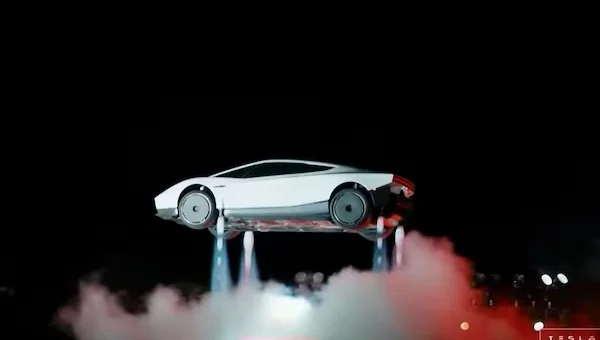
Tesla's New Roadster Jumps in the Air — But It's Not a Plane, and Regulators Are Scratching Their Heads
Tesla has revealed a new Roadster generation capable of short airborne jumps using cold-gas and compressed-air thrusters at a demonstration in Texas. The Federal Aviation Administration confirmed the vehicle does…

