

Rivian Acquires Third Dimension AI to Accelerate Self-Driving Development
Rivian has acquired UK-based Third Dimension AI, a startup that uses AI to turn images and video into controllable 3D environments. The technology allows engineers to simulate rare and dangerous driving scenarios without waiting for them to occur on real roads. The 15-person team will join Rivian's AI and autonomy division led by James Philbin. The purchase price was not disclosed, and the deal comes amid a broader race to develop self-driving systems.
Rivian has acquired UK-based startup Third Dimension AI for an undisclosed sum, a move aimed at accelerating its self-driving development by converting images and video into realistic 3D environments. The British firm's 15-person team will join Rivian's AI and autonomy division under James Philbin, senior vice president overseeing the field. The deal lands in the middle of a fierce race among automakers and tech companies to build more advanced driver-assistance systems. Terms were not disclosed.
How Rivian Plans to Use Third Dimension AI
Third Dimension AI's technology uses artificial intelligence to transform photos and video into controllable 3D environments. Engineers at Rivian can rebuild real road scenes, then tweak their elements to test how autonomous systems respond to different scenarios. A cyclist swerves in front of the car. A driver makes an unexpected move. Lighting, weather, and the positions of road users can all be changed to see how the system handles each case. That capability compresses thousands of miles of physical testing into a virtual loop.
Why Simulation Beats Waiting for Rare Events
Some dangerous situations are rare. Collecting enough real-world examples to test them is slow and expensive. Simulation lets engineers recreate those cases, repeat them. Alter the details without waiting for them to happen again on public roads. Rivian didn't disclose the purchase price, but confirmed the UK team will join its AI and autonomy group. The data volume is staggering: 400,000 driving sequences collected daily across Rivian's fleet, a scale that demands advanced simulation tools to turn raw footage into effective training.
The Electric Vehicle and Autonomy Race
Automakers and tech firms are pushing hard to develop systems that handle changing road conditions and react to the unexpected. Traditional testing, which relies on gathering massive amounts of data from real roads, is becoming less efficient. Rivian wants to cut that dependence through smart simulation environments. Rivals like Tesla lean on huge fleets to collect data, but Rivian is taking a different path built on generative AI.
The deal reflects a broader shift in the auto industry: data alone isn't enough. The tools that turn data into testable scenarios are the real competitive edge. Third Dimension AI's team will work inside Rivian to build those capabilities, while the company keeps harvesting 400,000 driving sequences every day from its fleet. The race to self-driving isn't over, but the tools of the race are changing fast.
Frequently Asked Questions
3 questions answered
Related News
View All News
3 Valves That Protect Your Gas-Converted Car From Leaks and Overpressure
Specialists at Gastec explained that the natural gas conversion system relies on 3 main valves. The gas solenoid prevents flow when the engine stops, the filling valve secures refueling and…

NVIDIA Launches Halos SAFE Framework to Test Autonomous Driving Safety Before Trust
NVIDIA announced on October 21, 2026, the Halos SAFE framework to evaluate autonomous driving safety by combining virtual simulation, real-world testing, and fleet data analysis. The framework aims to produce…

Agentic AI Set to Dominate Automotive Engineering: 68% of Carmakers Target Expansion Within 3 Years
A Capgemini Research Institute report reveals that 68% of automotive companies aim to increase reliance on agentic AI for non-core engineering activities to 68% within two to three years, up…

68% of Carmakers Adopt Agentic AI in Vehicle Development, Capgemini Report Finds
A Capgemini Research Institute report found that 68% of automotive companies are using or testing agentic AI in product development, with 33% in active use and 35% in pilot phases.…
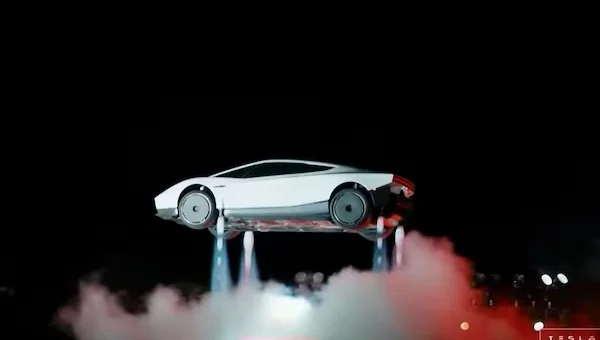
Tesla's New Roadster Jumps in the Air — But It's Not a Plane, and Regulators Are Scratching Their Heads
Tesla has revealed a new Roadster generation capable of short airborne jumps using cold-gas and compressed-air thrusters at a demonstration in Texas. The Federal Aviation Administration confirmed the vehicle does…

