

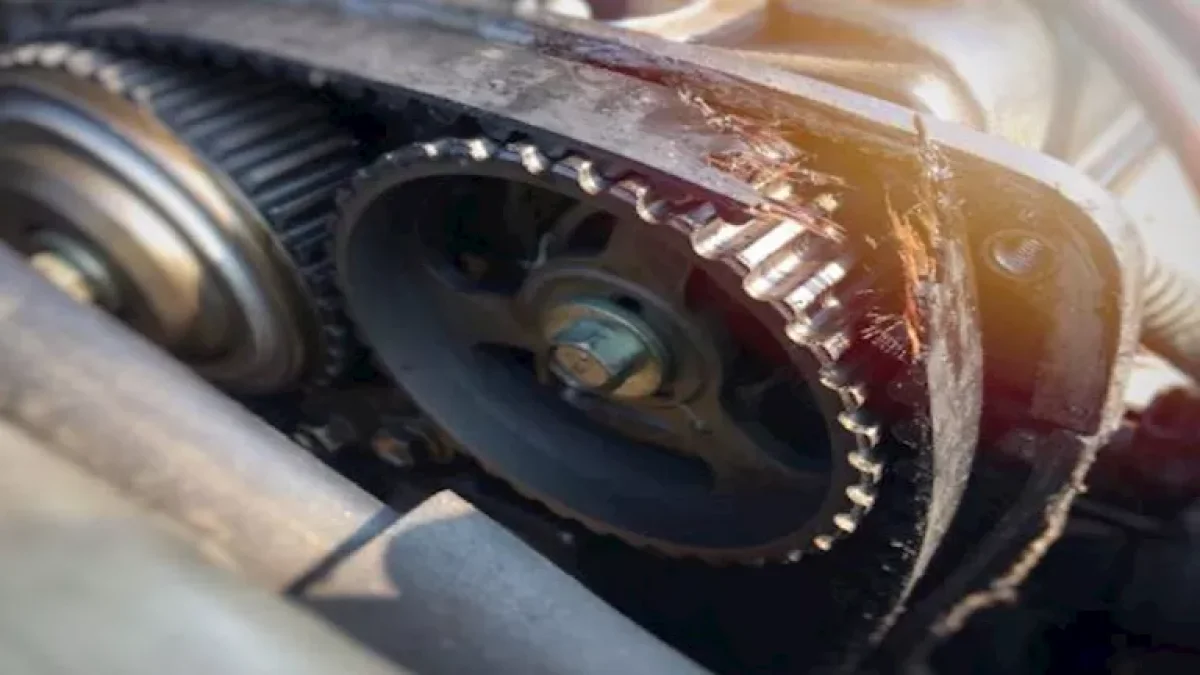
Timing Belt Snaps While Driving? 5 Steps That Save Your Engine from Destruction
A timing belt failure while driving stops the engine instantly and can destroy valves and pistons if the driver attempts a restart. The correct response is steering to a safe location with hazard lights on, then calling a tow truck without any attempt to crank the engine. A specialist inspection determines the damage scope, which may range from a simple belt replacement to a full cylinder head rebuild. Regular maintenance and replacing the belt at the recommended 60,000 to 100,000 km interval remain the best protection against this failure.
A snapped timing belt kills the engine instantly — and what you do in the next sixty seconds decides whether the repair costs 3,000 EGP or exceeds 30,000 EGP with a cylinder head rebuild and bent valves. The single worst move? Trying to restart the engine. That decision alone escalates a belt replacement into a full internal engine repair.
How to handle sudden engine shutdown at speed
Power steering assist disappears the moment the belt snaps, and the steering wheel turns heavy without warning. Grip it with both hands, switch on your hazard lights immediately. Steer gradually toward the far right shoulder until the car comes to a safe stop away from traffic flow. Do not yank the wheel or slam the brakes — sliding at your current speed is far more dangerous than a slow, controlled stop.
Why restarting the engine is the fatal mistake
The timing belt synchronizes the camshaft with the crankshaft. That synchronization is the only thing keeping pistons from slamming into open valves inside the combustion chamber. Once the belt fails, that timing is lost completely. Any attempt to crank the engine — even a brief one — can drive pistons directly into valve heads. The result: bent and destroyed valves, and in some engines, cracked piston crowns. Repair costs jump from a belt and tensioner kit to a partial or full engine overhaul.
A tow truck isn't a luxury — it's mandatory
After securing the vehicle on the shoulder, calling for a tow to a specialized workshop is the only correct move. Do not push the car, don't let anyone drag it. Never try to bump-start it on a slope. The real problem is that no driver can assess internal damage by looking at a broken belt — the engine may look completely intact from the outside while valves are already bent inside the head.
Professional inspection determines the entire repair path. In mild cases, the job stops at replacing the timing belt and its associated components. Engines that suffered piston-to-valve contact require removing the cylinder head, repairing or replacing valves. Swapping out damaged internal parts. Hyundai and Kia models are among the brands where this failure appears frequently in older examples, though any engine running a belt instead of a chain faces the same risk.
Preventive maintenance remains the strongest defense. Replacing the belt at the manufacturer's recommended interval — typically between 60,000 and 100,000 kilometers depending on the model — costs a fraction of any internal repair. Toyota Corolla and Nissan Sunny owners know this equation well. Inspect the belt at every service interval, and watch for cracking, glazing, or unusual vibration — the warning signs appear long before the sudden snap, but most drivers simply never look.
Frequently Asked Questions
3 questions answered
Related News
View All News
3 Valves That Protect Your Gas-Converted Car From Leaks and Overpressure
Specialists at Gastec explained that the natural gas conversion system relies on 3 main valves. The gas solenoid prevents flow when the engine stops, the filling valve secures refueling and…

NVIDIA Launches Halos SAFE Framework to Test Autonomous Driving Safety Before Trust
NVIDIA announced on October 21, 2026, the Halos SAFE framework to evaluate autonomous driving safety by combining virtual simulation, real-world testing, and fleet data analysis. The framework aims to produce…

Rivian Acquires Third Dimension AI to Accelerate Self-Driving Development
Rivian has acquired UK-based Third Dimension AI, a startup that uses AI to turn images and video into controllable 3D environments. The technology allows engineers to simulate rare and dangerous…

Agentic AI Set to Dominate Automotive Engineering: 68% of Carmakers Target Expansion Within 3 Years
A Capgemini Research Institute report reveals that 68% of automotive companies aim to increase reliance on agentic AI for non-core engineering activities to 68% within two to three years, up…

68% of Carmakers Adopt Agentic AI in Vehicle Development, Capgemini Report Finds
A Capgemini Research Institute report found that 68% of automotive companies are using or testing agentic AI in product development, with 33% in active use and 35% in pilot phases.…

