


Software Becomes the New Competitive Edge in the Automotive Industry
For more than a century, vehicles were primarily evaluated by factors such as engine performance, fuel efficiency, and acceleration. Today, however, the automotive industry is undergoing a rapid digital transformation that is redefining those standards. Software, artificial intelligence, and continuous over-the-air updates are now becoming just as important as traditional mechanical components, fundamentally changing how modern vehicles are developed, evaluated, and experienced.
Software-Defined Vehicles Are Reshaping Car Ownership
Industry reports indicate that automakers are increasingly embracing the concept of Software-Defined Vehicles (SDVs), a new generation of vehicles that rely on software to improve functionality and introduce new features even after leaving the production line. This evolution represents a major shift in the ownership experience, allowing vehicles to continue evolving throughout their lifecycle rather than remaining fixed at the moment of purchase.
Unlike conventional vehicles that relied on separate electronic control units for individual functions, modern software-defined vehicles are built on a unified digital architecture. This enables manufacturers to update driving systems, enhance overall performance, and introduce new capabilities through online software updates without replacing physical components. According to an analysis published by Boston Consulting Group (BCG), software has become one of the most significant sources of value in modern vehicles, particularly with the rapid growth of electric vehicles and intelligent driving systems. As a result, manufacturers are increasingly redesigning vehicles from the inside out, prioritizing digital architecture alongside mechanical engineering.
Billions Invested as Software Drives the Next Stage of Competition
The industry's growing investment in software extends far beyond adding larger infotainment displays or more advanced voice assistants. The primary objective is to build vehicles capable of continuous improvement throughout their operational life. Volkswagen, Mercedes-Benz, and General Motors have all announced substantial investments in developing in-house software platforms, while Toyota and Volvo Cars have established dedicated software engineering and digital systems teams to accelerate vehicle development and reduce dependence on external suppliers.
Industry analysis also highlights that competition is no longer limited to building a mechanically capable vehicle. Instead, manufacturers are increasingly competing to deliver a complete digital experience that can be continuously enhanced through software updates. Technology companies are also playing a central role in this transformation. NVIDIA DRIVE provides advanced computing capabilities for intelligent driving systems, while Qualcomm's Snapdragon Digital Chassis platform supports connectivity, infotainment, and driving technologies. Together, these developments illustrate how software is rapidly becoming one of the defining competitive advantages shaping the future of the global automotive industry.
Related News
View All News
3 Valves That Protect Your Gas-Converted Car From Leaks and Overpressure
Specialists at Gastec explained that the natural gas conversion system relies on 3 main valves. The gas solenoid prevents flow when the engine stops, the filling valve secures refueling and…

NVIDIA Launches Halos SAFE Framework to Test Autonomous Driving Safety Before Trust
NVIDIA announced on October 21, 2026, the Halos SAFE framework to evaluate autonomous driving safety by combining virtual simulation, real-world testing, and fleet data analysis. The framework aims to produce…
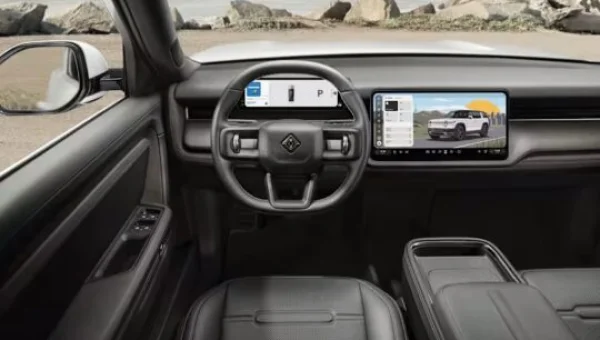
Rivian Acquires Third Dimension AI to Accelerate Self-Driving Development
Rivian has acquired UK-based Third Dimension AI, a startup that uses AI to turn images and video into controllable 3D environments. The technology allows engineers to simulate rare and dangerous…

Agentic AI Set to Dominate Automotive Engineering: 68% of Carmakers Target Expansion Within 3 Years
A Capgemini Research Institute report reveals that 68% of automotive companies aim to increase reliance on agentic AI for non-core engineering activities to 68% within two to three years, up…
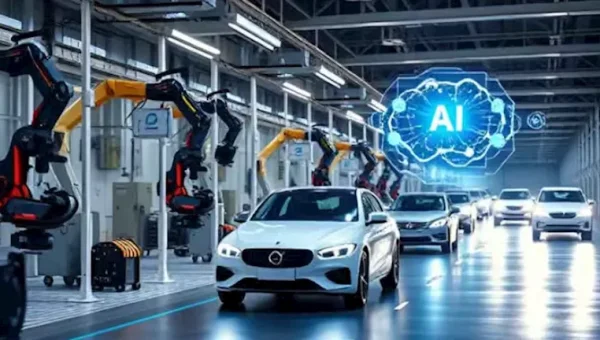
68% of Carmakers Adopt Agentic AI in Vehicle Development, Capgemini Report Finds
A Capgemini Research Institute report found that 68% of automotive companies are using or testing agentic AI in product development, with 33% in active use and 35% in pilot phases.…

