

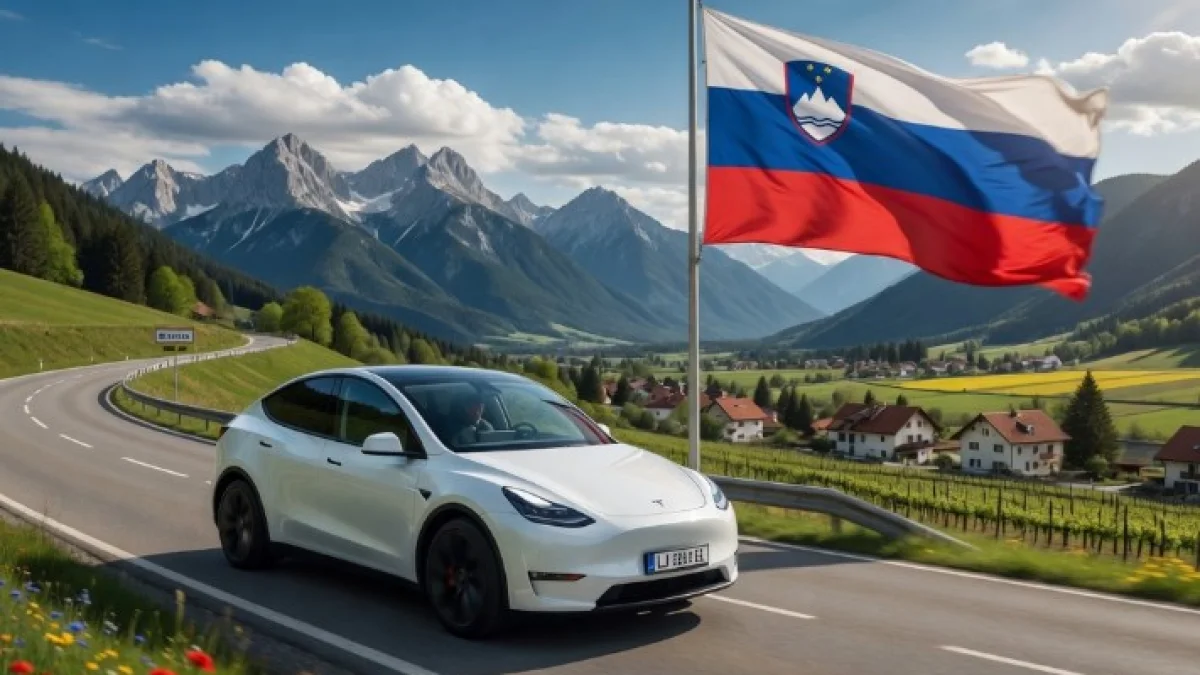
Slovenia Approves Tesla FSD Ahead of Pivotal EU Vote
Tesla's FSD Supervised has been approved for use in Slovenia, making it the sixth European country to allow the technology. The move signals a gradual European shift toward adopting driver-assistance systems while maintaining regulatory oversight. The Netherlands was the first EU member to approve it, and Finland and Greece are considering similar steps. A potential EU-wide vote could expand adoption in the coming weeks.
Tesla's FSD Supervised driver-assistance system has received the green light for use on Slovenian roads, making the country the sixth European nation to authorize the technology. The decision lands just weeks before a potential vote on EU-wide adoption.
This isn't a blanket permanent approval. Slovenia's traffic safety agency confirmed it accepted the temporary type approval, emphasizing the country wants to support innovation while keeping safety standards and regulatory oversight firmly in place.
What FSD Supervised Actually Does
The system stops short of full autonomous driving. Tesla makes that clear — the human driver remains the critical element. FSD Supervised can take control of the vehicle during transit, yet it demands the driver stay alert and ready to intervene at any moment.
The company announced via its European account on X that the Slovenian market launch will begin soon. Energy and Infrastructure Minister Jernej Vrtovec reshared the announcement himself, a clear signal of official government backing for the move.
Mapping Tesla's European Expansion
The Netherlands was the first EU member state to allow FSD on its roads, securing temporary approval back in April. Now with Slovenia added, the European count stands at six nations.Tesla's system is spreading step by step, and each fresh approval paves the way for others to follow.
The wave could widen soon. Finland and Greece have both stated they are studying the possibility of issuing similar authorizations. The trajectory looks steady — American technology is finding its way onto European roads gradually, yet consistently.
Slovenia's traffic safety agency views this as a template for introducing new technologies gradually into the transportation system, all under regulatory scrutiny and safety controls. The upcoming EU-wide vote in the coming weeks will be the real test of whether the continent is ready to embrace Tesla's vision for assisted driving on a much larger scale.
Frequently Asked Questions
3 questions answered
Related News
View All News
3 Valves That Protect Your Gas-Converted Car From Leaks and Overpressure
Specialists at Gastec explained that the natural gas conversion system relies on 3 main valves. The gas solenoid prevents flow when the engine stops, the filling valve secures refueling and…

NVIDIA Launches Halos SAFE Framework to Test Autonomous Driving Safety Before Trust
NVIDIA announced on October 21, 2026, the Halos SAFE framework to evaluate autonomous driving safety by combining virtual simulation, real-world testing, and fleet data analysis. The framework aims to produce…

Rivian Acquires Third Dimension AI to Accelerate Self-Driving Development
Rivian has acquired UK-based Third Dimension AI, a startup that uses AI to turn images and video into controllable 3D environments. The technology allows engineers to simulate rare and dangerous…

Agentic AI Set to Dominate Automotive Engineering: 68% of Carmakers Target Expansion Within 3 Years
A Capgemini Research Institute report reveals that 68% of automotive companies aim to increase reliance on agentic AI for non-core engineering activities to 68% within two to three years, up…

68% of Carmakers Adopt Agentic AI in Vehicle Development, Capgemini Report Finds
A Capgemini Research Institute report found that 68% of automotive companies are using or testing agentic AI in product development, with 33% in active use and 35% in pilot phases.…

