

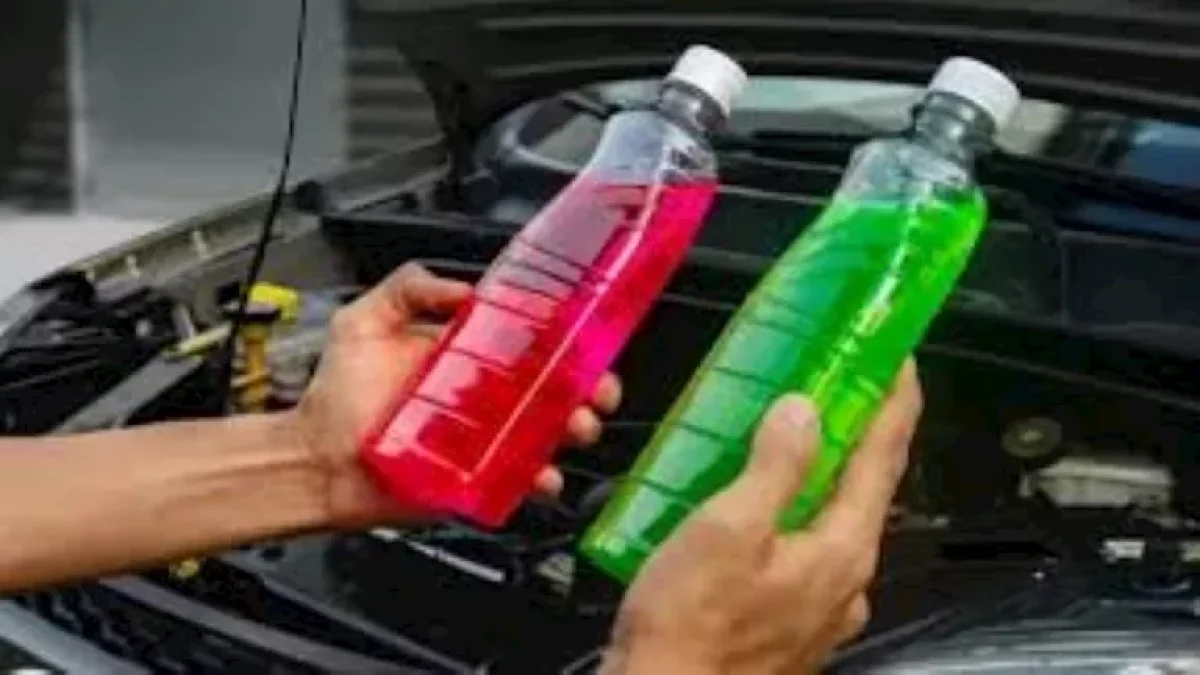
Red vs Green Coolant: Which One Is Right for Your Car?
Red and green coolants differ in chemical composition and service life. Green coolant uses silicate technology and suits older engines, while red coolant relies on organic acids and is designed for modern vehicles. Green coolant lasts between 30,000 and 50,000 kilometers, while red lasts longer. Mixing the two reduces protection efficiency and may cause deposits in the cooling system.
The coolant in your car isn't just another fluid. Choosing between red and green coolant directly affects engine life and cooling system efficiency, especially as temperatures rise in summer. The two types differ in chemical composition, protection mechanism. Service life, and each is designed for different vehicle needs.
Green Coolant: Traditional Protection for Older Engines
Green coolant relies on inorganic technology. Its main component is silicate. That forms a protective layer on metal parts inside the cooling system. This layer limits corrosion and rust, but it doesn't last forever. Green coolant typically lasts between 30,000 and 50,000 kilometers, or about two years depending on operating conditions. It needs more frequent replacement compared to newer coolant types. A key issue is that some components can break down over time and form deposits. That may restrict coolant flow inside the radiator and cooling loop. It's commonly used in some older cars and cast-iron engines. But determining the right type still depends on your car's specifications.
Red Coolant: Organic Acid Technology for Modern Cars
Red coolant uses organic acid technology. It contains no silicates, and its working mechanism is different. The protective materials react more actively in areas prone to corrosion instead of forming a continuous protective layer across all system parts. The result? Longer service life. Most modern cars leave the factory with red coolant because it's compatible with aluminum, plastics, and metals used in new engines. Mixing the two types can cause problems. What happens? Silicates react with organic acids and lose their protective properties. The engine may suffer internal corrosion, and cooling passages can clog with deposits.
How to Choose the Right Coolant
The rule is simple. Check your owner's manual. The manufacturer specifies the recommended type precisely. If you are using green coolant, don't switch to red without technical advice. If your car is modern, it most likely needs red coolant. Note the color of your current fluid. Green means silicates. Red or orange means organic acids. The price difference isn't huge, but the performance and service life difference is worth noting. Modern cars from Hyundai, Nissan, and Kia come with red coolant from the factory. Older cars like some Mitsubishi and Toyota models may use green. Do not rely on color alone. Read the label on the bottle.
Warning Signs: When to Change Coolant
There are clear signs. Falling coolant levels in the reservoir without a visible leak. Color turning brown or rusty. Deposits in the radiator. Engine temperature rising abnormally. These all indicate the coolant has lost its properties. Do not wait until temperatures spike. Early maintenance is far cheaper than repairing a corroded engine. Periodic inspection every 10,000 kilometers reveals the condition. For cars operating in hot conditions or used on long trips, inspection should be more frequent.
Mixing the Two Types: A Risk to Avoid
Mixing red and green coolant doesn't cause immediate damage. But it shortens the fluid's service life. Silicates and organic acids aren't compatible. The reaction between them reduces protection effectiveness. If you must top up and can't find the original type, add distilled water only as a temporary fix. Then replace the coolant entirely as soon as possible. Never use tap water. Its minerals and salts deposit inside the radiator and reduce cooling efficiency.
Choosing the right coolant isn't a minor detail. It's an investment in your engine's life. Red coolant suits modern cars, and green suits some older engines. But the final decision comes down to your owner's manual and your car's specifications. The cost difference is small, but the result difference is huge.
Frequently Asked Questions
3 questions answered
Related News
View All News
3 Valves That Protect Your Gas-Converted Car From Leaks and Overpressure
Specialists at Gastec explained that the natural gas conversion system relies on 3 main valves. The gas solenoid prevents flow when the engine stops, the filling valve secures refueling and…

NVIDIA Launches Halos SAFE Framework to Test Autonomous Driving Safety Before Trust
NVIDIA announced on October 21, 2026, the Halos SAFE framework to evaluate autonomous driving safety by combining virtual simulation, real-world testing, and fleet data analysis. The framework aims to produce…

Rivian Acquires Third Dimension AI to Accelerate Self-Driving Development
Rivian has acquired UK-based Third Dimension AI, a startup that uses AI to turn images and video into controllable 3D environments. The technology allows engineers to simulate rare and dangerous…

Agentic AI Set to Dominate Automotive Engineering: 68% of Carmakers Target Expansion Within 3 Years
A Capgemini Research Institute report reveals that 68% of automotive companies aim to increase reliance on agentic AI for non-core engineering activities to 68% within two to three years, up…

68% of Carmakers Adopt Agentic AI in Vehicle Development, Capgemini Report Finds
A Capgemini Research Institute report found that 68% of automotive companies are using or testing agentic AI in product development, with 33% in active use and 35% in pilot phases.…

