

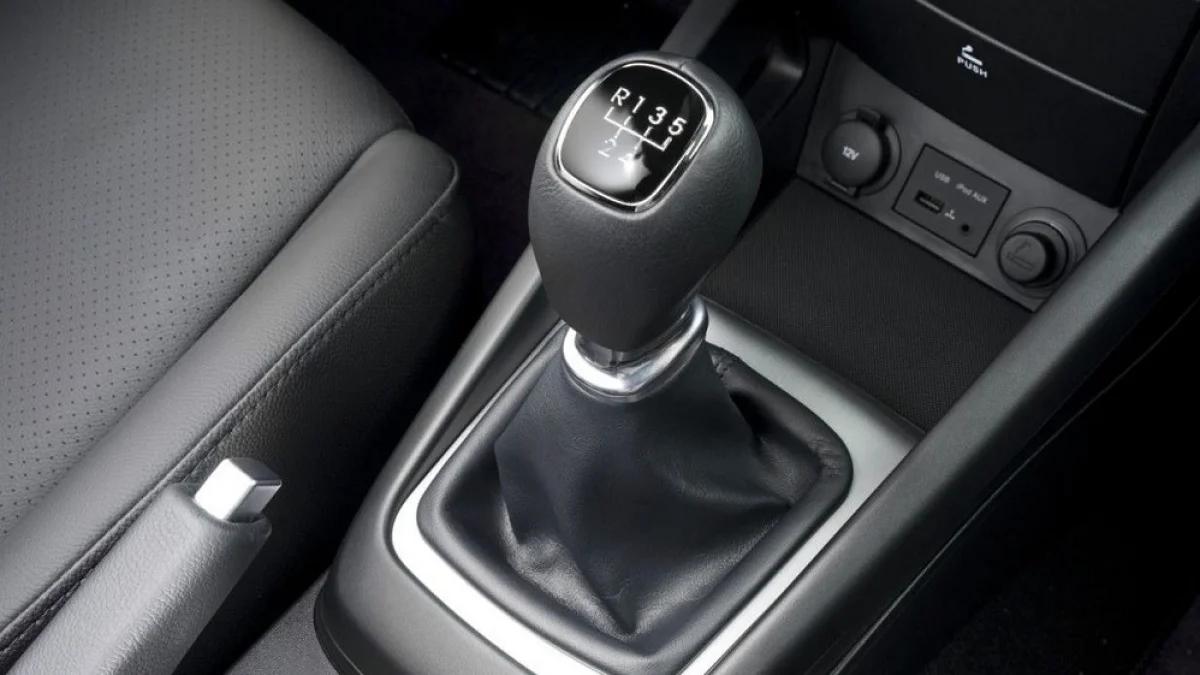
Porsche Explores Manual Feel in EV Era: Patent Reveals Real Gearbox with Electric Motor
Porsche has filed a patent for a mechanical gearbox designed for electric motors, featuring two mechanical gear ratios and a real clutch. The original filing dates back to March 2013, but the German version was granted in October 2025. The idea differs from software-based systems like the E-Shift in the Taycan, aiming to restore the feel of shifting gears in electric sports cars.
Porsche has filed a patent for a mechanical gearbox designed to work with an electric motor, aiming to blend the efficiency of electric propulsion with the tactile feel of shifting gears that sports car enthusiasts miss. The patent, originally filed in March 2013, was granted in its German version in October 2025, bringing it back into the spotlight recently.
A Real Gearbox, Not Just Electronic Simulation
The patent describes a transmission with two mechanical gear ratios, an input shaft driven by the electric motor. A set of gears and a clutch that allow switching between ratios. This differs fundamentally from modern systems that only simulate the sensation of shifting through software, sound, and momentary torque cuts. The patent covers an actual mechanical system capable of changing the gear ratio between the electric motor and the wheels.
Why Does an EV Need a Gearbox?
Unlike gasoline engines, electric motors deliver strong torque from low RPM and operate across a wide speed range, so most electric vehicles rely on a single gear ratio. But having more than one ratio can offer advantages in performance cars, such as improved acceleration at low speeds while maintaining efficiency or better top speed when shifting to a higher gear. Porsche's Taycan already uses a two-speed gearbox on the rear axle, though it operates automatically rather than as a traditional manual.
Porsche Wants to Bring Back the Feeling
Porsche's interest in gear shifting for EVs didn't stop with the old patent. In 2026, the company introduced the E-Shift system in the Taycan, a software system that mimics an eight-speed PDK. This system doesn't change actual ratios but adjusts torque response and sound to emulate a sporty driving experience. But the new patent goes further by proposing a true mechanical gearbox that lets the driver change ratios manually, opening the door for high-performance electric versions of the Porsche 911 or other models.
This move comes as automakers race to develop transmission solutions for EVs. Some brands like Hyundai have introduced a system that simulates a manual gearbox in the Ioniq 5 N, while Toyota is working on a manual transmission for internal combustion engines with electric assistance. But Porsche, known for sports cars like the Cayenne and Macan, aims to preserve its sporting identity even in the electric age.
Will We See a Manual EV Soon?
So far, Porsche has not announced any production plans for this gearbox, but the patent shows the company is seriously considering this direction. The first application could be in a future electric sports car or even a special version of the Taycan. If successful, it could spark a new race among automakers to redefine the electric driving experience. Initial figures suggest the two-speed gearbox in the Taycan helps improve 0-100 km/h acceleration to 2.8 seconds in the Turbo S version, a number that beats many traditional sports cars.
This patent doesn't necessarily mean Porsche will produce a manual gearbox for EVs, but it confirms the company is looking for ways to keep driving fun alive. In a market moving toward full electrification, preserving the feel of manual shifting could be the next competitive edge.
Frequently Asked Questions
3 questions answered
Related News
View All News
3 Valves That Protect Your Gas-Converted Car From Leaks and Overpressure
Specialists at Gastec explained that the natural gas conversion system relies on 3 main valves. The gas solenoid prevents flow when the engine stops, the filling valve secures refueling and…

NVIDIA Launches Halos SAFE Framework to Test Autonomous Driving Safety Before Trust
NVIDIA announced on October 21, 2026, the Halos SAFE framework to evaluate autonomous driving safety by combining virtual simulation, real-world testing, and fleet data analysis. The framework aims to produce…

Rivian Acquires Third Dimension AI to Accelerate Self-Driving Development
Rivian has acquired UK-based Third Dimension AI, a startup that uses AI to turn images and video into controllable 3D environments. The technology allows engineers to simulate rare and dangerous…

Agentic AI Set to Dominate Automotive Engineering: 68% of Carmakers Target Expansion Within 3 Years
A Capgemini Research Institute report reveals that 68% of automotive companies aim to increase reliance on agentic AI for non-core engineering activities to 68% within two to three years, up…

68% of Carmakers Adopt Agentic AI in Vehicle Development, Capgemini Report Finds
A Capgemini Research Institute report found that 68% of automotive companies are using or testing agentic AI in product development, with 33% in active use and 35% in pilot phases.…

