

New Technology Gives Autonomous Vehicles an Early Fault Detection System to Help Prevent Accidents
Researchers have developed a new technology that gives drones a mechanism similar to a sense of pain, not in the human sense but as an intelligent system designed to detect faults at an early stage and respond before they develop into complete operational failures. The innovation is intended to improve safety and reliability by using artificial intelligence to continuously monitor vehicle performance and automatically take preventive action whenever abnormal changes are detected in critical components.
How the Intelligent System Works
The technology equips drones with artificial intelligence algorithms that continuously monitor the performance of onboard components while analyzing sensor data in real time. When the system detects unusual changes in performance, vibration, or other indicators that may signal the beginning of a fault, it treats them as an alert requiring an immediate response. It then automatically adjusts the flight pattern to reduce stress on the affected component, in a way that resembles how a person naturally changes movement after feeling pain.
Early Warning Before Failure
Instead of waiting for a motor or propeller to fail, the system can identify early warning signs that indicate a developing mechanical or technical issue. It then applies preventive measures to maintain flight stability and complete the mission as safely as possible. Researchers believe this capability can significantly improve reliability, particularly during operations where human intervention is difficult, including search and rescue missions, infrastructure inspections, and autonomous delivery services.
Potential Applications for Autonomous Cars
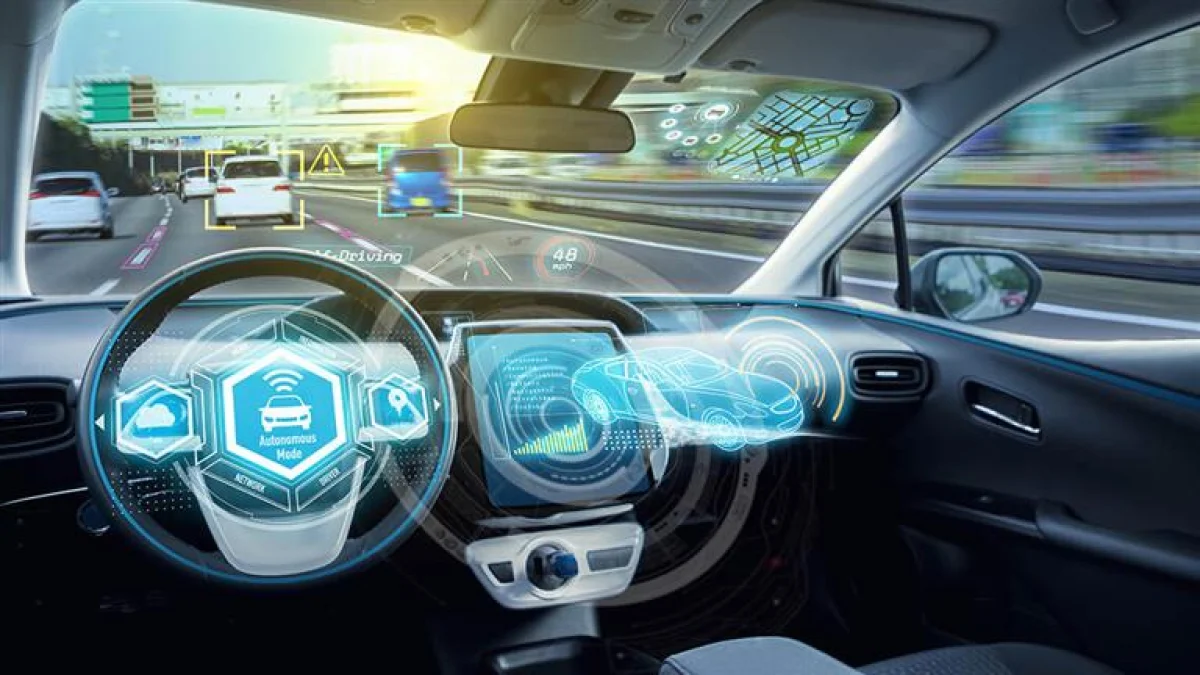
The research team believes the same principle could eventually be applied to autonomous vehicles. Rather than waiting for a mechanical or electronic component to fail, a self-driving car could identify the first signs of a problem and automatically adjust its driving behavior, reduce speed, or change its route to lower the likelihood of accidents while improving passenger safety.
The system relies on artificial intelligence algorithms that continuously compare incoming sensor data with the vehicle's normal operating patterns. When an abnormal deviation is detected, it is treated as a warning signal that triggers an immediate response before the issue becomes more serious. This approach differs from conventional warning systems because it does more than notify the user about a fault. It also takes autonomous corrective actions to reduce the impact of the problem while maintaining the highest possible level of operational safety. Experts believe the technology represents an important step forward for autonomous driving systems and robotics by introducing an additional layer of protection based on predicting faults and responding before they develop into larger failures.
Related News
View All News
3 Valves That Protect Your Gas-Converted Car From Leaks and Overpressure
Specialists at Gastec explained that the natural gas conversion system relies on 3 main valves. The gas solenoid prevents flow when the engine stops, the filling valve secures refueling and…

NVIDIA Launches Halos SAFE Framework to Test Autonomous Driving Safety Before Trust
NVIDIA announced on October 21, 2026, the Halos SAFE framework to evaluate autonomous driving safety by combining virtual simulation, real-world testing, and fleet data analysis. The framework aims to produce…

Rivian Acquires Third Dimension AI to Accelerate Self-Driving Development
Rivian has acquired UK-based Third Dimension AI, a startup that uses AI to turn images and video into controllable 3D environments. The technology allows engineers to simulate rare and dangerous…

Agentic AI Set to Dominate Automotive Engineering: 68% of Carmakers Target Expansion Within 3 Years
A Capgemini Research Institute report reveals that 68% of automotive companies aim to increase reliance on agentic AI for non-core engineering activities to 68% within two to three years, up…

68% of Carmakers Adopt Agentic AI in Vehicle Development, Capgemini Report Finds
A Capgemini Research Institute report found that 68% of automotive companies are using or testing agentic AI in product development, with 33% in active use and 35% in pilot phases.…

