

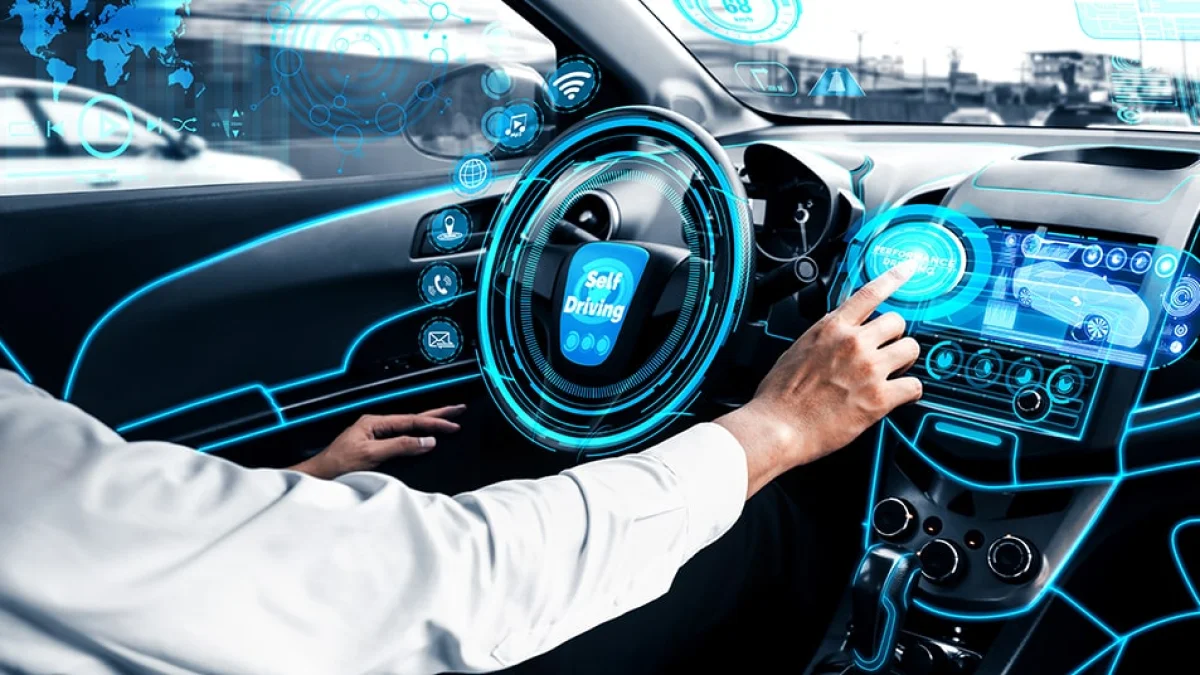
Modern Cars Become Prime Targets for Hackers: How They Turned into Mobile Data Centers
The modern car is no longer just an engine and a metal body. As cybersecurity researchers describe it, it has evolved into a mobile data center running millions of lines of code. This very transformation has opened the door to an unprecedented wave of cyberattacks. A report by Upstream, a specialist in connected vehicle security, revealed that cybersecurity attacks targeting the automotive and smart mobility sector doubled in 2025 alone, recording 494 documented incidents globally. Ransomware attacks alone accounted for 44% of all incidents—double their share from the previous year.
From Theory to Reality: Real Incidents That Shook the Automotive Industry
According to PCA Cyber Security, the first quarter of 2026 alone saw the discovery of 265 new security vulnerabilities in vehicle systems, representing a more than 100% increase compared to the same period last year. Among the most notable incidents documented in the report, hackers breached a service provider specializing in vehicle tracking systems, disabling thousands of users' ability to unlock or start their cars through mobile apps for two full weeks.
In another incident highlighting the dual role of artificial intelligence, attackers infiltrated a major used-car e-commerce platform and stole over 12 million data records using an AI-powered voice phishing campaign targeting customer service employees. The most prominent recent memory remains the attack on Land Rover, considered one of the most impactful assaults on the industry in recent years.
Where Is the Technical Weakness?
The isMalicious research platform revealed that the CAN bus network—the backbone of communication between a vehicle's control units—was originally designed decades ago without any sender identity verification mechanisms. This means any attacker who gains access to it, whether through the OBD-II port or the infotainment system, could theoretically send forged commands to control the brakes or steering. With the anticipated expansion of Vehicle-to-Everything (V2X) communication technologies, the report warns that the attack surface could widen to include traffic lights and pedestrians.
AI as an Electronic Shield Inside the Vehicle
On the other hand, artificial intelligence is becoming the first line of defense. According to a report by Global Market Insights, the automotive cybersecurity market is expected to grow from $4.5 billion in 2025 to over $13 billion by 2030, driven by an urgent need for integrated protection systems capable of real-time threat detection. Companies are developing machine learning-based solutions to detect abnormal data movement patterns inside the vehicle, much like traditional antivirus systems do.
Cybersecurity experts note that the race between developers and hackers is intensifying, with complexity increasing with each new generation of connected cars. The report emphasizes that collaboration between automakers and security technology firms has become an imperative, not just an option, to ensure the safety of both data and passengers in the age of smart mobility.
Related News
View All News
3 Valves That Protect Your Gas-Converted Car From Leaks and Overpressure
Specialists at Gastec explained that the natural gas conversion system relies on 3 main valves. The gas solenoid prevents flow when the engine stops, the filling valve secures refueling and…

NVIDIA Launches Halos SAFE Framework to Test Autonomous Driving Safety Before Trust
NVIDIA announced on October 21, 2026, the Halos SAFE framework to evaluate autonomous driving safety by combining virtual simulation, real-world testing, and fleet data analysis. The framework aims to produce…

Rivian Acquires Third Dimension AI to Accelerate Self-Driving Development
Rivian has acquired UK-based Third Dimension AI, a startup that uses AI to turn images and video into controllable 3D environments. The technology allows engineers to simulate rare and dangerous…

Agentic AI Set to Dominate Automotive Engineering: 68% of Carmakers Target Expansion Within 3 Years
A Capgemini Research Institute report reveals that 68% of automotive companies aim to increase reliance on agentic AI for non-core engineering activities to 68% within two to three years, up…

68% of Carmakers Adopt Agentic AI in Vehicle Development, Capgemini Report Finds
A Capgemini Research Institute report found that 68% of automotive companies are using or testing agentic AI in product development, with 33% in active use and 35% in pilot phases.…

