

Can Helwan Diesel Engines Shape Egypt's Auto Localization Future?
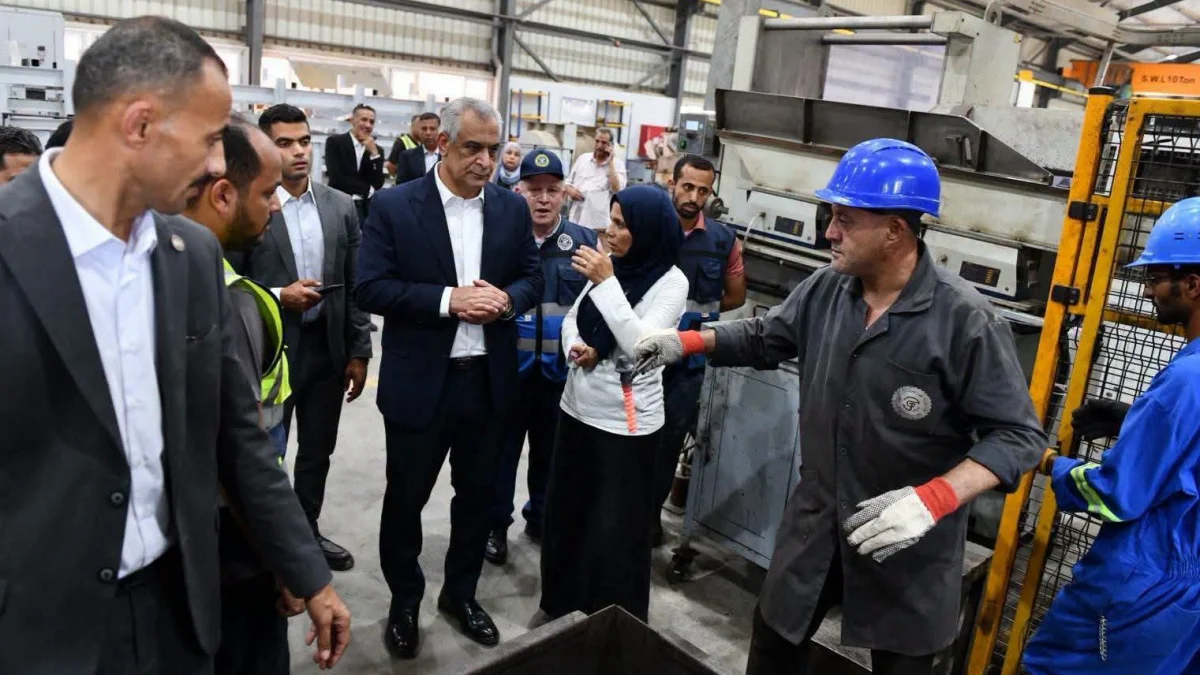
Egypt's State Minister for Military Production conducted a surprise visit to Helwan Diesel Engines Company to inspect diesel engine production and fastener lines. The tour highlighted advanced manufacturing technologies including robotics, CNC machines, and hot/cold forming processes. These efforts aim to deepen local manufacturing of automotive components and reduce dependency on imports.
Helwan Diesel Engines Company 'Military Factory 909' holds manufacturing capabilities that could shift the automotive game entirely. State Minister for Military Production Eng. Salah Soliman Jumblatt conducted a surprise inspection tour across production lines, aiming to maximize the use of available technological capacities to deepen local manufacturing.
Diesel Engines: A Strategic Industrial Base
The Minister's tour began with the diesel engines and spare parts factory, a cornerstone supporting engineering industries tied to vehicles and transport. These engines are vital for commercial vehicles and transport applications, making the development of local engine manufacturing a key axis for reducing reliance on imported components.
It doesn't stop at engines alone. The field visit also covered fasteners production lines, which rely on hot and cold forming technologies — critical techniques for producing precision components used across construction and automotive sectors.
CNC and Robotics: Backbone of Modern Manufacturing
The adoption of robotics and advanced CNC machines inside production lines signals a genuine strategic shift within Factory 909. These modern technologies aren't just line upgrades; they represent the optimal path to significantly boost precision and efficiency in manufacturing metal components and spare parts that demand strict quality standards.
Hot forming produces large bolts with complex designs, offering high durability to withstand loads and shocks. Cold forming achieves exceptional dimensional accuracy, a prerequisite for modern car parts needing advanced mechanical properties. These precise tolerances separate a competitive local component from an imported one.
Can these efforts finally realize Egypt's automotive localization dream? Early indicators from the factory floor are promising, confirming the technological infrastructure is ready for this challenge. Long industrial expertise combined with modern digital control and manufacturing systems presents a winning equation — one that could see the military production sector play a central role in Egypt's automotive industry, particularly as localization policies continue to gain momentum.
Frequently Asked Questions
3 questions answered
Related News
View All News
3 Valves That Protect Your Gas-Converted Car From Leaks and Overpressure
Specialists at Gastec explained that the natural gas conversion system relies on 3 main valves. The gas solenoid prevents flow when the engine stops, the filling valve secures refueling and…

NVIDIA Launches Halos SAFE Framework to Test Autonomous Driving Safety Before Trust
NVIDIA announced on October 21, 2026, the Halos SAFE framework to evaluate autonomous driving safety by combining virtual simulation, real-world testing, and fleet data analysis. The framework aims to produce…

Rivian Acquires Third Dimension AI to Accelerate Self-Driving Development
Rivian has acquired UK-based Third Dimension AI, a startup that uses AI to turn images and video into controllable 3D environments. The technology allows engineers to simulate rare and dangerous…

Agentic AI Set to Dominate Automotive Engineering: 68% of Carmakers Target Expansion Within 3 Years
A Capgemini Research Institute report reveals that 68% of automotive companies aim to increase reliance on agentic AI for non-core engineering activities to 68% within two to three years, up…

68% of Carmakers Adopt Agentic AI in Vehicle Development, Capgemini Report Finds
A Capgemini Research Institute report found that 68% of automotive companies are using or testing agentic AI in product development, with 33% in active use and 35% in pilot phases.…

