

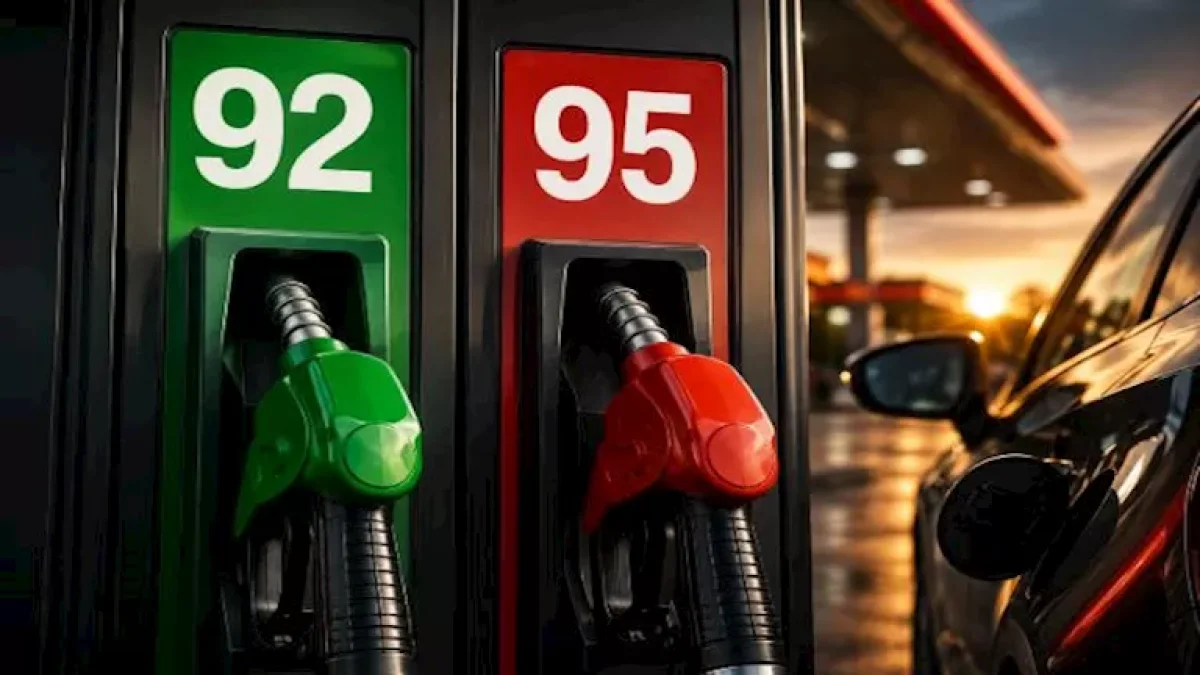
Gasoline 92 vs. 95: Which Fuel Is the Right Choice for Your Car?
The question comes up often. Many drivers believe that filling up with 95-octane gasoline automatically delivers more power and stronger engine performance, yet the real answer depends far more on the engine's design and the manufacturer's recommendation than on the fuel grade itself, which means choosing the correct gasoline starts with the vehicle's specifications rather than the assumption that a higher octane rating is always better. The owner's manual has the answer.
Understanding the Octane Rating
95 is more than a number. The octane rating measures a fuel's ability to resist premature combustion inside the engine, and a higher octane level allows gasoline to withstand greater pressure and heat before igniting, making it suitable for engines with high compression ratios as well as turbocharged powertrains that are engineered to operate with this type of fuel. That is its primary purpose.
But does that improve every car? If the manufacturer recommends 92-octane gasoline, switching to 95 won't provide a noticeable increase in power or acceleration, nor will it significantly reduce fuel consumption, because the engine is already engineered to deliver its intended performance using the recommended fuel grade. The result is straightforward.
When Is 95-Octane Necessary?
The difference becomes clear. If a vehicle is designed to run on 95-octane gasoline, using 92 instead may reduce performance and, in some cases, can lead to engine knocking, although modern engine management systems are capable of reducing the effects of knocking to help protect the engine during operation. Following the recommendation matters.
Inside the owner's manual is the key detail. A higher octane rating doesn't mean that 95-octane gasoline cleans the engine or extends engine life in every vehicle, because its primary benefit is compatibility with engines specifically designed for it, while cars built for 92-octane fuel are unlikely to gain any meaningful advantage, so drivers should always check the owner's manual or the label inside the fuel filler door where the manufacturer specifies the recommended octane rating for optimum performance and efficiency. The right fuel keeps the engine operating as intended.
Related News
View All News
3 Valves That Protect Your Gas-Converted Car From Leaks and Overpressure
Specialists at Gastec explained that the natural gas conversion system relies on 3 main valves. The gas solenoid prevents flow when the engine stops, the filling valve secures refueling and…

NVIDIA Launches Halos SAFE Framework to Test Autonomous Driving Safety Before Trust
NVIDIA announced on October 21, 2026, the Halos SAFE framework to evaluate autonomous driving safety by combining virtual simulation, real-world testing, and fleet data analysis. The framework aims to produce…

Rivian Acquires Third Dimension AI to Accelerate Self-Driving Development
Rivian has acquired UK-based Third Dimension AI, a startup that uses AI to turn images and video into controllable 3D environments. The technology allows engineers to simulate rare and dangerous…

Agentic AI Set to Dominate Automotive Engineering: 68% of Carmakers Target Expansion Within 3 Years
A Capgemini Research Institute report reveals that 68% of automotive companies aim to increase reliance on agentic AI for non-core engineering activities to 68% within two to three years, up…

68% of Carmakers Adopt Agentic AI in Vehicle Development, Capgemini Report Finds
A Capgemini Research Institute report found that 68% of automotive companies are using or testing agentic AI in product development, with 33% in active use and 35% in pilot phases.…

