

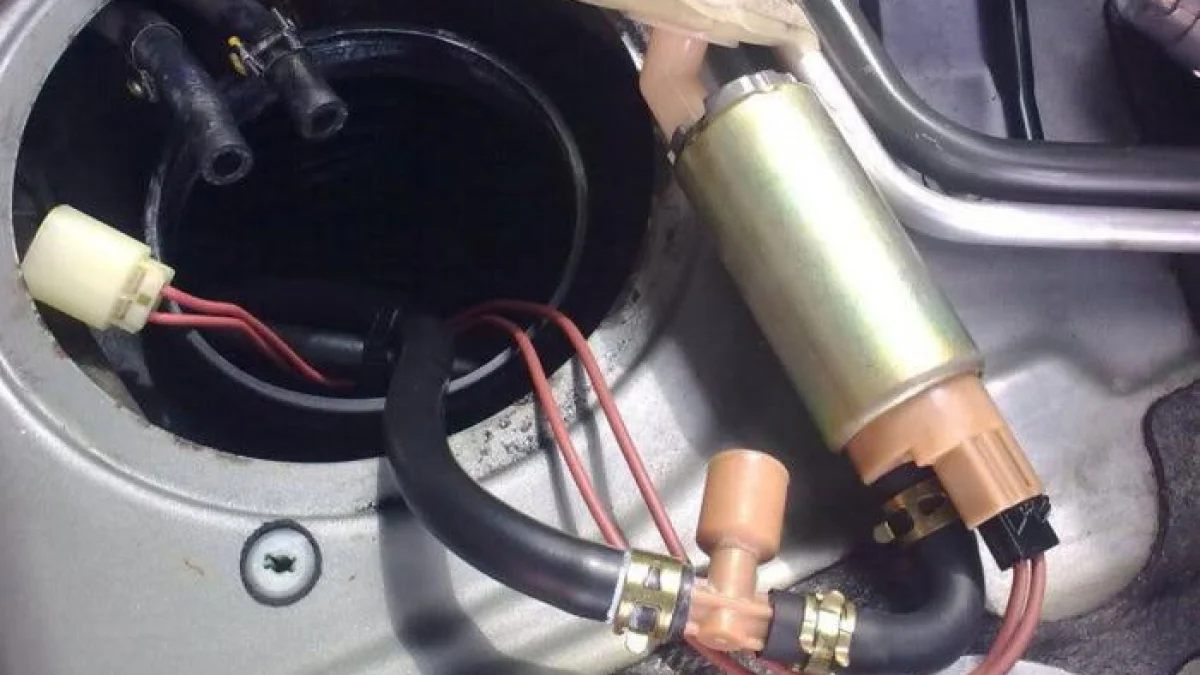
Strange Buzz and Power Loss? Telltale Signs of a Failing Fuel Pump
A strange buzz from the rear, an engine that stutters mid-drive, acceleration that fades without warning. These aren't random glitches — they're early warnings from a fuel system under stress. The fuel pump, that silent component tucked behind the tank, carries the critical job of delivering fuel at the right pressure to the engine.
Failure rarely strikes without notice. Most cars flash clear signals before the pump completely gives out, yet these symptoms often overlap with other faults in the ignition and fuel delivery systems. That's why a proper technical inspection remains the only way to confirm the diagnosis before swapping parts.
Warning Signs You Should Never Ignore
Hard starting tops the list. If the engine needs multiple cranks to fire up, or takes noticeably longer than usual, the pump likely can't build the required pressure quickly enough. The same goes for a loud humming noise coming from the tank area — a faint whir when turning the key is normal on many cars, but a persistent or increasingly loud tone means the pump is struggling against a clogged filter or internal strain.
Power stuttering during highway driving or when flooring the accelerator reveals the pump's failure to maintain steady fuel flow. Gas reaches the engine in uneven bursts, translating into jerky movement. Weak acceleration on uphill grades or under heavy load also ranks among the key indicators, since the engine demands more fuel in those situations and a tired pump simply can't keep up.
When to Take Immediate Action
A car that suddenly dies while driving and then restarts after a brief pause is a red flag that demands instant attention. This could point to pump overheating or an electrical connection issue, but the safest response is pulling over and scheduling a checkup before the same failure happens in a more dangerous spot.
Rough idling, noticeable vibration, or irregular engine rpm fluctuations provide additional clues. In some cases, the check engine light illuminates when the ECU logs a fuel pressure fault. An unusual spike in fuel consumption also deserves attention, though by itself it can't confirm the diagnosis. Catching these symptoms early saves drivers from far costlier repairs involving injectors or the engine itself.
Related News
View All News
3 Valves That Protect Your Gas-Converted Car From Leaks and Overpressure
Specialists at Gastec explained that the natural gas conversion system relies on 3 main valves. The gas solenoid prevents flow when the engine stops, the filling valve secures refueling and…

NVIDIA Launches Halos SAFE Framework to Test Autonomous Driving Safety Before Trust
NVIDIA announced on October 21, 2026, the Halos SAFE framework to evaluate autonomous driving safety by combining virtual simulation, real-world testing, and fleet data analysis. The framework aims to produce…

Rivian Acquires Third Dimension AI to Accelerate Self-Driving Development
Rivian has acquired UK-based Third Dimension AI, a startup that uses AI to turn images and video into controllable 3D environments. The technology allows engineers to simulate rare and dangerous…

Agentic AI Set to Dominate Automotive Engineering: 68% of Carmakers Target Expansion Within 3 Years
A Capgemini Research Institute report reveals that 68% of automotive companies aim to increase reliance on agentic AI for non-core engineering activities to 68% within two to three years, up…

68% of Carmakers Adopt Agentic AI in Vehicle Development, Capgemini Report Finds
A Capgemini Research Institute report found that 68% of automotive companies are using or testing agentic AI in product development, with 33% in active use and 35% in pilot phases.…

