

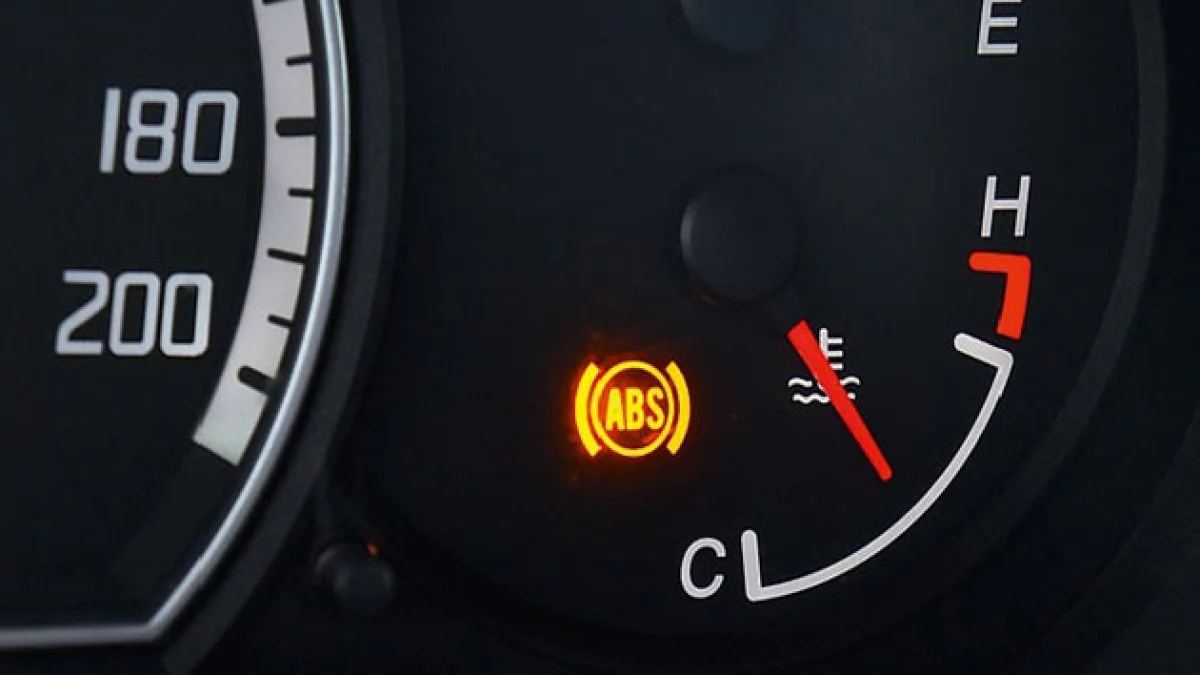
The 'Floater Chip' Malfunction: Why Your Car Suddenly Stops Despite a Full Fuel Gauge
Imagine driving down a highway when your car suddenly comes to a halt, only to discover the fuel tank is nearly empty — despite the fuel gauge on your dashboard stubbornly showing a sufficient level. This phenomenon, often called the 'illusion indicator,' is not a complex mechanical failure. It is typically caused by a small, overlooked component inside the fuel tank known as the 'fuel floater chip' or sending unit.
Understanding the Fuel Floater Chip
According to Hamada El-Safty, manager of an automotive service center, the problem does not lie with the dashboard gauge itself but with a part inside the fuel tank — the fuel floater chip. This chip is responsible for measuring the fuel level and sending accurate readings to the instrument cluster. When it fails, it transmits incorrect data, causing the gauge to remain stationary. The driver then mistakenly believes there is plenty of fuel left, while the tank is actually nearly empty.
Warning Signs You Should Never Ignore
El-Safty emphasized that if the fuel gauge remains fixed for an extended period, even after covering significant distances, it serves as an early warning of a faulty floater chip. Ignoring this sign can lead to an unexpected breakdown in the middle of the road, posing a serious safety risk. Experts recommend monitoring the fuel gauge daily and paying close attention if it fails to move as expected.
Repair Costs and Maintenance Tips
The service center manager highlighted the importance of regular fuel system inspections. The cost of replacing a floater chip typically ranges between EGP 500 and EGP 1,200 or more for economy cars, depending on the vehicle's make and model. For some premium or imported vehicles, the price can double. To avoid sudden stops and ensure driving safety, it is advisable to visit a specialized service center as soon as any irregularity in the fuel gauge is detected.
Related News
View All News
3 Valves That Protect Your Gas-Converted Car From Leaks and Overpressure
Specialists at Gastec explained that the natural gas conversion system relies on 3 main valves. The gas solenoid prevents flow when the engine stops, the filling valve secures refueling and…

NVIDIA Launches Halos SAFE Framework to Test Autonomous Driving Safety Before Trust
NVIDIA announced on October 21, 2026, the Halos SAFE framework to evaluate autonomous driving safety by combining virtual simulation, real-world testing, and fleet data analysis. The framework aims to produce…

Rivian Acquires Third Dimension AI to Accelerate Self-Driving Development
Rivian has acquired UK-based Third Dimension AI, a startup that uses AI to turn images and video into controllable 3D environments. The technology allows engineers to simulate rare and dangerous…

Agentic AI Set to Dominate Automotive Engineering: 68% of Carmakers Target Expansion Within 3 Years
A Capgemini Research Institute report reveals that 68% of automotive companies aim to increase reliance on agentic AI for non-core engineering activities to 68% within two to three years, up…

68% of Carmakers Adopt Agentic AI in Vehicle Development, Capgemini Report Finds
A Capgemini Research Institute report found that 68% of automotive companies are using or testing agentic AI in product development, with 33% in active use and 35% in pilot phases.…

