

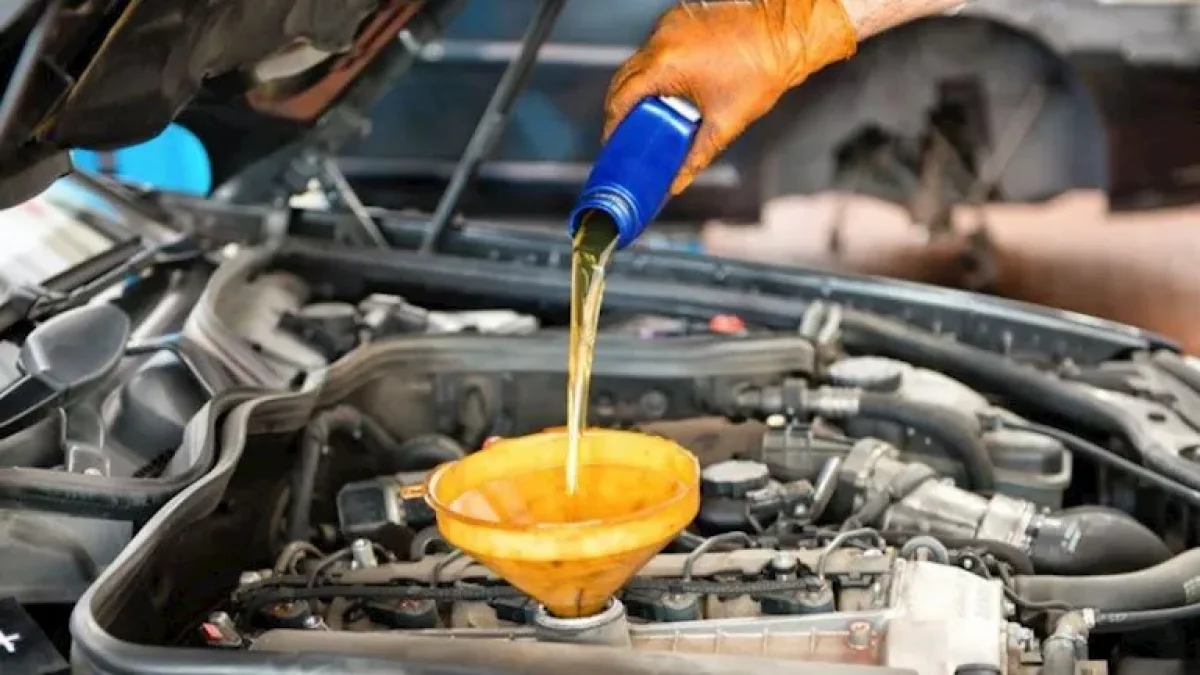
Engine Oil Off-Spec: Does It Really Damage Your Engine?
Using engine oil that doesn't match manufacturer recommendations isn't automatically harmful if it meets the required viscosity and performance specs. The real danger starts when oil properties don't align with engine needs, especially in modern turbocharged engines. Matching the specifications in your owner's manual is what protects your engine from wear and failure.
Does using engine oil that the manufacturer doesn't recommend mean certain engine failure? The short answer is no, as long as the oil meets the required technical specifications like viscosity grade 5W-30 and performance certifications. Real danger begins when the oil's properties differ from what your engine actually needs, not when the bottle carries a different brand name.
Viscosity and Specs Matter More Than Brand Names
The numbers printed on the bottle tell the real story. Viscosity grades like 0W-20 or 5W-40 determine how the oil flows at different temperatures. They don't measure quality so much as suitability for a specific engine design. Many drivers assume any oil from a famous brand will provide adequate protection, yet the truth is that matching the specifications in your owner's manual is what really counts.
Oil that doesn't meet the required specs might not offer sufficient protection for moving parts. Modern engines equipped with turbochargers or variable valve timing systems rely heavily on oil pressure and flow characteristics to keep those sensitive components operating efficiently. Choosing oil thicker than recommended can slow its circulation during cold starts, increasing friction and wear.
When Does the Wrong Oil Become a Real Problem?
Prolonged use of oil with lower viscosity than required can lead to serious trouble. Under heavy loads or high temperatures, that oil may fail to maintain a protective film between components, accelerating wear and leading to costly engine damage.
The right oil depends on engine design and operating conditions. Some modern powertrains require oils with specific formulations to protect exhaust aftertreatment systems, and using an unsuitable product could affect those systems over time, not just the engine's performance.
The golden rule is straightforward: as long as the oil matches the specifications in your vehicle's manual regarding viscosity and certifications, you can use any trustworthy brand. But simply switching to a different brand that doesn't meet those specs poses a genuine risk to your engine's health, efficiency, and fuel economy.
Frequently Asked Questions
4 questions answered
Related News
View All News
3 Valves That Protect Your Gas-Converted Car From Leaks and Overpressure
Specialists at Gastec explained that the natural gas conversion system relies on 3 main valves. The gas solenoid prevents flow when the engine stops, the filling valve secures refueling and…

NVIDIA Launches Halos SAFE Framework to Test Autonomous Driving Safety Before Trust
NVIDIA announced on October 21, 2026, the Halos SAFE framework to evaluate autonomous driving safety by combining virtual simulation, real-world testing, and fleet data analysis. The framework aims to produce…

Rivian Acquires Third Dimension AI to Accelerate Self-Driving Development
Rivian has acquired UK-based Third Dimension AI, a startup that uses AI to turn images and video into controllable 3D environments. The technology allows engineers to simulate rare and dangerous…

Agentic AI Set to Dominate Automotive Engineering: 68% of Carmakers Target Expansion Within 3 Years
A Capgemini Research Institute report reveals that 68% of automotive companies aim to increase reliance on agentic AI for non-core engineering activities to 68% within two to three years, up…

68% of Carmakers Adopt Agentic AI in Vehicle Development, Capgemini Report Finds
A Capgemini Research Institute report found that 68% of automotive companies are using or testing agentic AI in product development, with 33% in active use and 35% in pilot phases.…

