

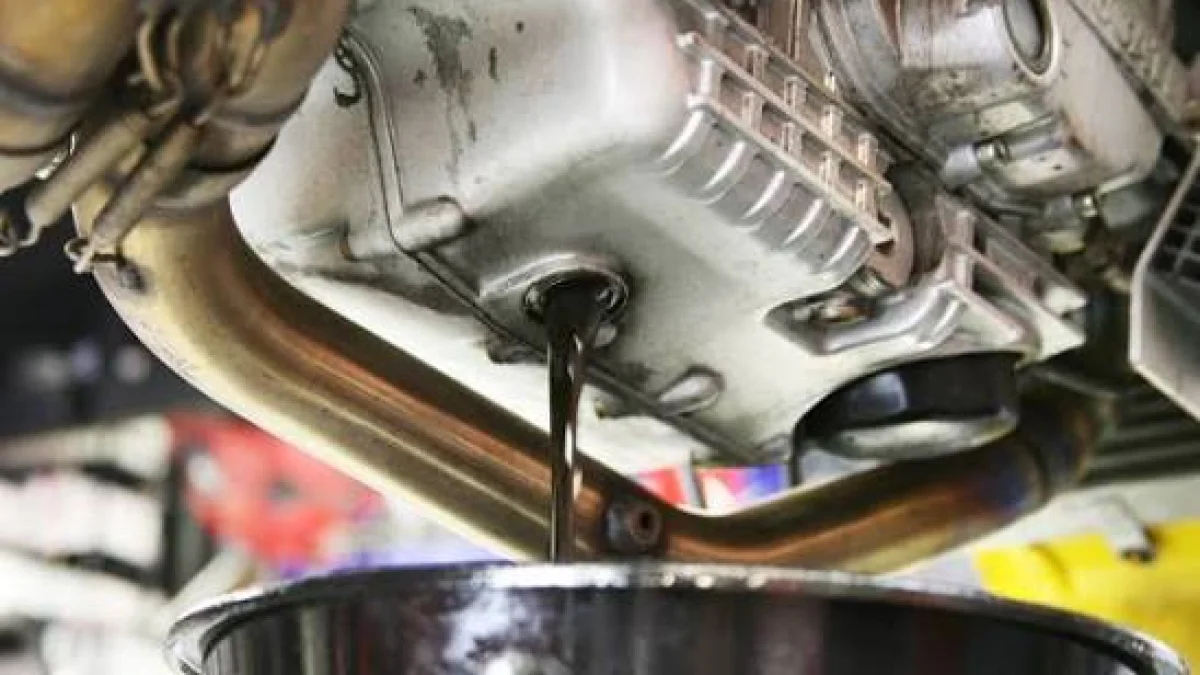
Engine Oil Turning Black: Is It a Sign of Impending Disaster? Expert Reveals the Full Truth
Engine oil naturally turns from golden to black as it captures soot, carbon deposits, and microscopic metal particles during operation — this is not a sign of oil failure. Automotive maintenance expert Haitham Farag says color is an unreliable indicator of oil condition; instead, drivers should follow mileage intervals and manufacturer recommendations. Dark oil proves the lubricant is doing its cleaning job, but continuing to use oil past its service life can lead to severe engine damage and costly repairs.
The moment engine oil shifts from its golden amber hue to a deep black, many drivers start panicking. Is this a sign of contamination? Does it indicate imminent mechanical failure? An automotive maintenance expert says the reality is far less dramatic.
Why Engine Oil Changes Color
Fresh engine oil begins its life with a clear, golden appearance, but that changes quickly once the engine fires up. Haitham Farag, a specialized automotive maintenance engineer, explains that the color transformation is a natural consequence of the oil's duties inside the powerplant.
Oil doesn't just lubricate moving parts like pistons, valves, and the crankshaft. It also acts as a cleaning agent, capturing dirt, carbon deposits from combustion. Microscopic metal particles generated by friction. These contaminants stay suspended in the oil — that's exactly what darkens its color over time.
Judging oil quality by its shade alone is a mistake many car owners make.
When Does Black Oil Become a Real Concern
The oil's color alone provides no reliable indication of its health or remaining lifespan. What matters more is the distance traveled, operating conditions, and whether the vehicle has followed the manufacturer's recommended service intervals.
Eventually, through repeated heat cycles and sustained use, oil loses its viscosity and its ability to shield engine components. This chemical breakdown — not the dark color — is the real warning sign drivers should monitor.
Following the Service Schedule Is the Only Safe Approach
Extending oil changes beyond the recommended interval invites serious trouble. The oil becomes less effective at reducing friction, causing elevated temperatures and accelerated wear on critical engine parts.
Neglecting scheduled maintenance can lead to expensive repairs down the line. The expert stresses that sticking to the service schedule in your owner's manual — while using the exact oil grade the automaker specifies — is the only reliable strategy for protecting your engine.
Dark oil is proof that your engine is being cleaned. Running it past its service life is where the real damage begins.
Frequently Asked Questions
3 questions answered
Related News
View All News
3 Valves That Protect Your Gas-Converted Car From Leaks and Overpressure
Specialists at Gastec explained that the natural gas conversion system relies on 3 main valves. The gas solenoid prevents flow when the engine stops, the filling valve secures refueling and…

NVIDIA Launches Halos SAFE Framework to Test Autonomous Driving Safety Before Trust
NVIDIA announced on October 21, 2026, the Halos SAFE framework to evaluate autonomous driving safety by combining virtual simulation, real-world testing, and fleet data analysis. The framework aims to produce…

Rivian Acquires Third Dimension AI to Accelerate Self-Driving Development
Rivian has acquired UK-based Third Dimension AI, a startup that uses AI to turn images and video into controllable 3D environments. The technology allows engineers to simulate rare and dangerous…

Agentic AI Set to Dominate Automotive Engineering: 68% of Carmakers Target Expansion Within 3 Years
A Capgemini Research Institute report reveals that 68% of automotive companies aim to increase reliance on agentic AI for non-core engineering activities to 68% within two to three years, up…

68% of Carmakers Adopt Agentic AI in Vehicle Development, Capgemini Report Finds
A Capgemini Research Institute report found that 68% of automotive companies are using or testing agentic AI in product development, with 33% in active use and 35% in pilot phases.…

