

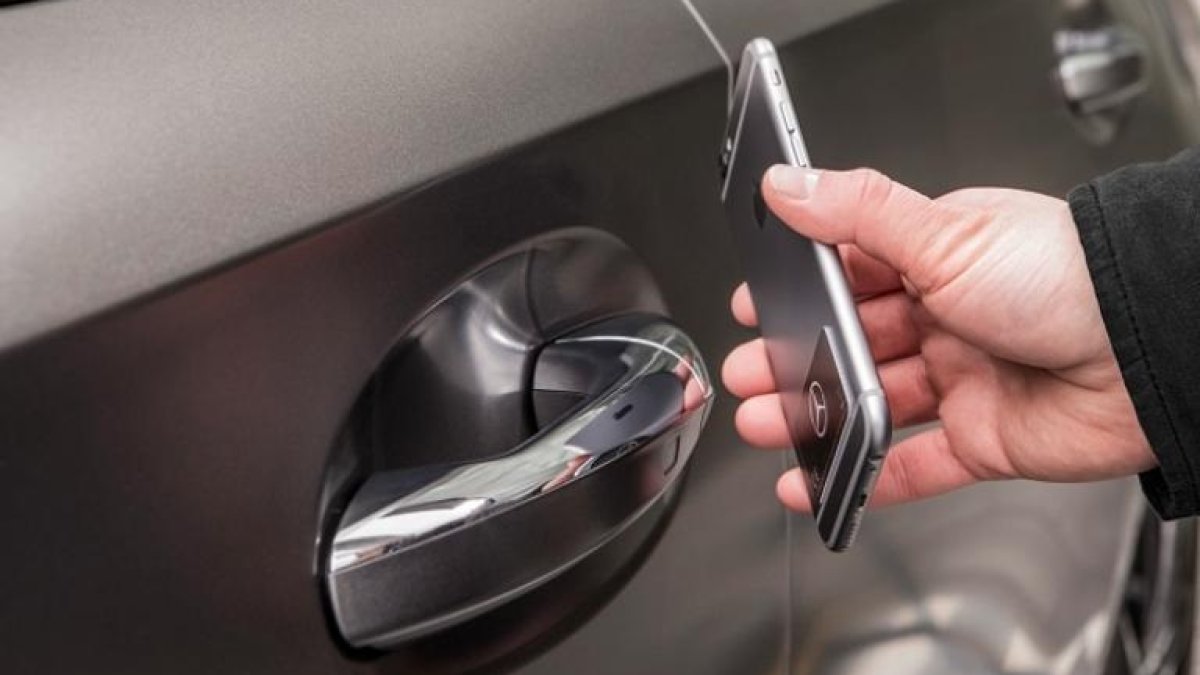
Digital Car Keys Move Closer to Replacing Traditional Vehicle Keys
Just a few years ago, losing a car key could ruin an entire day. Today, a smartphone can unlock doors, start a vehicle, and even share digital access with other users through a single tap.
The concept of the digital car key is no longer limited to prototype vehicles. It has evolved into a real-world automotive technology that is rapidly expanding across the premium and smart vehicle segments. Automakers including BMW, Mercedes-Benz, Hyundai, Tesla, and Kia have already begun using smartphones and smartwatches as alternatives to conventional car keys.
How Does a Digital Key Work?
The system connects a vehicle to a smartphone using technologies such as NFC, Bluetooth, or Ultra Wideband, allowing the vehicle to automatically recognize the authorized device as it approaches.
Once the user reaches the vehicle, the doors can unlock automatically, while the engine can be started without removing the phone from a pocket or bag.
Some systems also allow owners to share a digital key with family members or friends through mobile applications, while setting specific permissions such as driving speed limits or usage schedules.
Why Are Automakers Moving Away from Traditional Keys?
Car manufacturers view digital keys as a more seamless and convenient user experience, particularly as modern vehicles continue to evolve into connected platforms linked to internet services, mobile applications, and cloud-based technologies.
The technology also helps reduce the risk of losing or forgetting traditional keys while simplifying the management of shared vehicles and modern rental services.
Is the Technology Truly Secure?
Security remains one of the biggest points of debate surrounding digital vehicle access systems. While manufacturers emphasize the use of highly advanced encryption technologies, some cybersecurity experts caution that any digitally connected system could theoretically face hacking attempts or data theft risks.
However, modern systems employ multiple layers of protection, including dynamic encryption, two-factor authentication, and Ultra Wideband technology, which helps reduce the risk of relay attacks that have occasionally been used in vehicle theft cases.
What Happens If the Phone Battery Dies?
This remains one of the most frequently asked questions about digital car keys. To address the concern, most manufacturers provide backup solutions, including the use of a traditional key or NFC functionality that can continue operating even when a smartphone battery is partially depleted on certain modern devices.
Related News
View All News
3 Valves That Protect Your Gas-Converted Car From Leaks and Overpressure
Specialists at Gastec explained that the natural gas conversion system relies on 3 main valves. The gas solenoid prevents flow when the engine stops, the filling valve secures refueling and…

NVIDIA Launches Halos SAFE Framework to Test Autonomous Driving Safety Before Trust
NVIDIA announced on October 21, 2026, the Halos SAFE framework to evaluate autonomous driving safety by combining virtual simulation, real-world testing, and fleet data analysis. The framework aims to produce…

Rivian Acquires Third Dimension AI to Accelerate Self-Driving Development
Rivian has acquired UK-based Third Dimension AI, a startup that uses AI to turn images and video into controllable 3D environments. The technology allows engineers to simulate rare and dangerous…

Agentic AI Set to Dominate Automotive Engineering: 68% of Carmakers Target Expansion Within 3 Years
A Capgemini Research Institute report reveals that 68% of automotive companies aim to increase reliance on agentic AI for non-core engineering activities to 68% within two to three years, up…

68% of Carmakers Adopt Agentic AI in Vehicle Development, Capgemini Report Finds
A Capgemini Research Institute report found that 68% of automotive companies are using or testing agentic AI in product development, with 33% in active use and 35% in pilot phases.…

