

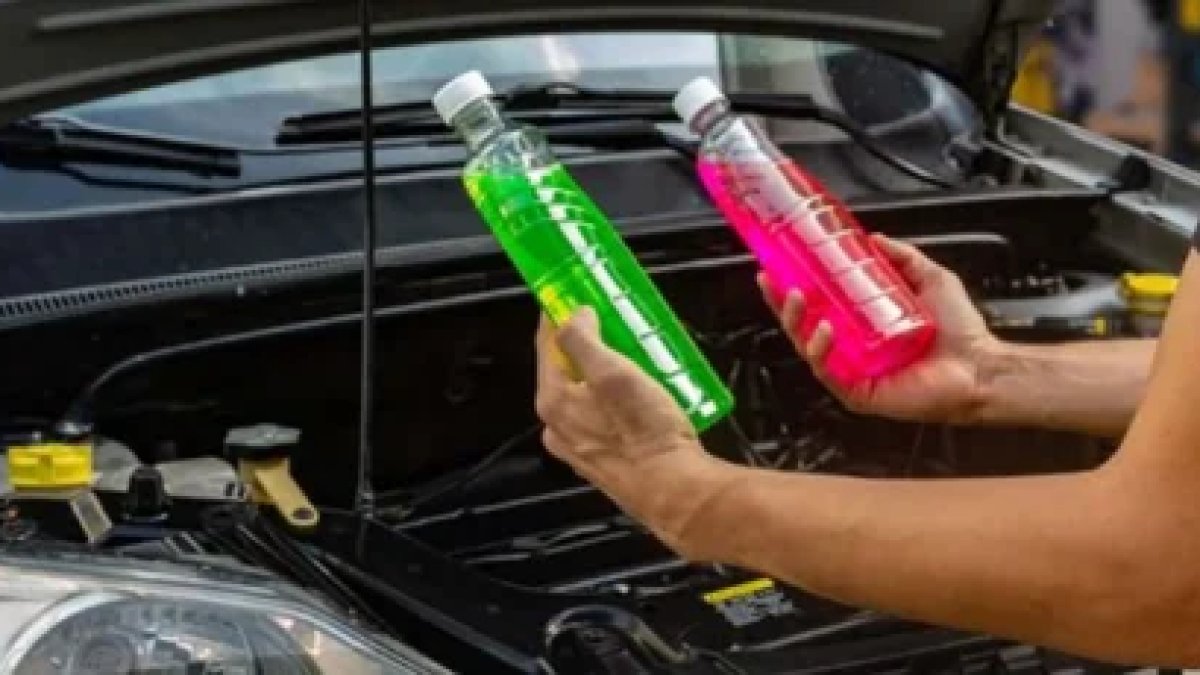
Coolant Color Guide: Green vs Red – Which Is Best for Your Engine?
There is an ongoing debate among car owners about which coolant is better: green or red. Choosing the right coolant is essential to prevent engine damage. The color difference is not just cosmetic—it reflects a distinct chemical composition that affects performance and longevity.
Why Coolant Matters
Coolant, also known as antifreeze, regulates engine temperature, preventing overheating in hot weather and freezing in cold conditions. It protects internal components from corrosion. Coolant is typically made from ethylene glycol or propylene glycol, combined with anti-corrosion additives and thermal stabilizers.
The Danger of Using Plain Water
Many drivers use plain water as a substitute, but this is a poor choice. Tap water contains high levels of minerals and impurities that accumulate in the radiator, leading to rust and corrosion over time. Unlike colored coolants, plain water boils and freezes quickly, making it unsuitable for extreme conditions.
Green Coolant
Green coolant consists of water and chemical compounds that cool the engine efficiently without reacting with metal components. It is free of salts and impurities, preventing rust, and has a boiling point of 120°C, making it ideal for high temperatures. It is commonly used in older vehicles, but its lifespan is relatively short.
Red Coolant
Red coolant shares the same purity as green coolant but adds antifreeze properties and lacks silicates, which can cause corrosion. It is based on propylene glycol, making it more suitable for modern or large vehicles, as well as aluminum radiators, due to its ability to protect sensitive metal parts. Its lifespan is longer than that of green coolant.
Blue Coolant
Blue coolant contains ethylene glycol and is recommended for copper radiators or any metal other than aluminum. It should be replaced every 24 months or 50,000 km.
When to Replace Coolant
Red coolant should be replaced every 4 to 5 years, green coolant every 2 to 3 years, and blue coolant every 24 months or 50,000 km.
Can You Mix Coolant Colors?
Mixing different coolant colors is not recommended, as the chemical reaction can damage engine components.
Related News
View All News
3 Valves That Protect Your Gas-Converted Car From Leaks and Overpressure
Specialists at Gastec explained that the natural gas conversion system relies on 3 main valves. The gas solenoid prevents flow when the engine stops, the filling valve secures refueling and…

NVIDIA Launches Halos SAFE Framework to Test Autonomous Driving Safety Before Trust
NVIDIA announced on October 21, 2026, the Halos SAFE framework to evaluate autonomous driving safety by combining virtual simulation, real-world testing, and fleet data analysis. The framework aims to produce…

Rivian Acquires Third Dimension AI to Accelerate Self-Driving Development
Rivian has acquired UK-based Third Dimension AI, a startup that uses AI to turn images and video into controllable 3D environments. The technology allows engineers to simulate rare and dangerous…

Agentic AI Set to Dominate Automotive Engineering: 68% of Carmakers Target Expansion Within 3 Years
A Capgemini Research Institute report reveals that 68% of automotive companies aim to increase reliance on agentic AI for non-core engineering activities to 68% within two to three years, up…

68% of Carmakers Adopt Agentic AI in Vehicle Development, Capgemini Report Finds
A Capgemini Research Institute report found that 68% of automotive companies are using or testing agentic AI in product development, with 33% in active use and 35% in pilot phases.…

