

Not All Parts Wear Out: The Car Components That Last a Lifetime
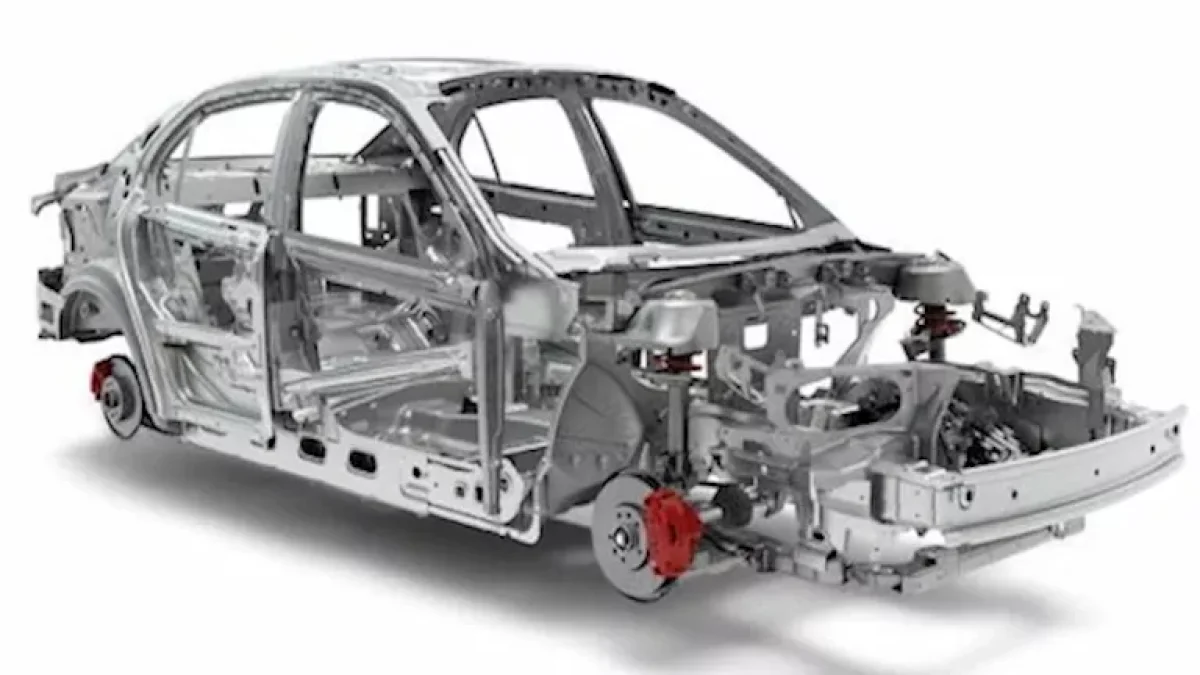
Some car components are engineered to last the entire vehicle lifespan without routine replacement. The chassis, internal safety cage, and steering column are the most notable fixed parts that never appear on a service schedule. These components only suffer damage in severe accidents or major structural deformations. Inspecting them is critical when buying a used car because repair costs can exceed the vehicle's value.
Car maintenance isn't an endless checklist of parts to replace. Some components in your vehicle are built to outlast you. The chassis, the internal steel body known as the safety cage, and the steering column — these specific parts typically never appear on a routine service schedule. They can last the entire lifespan of the car.
Chassis: The Foundation That Never Moves
Did you know the chassis is the structural base that connects the engine, suspension system, and exterior body in vehicles with a separate frame? Exactly. This core component is engineered to handle massive loads over decades without requiring routine maintenance or replacement. Accidents change the equation, though. When severe structural deformations occur after violent collisions, repair or replacement can become unavoidable — but that's a rare exception, not standard practice.
The Safety Cage: Your Shield in a Crash
The vehicle's internal metal structure — what specialists call the safety cage — is the primary component protecting occupants during collisions. This part never appears on a routine maintenance schedule. It's manufactured as a fixed, integral part of the vehicle's architecture. In some accidents, specific sections can be repaired or straightened. But extensive damage may require replacing structural components or writing off the vehicle entirely. Here's the real question: do you know the condition of your car's safety cage before buying it?
Steering Column: Built to Endure Normal Conditions
The steering column is a fundamental part of the steering system. It's designed to operate for extended periods without replacement under normal driving conditions. That doesn't mean it's immune to faults. But it's certainly not a consumable part you swap out every few thousand kilometers. Ask any experienced mechanic — they'll confirm the steering column lives with the car, not with the tires or fluids.
Why This Matters for Car Owners
Understanding the difference between fixed components and consumable parts can save you thousands of pounds. Used car buyers benefit most from this knowledge. When inspecting a vehicle before purchase, verify the condition of the chassis and internal body structure. If these two are damaged, repair costs can exceed the car's value. Used car prices in Egypt are directly affected by the condition of these core components. A vehicle with a sound chassis is worth far more than one with structural deformation.
The irony is that many drivers worry about oil and filter changes while ignoring structural inspections on a used car. Consumable parts are easy to replace. The chassis, safety cage, and steering column — these are either sound or they're not. No middle ground. If you're shopping for a pre-owned vehicle, inspect these components first.
Frequently Asked Questions
3 questions answered
Related News
View All News
3 Valves That Protect Your Gas-Converted Car From Leaks and Overpressure
Specialists at Gastec explained that the natural gas conversion system relies on 3 main valves. The gas solenoid prevents flow when the engine stops, the filling valve secures refueling and…

NVIDIA Launches Halos SAFE Framework to Test Autonomous Driving Safety Before Trust
NVIDIA announced on October 21, 2026, the Halos SAFE framework to evaluate autonomous driving safety by combining virtual simulation, real-world testing, and fleet data analysis. The framework aims to produce…

Rivian Acquires Third Dimension AI to Accelerate Self-Driving Development
Rivian has acquired UK-based Third Dimension AI, a startup that uses AI to turn images and video into controllable 3D environments. The technology allows engineers to simulate rare and dangerous…

Agentic AI Set to Dominate Automotive Engineering: 68% of Carmakers Target Expansion Within 3 Years
A Capgemini Research Institute report reveals that 68% of automotive companies aim to increase reliance on agentic AI for non-core engineering activities to 68% within two to three years, up…

68% of Carmakers Adopt Agentic AI in Vehicle Development, Capgemini Report Finds
A Capgemini Research Institute report found that 68% of automotive companies are using or testing agentic AI in product development, with 33% in active use and 35% in pilot phases.…

