

Cairo Governorate Saves Over 1 Million Liters of Fuel Annually with Smart Fuel Station
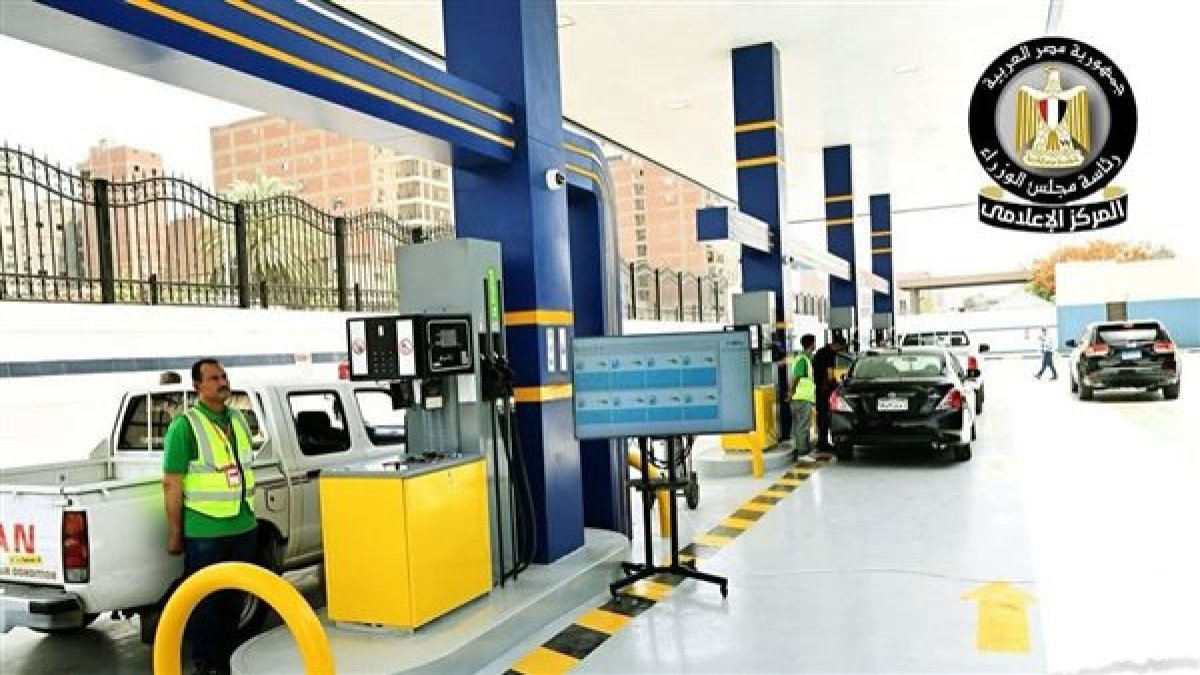
Cairo Governorate has achieved a significant breakthrough in managing its vehicle fuel system by operating a digitally-controlled smart fuel station. The new station has resulted in monthly savings of nearly 2 million Egyptian pounds, with fuel consumption reduced by up to 62%, while total annual savings have surpassed one million liters of fuel.
An Advanced Model for Smart Petroleum Resource Management
According to a statement from the Egyptian Cabinet's Media Center, the smart fuel station represents a sophisticated model for the intelligent management of petroleum resources. Traditional operating methods have been replaced with an integrated electronic system that ensures precise monitoring of fueling operations, reduces waste, and enforces strict control over consumption.
Station Details and Strategic Location
The station was implemented by the Arab Organization for Industrialization (AOI) on a 3,017 square meter area in the Al-Zawya Al-Hamra district. It serves 678 vehicles belonging to the Governorate's General Office and the Cairo Cleaning and Beautification Authority, in addition to meeting the needs of the eastern, northern, and western district areas.
Impressive Results in Fuel and Oil Savings
The new system has yielded impressive results, achieving monthly savings of approximately 95,600 liters of fuel, equivalent to a 62% reduction in previous consumption rates. This translates into financial savings of nearly 2 million pounds per month, while total annual savings have exceeded one million liters of fuel. The station also recorded a 44.7% reduction in vehicle oil consumption.
How the Smart System Works
The station's smart system relies on installing a special electronic ring on the fuel tank opening of vehicles included in the system. This technology allows for highly accurate recording of fuel dispensed and consumed, while preventing the extraction or tampering of petroleum products, providing real-time monitoring of fuel movement.
Advanced Infrastructure and Equipment
The station features four underground tanks with a total capacity of 160,000 liters, along with five fueling pumps equipped with twenty dispensing nozzles, ensuring fast and efficient service for the beneficiary vehicle fleet. It also includes a fully integrated two-story service building spanning over 1,000 square meters, housing technical workshops and a central control room for automatically monitoring consumption rates and matching dispensed quantities with actual tank inventory. The station is further equipped with an advanced CCTV system to enhance security and surveillance levels, as well as state-of-the-art safety and protection equipment including fire alarm and suppression systems, and an emergency backup generator.
Related News
View All News
3 Valves That Protect Your Gas-Converted Car From Leaks and Overpressure
Specialists at Gastec explained that the natural gas conversion system relies on 3 main valves. The gas solenoid prevents flow when the engine stops, the filling valve secures refueling and…

NVIDIA Launches Halos SAFE Framework to Test Autonomous Driving Safety Before Trust
NVIDIA announced on October 21, 2026, the Halos SAFE framework to evaluate autonomous driving safety by combining virtual simulation, real-world testing, and fleet data analysis. The framework aims to produce…

Rivian Acquires Third Dimension AI to Accelerate Self-Driving Development
Rivian has acquired UK-based Third Dimension AI, a startup that uses AI to turn images and video into controllable 3D environments. The technology allows engineers to simulate rare and dangerous…

Agentic AI Set to Dominate Automotive Engineering: 68% of Carmakers Target Expansion Within 3 Years
A Capgemini Research Institute report reveals that 68% of automotive companies aim to increase reliance on agentic AI for non-core engineering activities to 68% within two to three years, up…

68% of Carmakers Adopt Agentic AI in Vehicle Development, Capgemini Report Finds
A Capgemini Research Institute report found that 68% of automotive companies are using or testing agentic AI in product development, with 33% in active use and 35% in pilot phases.…

