

Bosch Introduces New Technology to Reduce Gasoline Engine Emissions During Cold Start
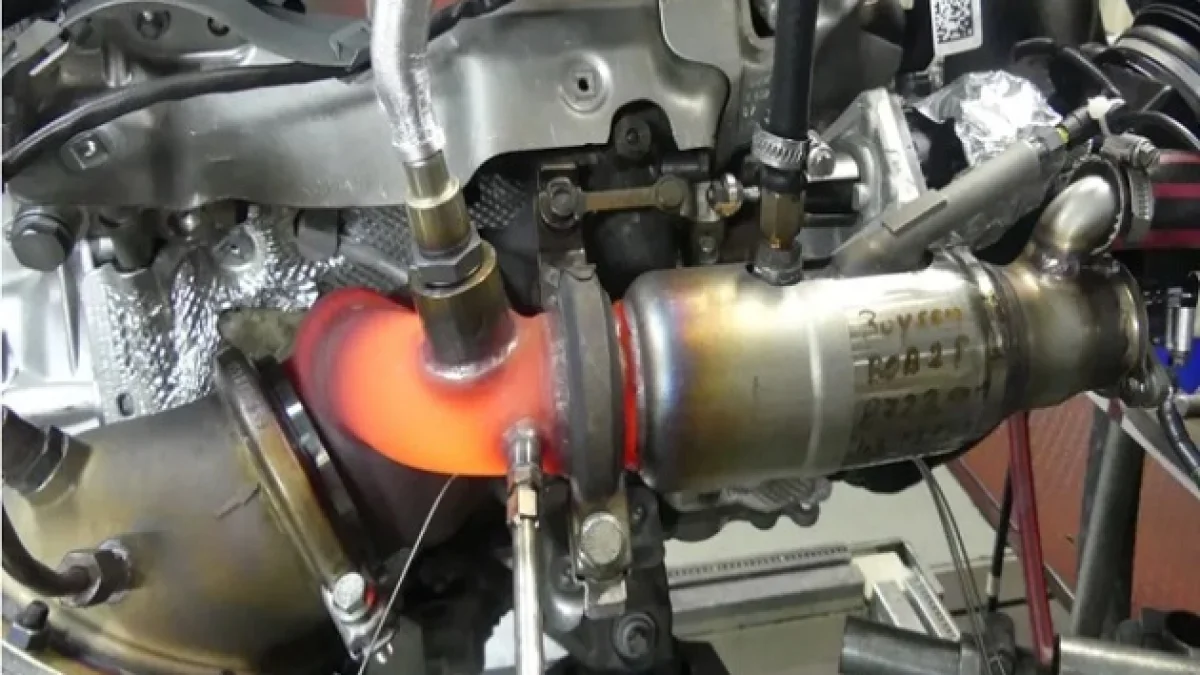
Bosch has unveiled an innovative technology designed to reduce emissions from gasoline vehicles, particularly during the critical moments after engine startup. This period, known as cold start, sees the highest emission levels before the exhaust system reaches its optimal operating temperature. The concept relies on a gas-powered heater placed within the exhaust system, which rapidly releases thermal energy near the catalytic converter. This allows the converter to reach its ideal operating temperature more quickly, significantly cutting down pollutants generated during cold starts.
The Cold Start Problem and Its Environmental Impact
Despite major advancements in modern gasoline engines, the cold start phase remains one of the most polluting periods of vehicle operation. The catalytic converter, responsible for treating harmful gases from the engine, requires high temperatures to function efficiently. During the first seconds or minutes after ignition, the converter is less effective at purifying exhaust gases, allowing a higher proportion of pollutants to escape into the atmosphere. This challenge has driven Bosch to develop a solution that specifically addresses this gap in emission control.
How Bosch's New Technology Works
Bosch's new technology works by rapidly heating the catalytic converter using a small flame inside the exhaust system, rather than relying solely on engine heat to raise the system's temperature. This gas heater delivers direct thermal energy to the exhaust stream before the catalytic converter, enabling it to activate faster and reducing the duration of high-emission operation. It is important to note that this technology is not about cleaning the engine with flame or removing carbon deposits from combustion chambers. Instead, it focuses on accelerating the catalytic converter's performance to purify exhaust gases before they are released into the air.
Importance Amid Stricter Emission Standards
The importance of this technology grows as global emission standards become increasingly stringent, especially in major cities suffering from vehicle-related air pollution. Plug-in hybrid vehicles could particularly benefit, as their gasoline engines often run for short, intermittent periods, making rapid catalytic converter heating even more critical. Bosch presents this system as an effective alternative to some electric heating solutions, maintaining fuel efficiency while reducing harmful emissions. This innovation offers a transitional solution for internal combustion engines before the full electrification era, helping automakers meet regulatory requirements without immediately abandoning gasoline powertrains.
Related News
View All News
3 Valves That Protect Your Gas-Converted Car From Leaks and Overpressure
Specialists at Gastec explained that the natural gas conversion system relies on 3 main valves. The gas solenoid prevents flow when the engine stops, the filling valve secures refueling and…

NVIDIA Launches Halos SAFE Framework to Test Autonomous Driving Safety Before Trust
NVIDIA announced on October 21, 2026, the Halos SAFE framework to evaluate autonomous driving safety by combining virtual simulation, real-world testing, and fleet data analysis. The framework aims to produce…

Rivian Acquires Third Dimension AI to Accelerate Self-Driving Development
Rivian has acquired UK-based Third Dimension AI, a startup that uses AI to turn images and video into controllable 3D environments. The technology allows engineers to simulate rare and dangerous…

Agentic AI Set to Dominate Automotive Engineering: 68% of Carmakers Target Expansion Within 3 Years
A Capgemini Research Institute report reveals that 68% of automotive companies aim to increase reliance on agentic AI for non-core engineering activities to 68% within two to three years, up…

68% of Carmakers Adopt Agentic AI in Vehicle Development, Capgemini Report Finds
A Capgemini Research Institute report found that 68% of automotive companies are using or testing agentic AI in product development, with 33% in active use and 35% in pilot phases.…

