

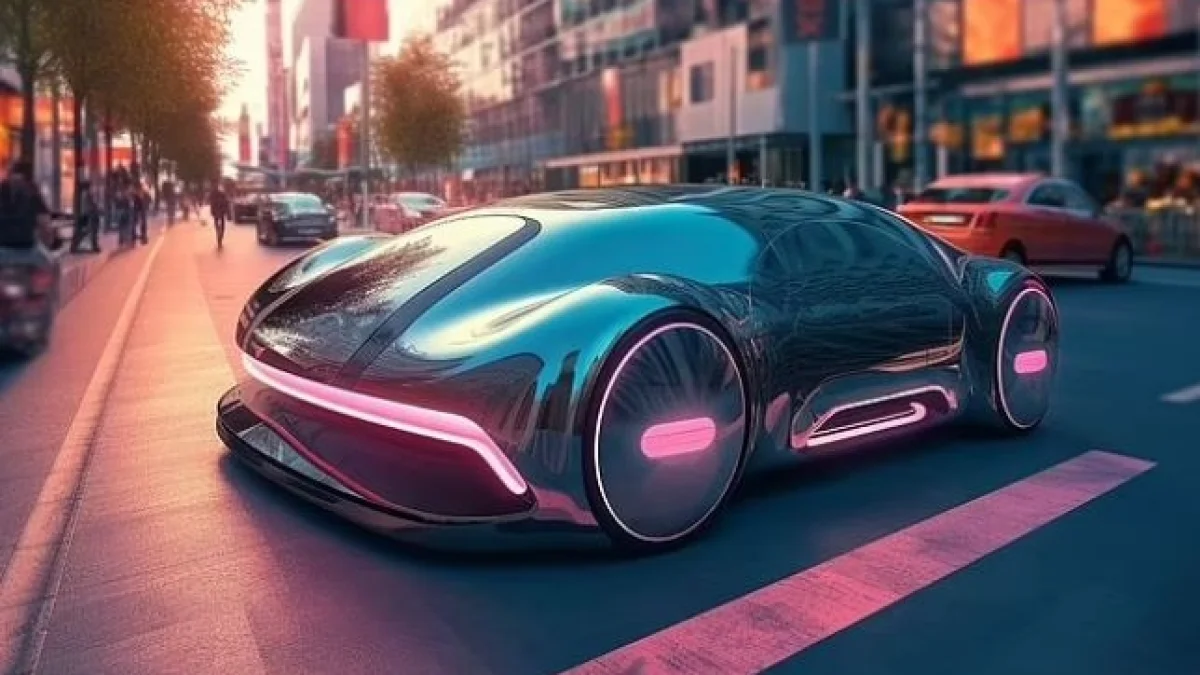
AI in Cars: How It's Reshaping the Future of Driving
Artificial intelligence has become an integral part of the modern driving experience, even if drivers don't always notice it. Smart systems are silently controlling countless details inside and outside the cabin. Behind the tech curtain, complex algorithms process enormous data sets in milliseconds to keep occupants safe.
Safety Systems That Act Before a Crash
Advanced driver-assistance features powered by AI now include automatic emergency braking, blind-spot monitoring, lane-departure warnings, traffic sign recognition, and rear cross-traffic alerts. These systems have moved beyond luxury cars and are now spreading across mid-priced models thanks to falling sensor costs. Adaptive cruise control maintains a safe distance from the vehicle ahead, adjusting speed automatically with traffic flow. The evolution of these technologies signals a major shift in automotive safety.
How Cars Perceive the World Around Them
The journey of intelligent perception begins with a suite of cameras, radars. Sensors building a continuous picture of the surroundings. Systems can identify other vehicles, pedestrians, bicycles, lane markings, traffic signs. Even stationary obstacles on the road. Algorithms go beyond mere object detection, analyzing the type, direction, and speed of movement, then estimating the likelihood of it entering the vehicle's path in the next few seconds. Based on that analysis, the car can warn the driver, slow down, brake automatically, or make subtle steering corrections to prevent leaving the lane.
Performance improves with better sensors, software. Mapping data, but heavy rain, fog, dust, faded road markings, or a faulty camera can degrade accuracy. In congested streets, the technical challenge is even greater. The gap between marketing promises and real-world behavior remains wide, particularly in chaotic traffic environments.
The Road to Full Autonomy
Despite rapid progress, a vehicle capable of making every decision without human input is still far from practical reality in most markets. Current technologies serve an assistive role rather than replacing the driver entirely. Advanced driver-assistance systems transform the car from a machine that follows orders into an intelligent partner that participates in driving decisions. Automakers are racing toward this goal, investing heavily in deep-learning algorithms and enhanced environmental understanding.
What does this mean practically? The future holds exciting prospects, with vehicles learning from driver behavior, predicting failures. Updating their software over the air, much like smartphones. These developments will redefine the relationship between humans and machines. Will open the door to safer, more efficient driving experiences as time goes by.
Related News
View All News
3 Valves That Protect Your Gas-Converted Car From Leaks and Overpressure
Specialists at Gastec explained that the natural gas conversion system relies on 3 main valves. The gas solenoid prevents flow when the engine stops, the filling valve secures refueling and…

NVIDIA Launches Halos SAFE Framework to Test Autonomous Driving Safety Before Trust
NVIDIA announced on October 21, 2026, the Halos SAFE framework to evaluate autonomous driving safety by combining virtual simulation, real-world testing, and fleet data analysis. The framework aims to produce…

Rivian Acquires Third Dimension AI to Accelerate Self-Driving Development
Rivian has acquired UK-based Third Dimension AI, a startup that uses AI to turn images and video into controllable 3D environments. The technology allows engineers to simulate rare and dangerous…

Agentic AI Set to Dominate Automotive Engineering: 68% of Carmakers Target Expansion Within 3 Years
A Capgemini Research Institute report reveals that 68% of automotive companies aim to increase reliance on agentic AI for non-core engineering activities to 68% within two to three years, up…

68% of Carmakers Adopt Agentic AI in Vehicle Development, Capgemini Report Finds
A Capgemini Research Institute report found that 68% of automotive companies are using or testing agentic AI in product development, with 33% in active use and 35% in pilot phases.…

