

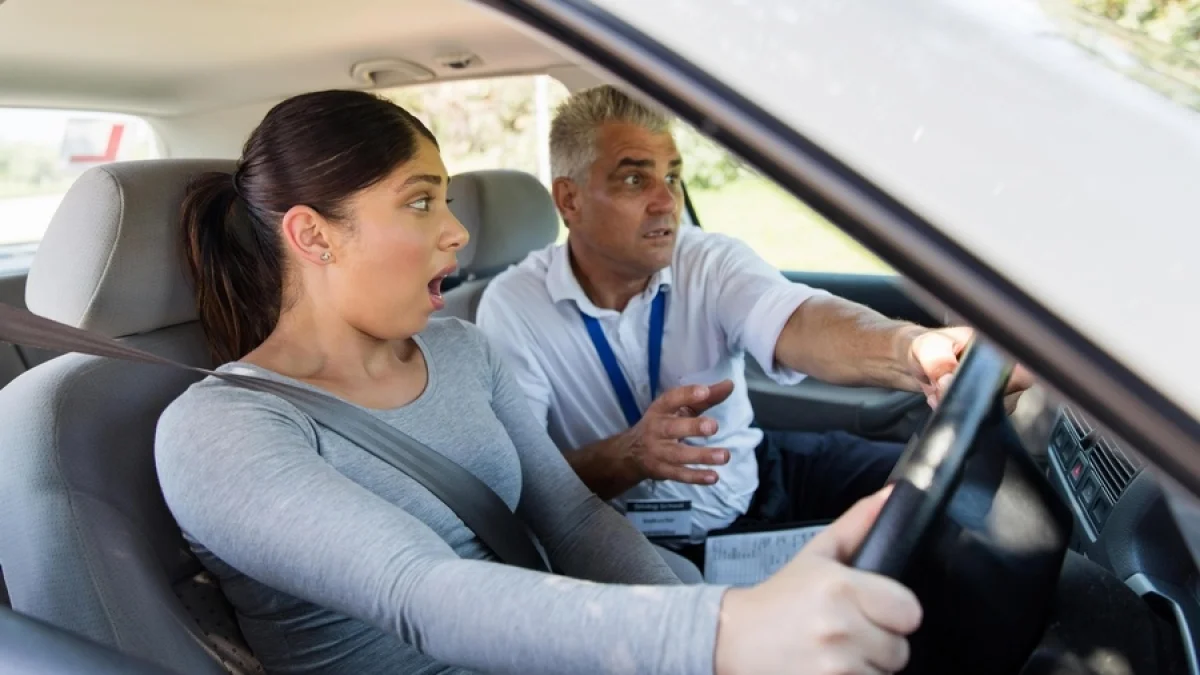
AI Solves the Hardest Problem for Women: Parking Made Easier
Artificial intelligence now helps drivers solve the problem of parking in tight spaces through advanced systems combining cameras and sensors. These systems offer steering assistance and full control over acceleration and braking during parking maneuvers. NHTSA confirms these technologies don't make cars fully self-driving, keeping responsibility on the driver. A new study proposed an advanced framework for automated parking in complex environments.
Does parallel parking in a tight spot still make your heart race? Artificial intelligence is now offering a real solution, as modern cars have become capable of seeing surrounding space, analyzing it with precision, and executing the entire parking maneuver without much driver input — a breakthrough that matters to every driver who dreads this daily challenge.
How Does the Car See What the Eye Cannot?
Advanced parking systems rely on a combination of cameras and sensors that monitor vehicles, obstacles, and parking space edges, then use this data to determine the optimal path. Some systems only assist with steering input, while more sophisticated ones take full control of acceleration, brakes, and steering during the parking process, ending years of frustration in crowded parking lots.
Official Support from Traffic Safety Authorities
The National Highway Traffic Safety Administration (NHTSA) confirmed that assistive technologies for reversing and parking now include rear cameras, cross-traffic alert behind the vehicle, and automatic braking when a collision risk is detected. These systems are no longer luxury items but essential safety features in most new cars arriving at global and Middle Eastern markets in recent years.
From Automatic Parking to Full Environment Understanding
The new wave of technology doesn't just move the steering wheel automatically; the latest systems analyze the surrounding environment and choose the appropriate parking strategy even in complex spaces with moving obstacles. A 2026 study published in Robotics and Autonomous Systems proposed an advanced automated parking framework that combines awareness of surrounding moving objects, behavior prediction, and planning multiple strategies to find a safer, more efficient path in difficult environments.
Important Advice: Don't Let the Car Think Alone
Despite all this major technical progress, having smart parking doesn't mean the driver can ignore what's happening around the vehicle, and NHTSA stresses that current assistive technologies don't make the car fully self-driving, keeping control and attention responsibility firmly on the driver no matter how advanced the system becomes. More importantly, a 2025 study on automated parking assistance found that driver understanding of how the system works directly affects their ability to use it safely, and practical training remains essential to avoid errors or misjudging the limits of these intelligent technologies.
Parking may indeed become less stressful in the coming years, but artificial intelligence here doesn't eliminate driver skill or the need for training — it provides an extra pair of eyes and a helping electronic hand when space gets tight and pressure builds up in parking lots.
Frequently Asked Questions
3 questions answered
Related News
View All News
3 Valves That Protect Your Gas-Converted Car From Leaks and Overpressure
Specialists at Gastec explained that the natural gas conversion system relies on 3 main valves. The gas solenoid prevents flow when the engine stops, the filling valve secures refueling and…

NVIDIA Launches Halos SAFE Framework to Test Autonomous Driving Safety Before Trust
NVIDIA announced on October 21, 2026, the Halos SAFE framework to evaluate autonomous driving safety by combining virtual simulation, real-world testing, and fleet data analysis. The framework aims to produce…

Rivian Acquires Third Dimension AI to Accelerate Self-Driving Development
Rivian has acquired UK-based Third Dimension AI, a startup that uses AI to turn images and video into controllable 3D environments. The technology allows engineers to simulate rare and dangerous…

Agentic AI Set to Dominate Automotive Engineering: 68% of Carmakers Target Expansion Within 3 Years
A Capgemini Research Institute report reveals that 68% of automotive companies aim to increase reliance on agentic AI for non-core engineering activities to 68% within two to three years, up…

68% of Carmakers Adopt Agentic AI in Vehicle Development, Capgemini Report Finds
A Capgemini Research Institute report found that 68% of automotive companies are using or testing agentic AI in product development, with 33% in active use and 35% in pilot phases.…

