

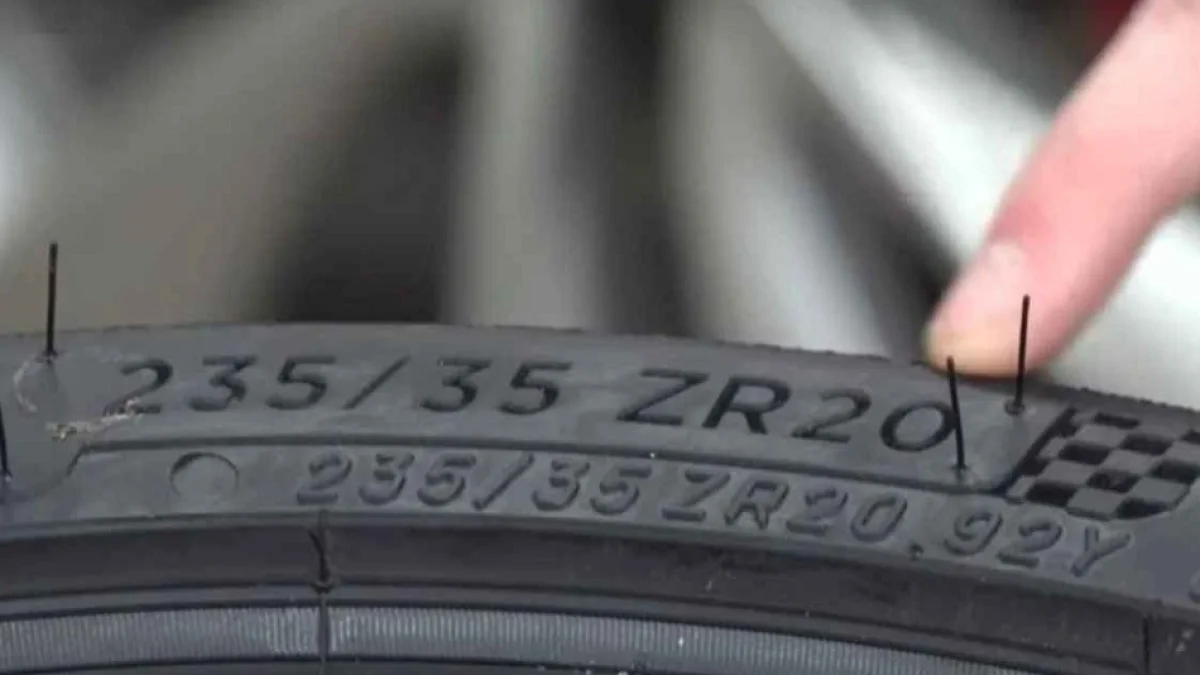
What Does ZR Mean on Your Tires? Not Just a Decoration But a Critical Performance Indicator
Many drivers believe the codes printed on the sidewall of a tire are just technical details not worth paying attention to. However, these letters and numbers can determine the tire's speed capability, construction method, and the level of safety it provides on the road. Among the most confusing codes for car owners is the ZR symbol. Some assume it simply refers to a special type of performance tire, or that it is always superior to regular tires. In reality, this code is fundamentally linked to the tire's ability to withstand high speeds.
What Do the Letters R and Z Stand For?
The letter R in a tire size designation stands for Radial, meaning the tire is of radial construction, the most widely used design in modern vehicles. In this type, the internal layers extend radially from one side to the other, which helps improve stability, increase tire lifespan, and provide more balanced performance compared to older bias-ply tires, which are now rare in passenger cars. When the ZR code appears, the R still indicates radial construction, while the Z signifies that the tire is designed for high-speed operation. According to standard tire classifications, the ZR code can be used for tires capable of exceeding 240 kilometers per hour. Higher-performance tires are associated with speed ratings such as W, Y, and (Y), which can reach 270 or 300 km/h or more.
Not Every ZR Tire Is Right for Your Car
A common mistake many drivers make is believing that choosing a tire with a higher speed rating automatically means it is the best option, even if the vehicle does not require it. A high-performance tire may offer better stability, quicker cornering response, and shorter braking distances under certain conditions. However, it can also be less comfortable, noisier, more expensive, and may negatively impact fuel consumption due to the stiffer rubber compound used in its construction.
When Do You Actually Need ZR Tires?
The importance of ZR tires becomes evident in high-performance sports cars and luxury vehicles, which are fundamentally designed for high-speed driving and require tires capable of handling the stress and heat generated at such speeds. In contrast, family sedans, hatchbacks, and crossover SUVs used daily in cities and on regular roads typically do not need this type of tire. Speed ratings such as T, H, or V are often more than sufficient to meet everyday driving needs, while offering better ride comfort and lower cost. Understanding the true meaning of the ZR code empowers drivers to make more informed decisions when purchasing tires, ensuring the ideal balance between performance, safety, and cost.
Related News
View All News
Signs of Spark Plug Failure in Your Car Engine — When to Replace Them
Spark plugs are essential engine components, and their failure causes difficulty starting, engine vibration, poor acceleration, and increased fuel consumption. Other signs include an illuminated check engine light and exhaust…

Your Complete Guide to Maintaining Car Tires as Winter Temperatures Drop
As winter approaches and temperatures fall, car tires need extra care to maintain grip and safety. Regular pressure checks, tread depth inspection, crack monitoring, and wheel alignment are essential steps.…
From Paper to Pavement: Inside the Making of a New Car
Developing a new car begins in the design studio with initial sketches that become a 3D digital model and then a full-size clay model. Engineering teams work in parallel to…

Tesla Drops 'Self-Driving' Name in Europe, Calls It 'Driver Assistant'
Tesla has renamed its 'Autopilot' system to 'Tesla Driver Assistant' in Europe after misleading claims. This change follows legal disputes and a retreat from full self-driving promises. In the U.S.,…

Chery Tiggo 9 CSH Survives Brutal Safety Tests: Saltwater Immersion and Underbody Impacts
Chery conducted extreme safety tests on the Tiggo 9 CSH, including a 24-hour saltwater immersion of its high-voltage battery and an underbody scraping test against a solid obstacle. Results showed…

