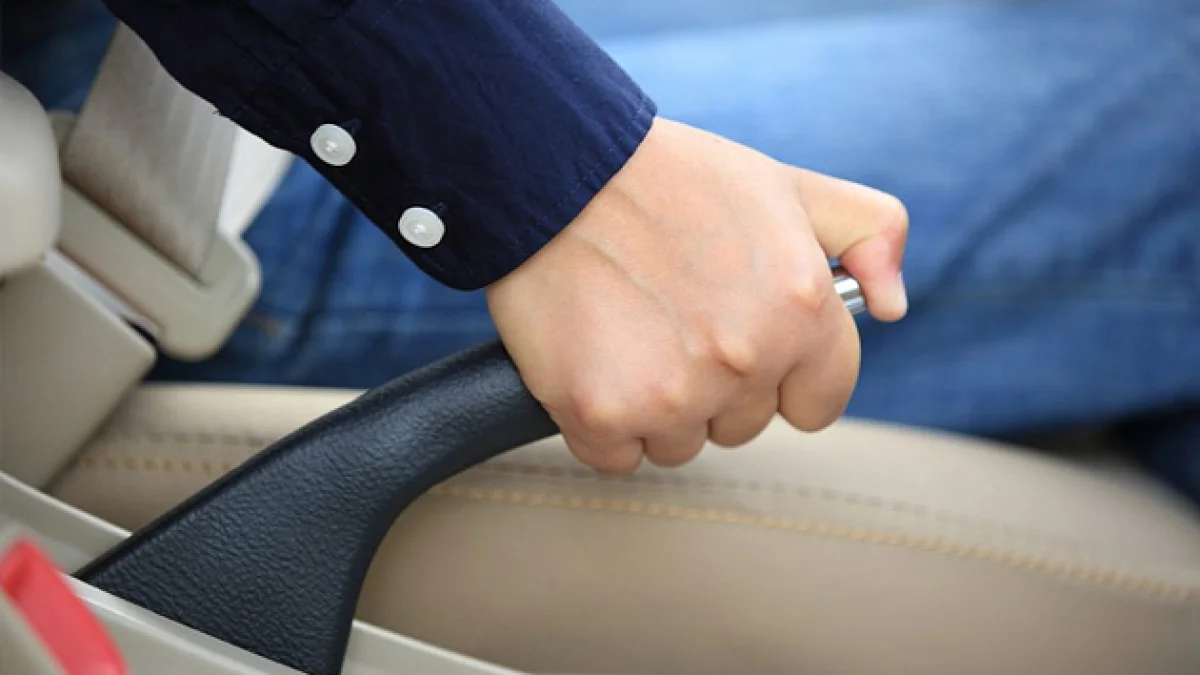
Weak Handbrake: A Simple Fault That Could Let Your Car Roll Away
A weak handbrake is one of those faults that many drivers underestimate, yet it can lead to serious damage, especially when parking on steep or uneven surfaces. The handbrake is not just a helpful stopping aid; it is a critical safety component that prevents your vehicle from moving after parking. When its efficiency declines, the car may suddenly roll on a slope, risking collisions or causing significant financial loss.
Common Causes of Handbrake Weakness
Handbrake Cable Looseness
One of the most common reasons for a weak handbrake is a loose cable connecting the lever to the rear braking system. When the cable becomes slack, the required force does not transfer properly to the brakes, causing the driver to notice the lever rising higher than usual without the car holding firmly. This issue is prevalent in many vehicles with traditional mechanical systems, such as certain Toyota and Hyundai models that rely on metal cables for actuation.
Brake Component Wear
Frequent or aggressive use of the handbrake can lead to wear and tear on its internal components, particularly in cars with conventional mechanical systems. Over time, these parts lose their ability to hold the vehicle effectively, with signs emerging such as reduced grip or the need to pull the lever much harder. This affects older vehicles like BMW or Mercedes that have covered high mileage.
Lack of Lubrication in Joints
The joints of the handbrake mechanism require smooth movement to function efficiently. When lubrication is insufficient or dirt and rust accumulate, movement becomes stiff, and the required force may not reach the brakes properly. In such cases, the driver may experience difficulty pulling the handbrake or returning it to its normal position. Regular maintenance at specialized service centers, such as those handling Nissan or Kia, is recommended to ensure smooth operation.
Warning Signs and Preventive Measures
Key Indicators of a Weak Handbrake
Prominent signs that warrant inspection include the handbrake's inability to hold the car on a slope, the lever rising higher than normal, or a squeaking noise during use. Additionally, abnormal resistance when pulling or noticing fluid leaks in some systems may indicate a fault needing prompt attention. These signs are particularly noticeable in cars like Chery or Geely, which may be more prone to component wear due to usage patterns.
Don't Wait for the Car to Move
If a driver notices any weakness in the handbrake, it should be inspected by a qualified technician without delay. Relying solely on the transmission's park position when parking, especially on inclined streets, is not safe. Proper handbrake usage is also advised—avoid pulling it aggressively unless necessary—along with regular maintenance of the entire braking system. This is especially important for owners of sports cars like Porsche or luxury vehicles like Volvo, which demand precise care.
Ultimately, the handbrake may seem like a simple component, but it can prevent a serious accident when parking. Addressing its weakness early is far cheaper than dealing with the consequences of a car rolling away on its own. Don't hesitate to visit a specialized workshop if you notice any of the mentioned signs, especially if you own a car with a mechanical handbrake system such as Suzuki or Chevrolet.
Related News
View All News
Signs of Spark Plug Failure in Your Car Engine — When to Replace Them
Spark plugs are essential engine components, and their failure causes difficulty starting, engine vibration, poor acceleration, and increased fuel consumption. Other signs include an illuminated check engine light and exhaust…

Your Complete Guide to Maintaining Car Tires as Winter Temperatures Drop
As winter approaches and temperatures fall, car tires need extra care to maintain grip and safety. Regular pressure checks, tread depth inspection, crack monitoring, and wheel alignment are essential steps.…
From Paper to Pavement: Inside the Making of a New Car
Developing a new car begins in the design studio with initial sketches that become a 3D digital model and then a full-size clay model. Engineering teams work in parallel to…

Tesla Drops 'Self-Driving' Name in Europe, Calls It 'Driver Assistant'
Tesla has renamed its 'Autopilot' system to 'Tesla Driver Assistant' in Europe after misleading claims. This change follows legal disputes and a retreat from full self-driving promises. In the U.S.,…
Chery Tiggo 9 CSH Survives Brutal Safety Tests: Saltwater Immersion and Underbody Impacts
Chery conducted extreme safety tests on the Tiggo 9 CSH, including a 24-hour saltwater immersion of its high-voltage battery and an underbody scraping test against a solid obstacle. Results showed…