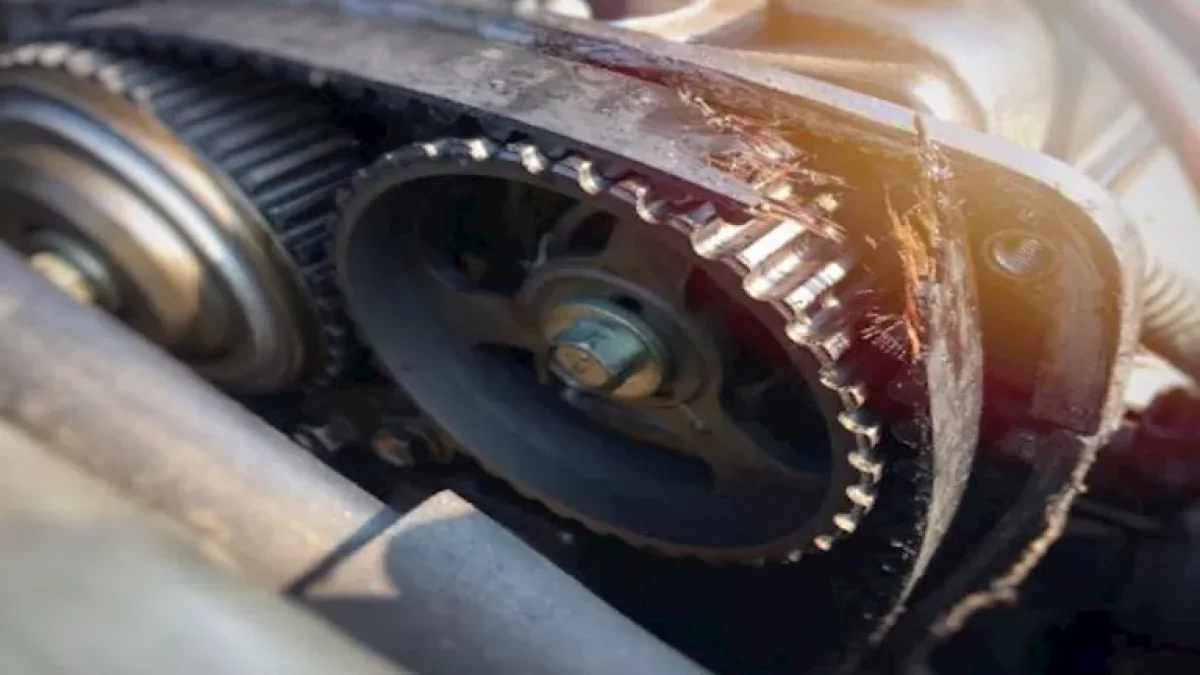
Timing Belt Snaps While Driving? 5 Steps That Save Your Engine from Destruction
A timing belt failure while driving stops the engine instantly and can destroy valves and pistons if the driver attempts a restart. The correct response is steering to a safe location with hazard lights on, then calling a tow truck without any attempt to crank the engine. A specialist inspection determines the damage scope, which may range from a simple belt replacement to a full cylinder head rebuild. Regular maintenance and replacing the belt at the recommended 60,000 to 100,000 km interval remain the best protection against this failure.
A snapped timing belt kills the engine instantly — and what you do in the next sixty seconds decides whether the repair costs 3,000 EGP or exceeds 30,000 EGP with a cylinder head rebuild and bent valves. The single worst move? Trying to restart the engine. That decision alone escalates a belt replacement into a full internal engine repair.
How to handle sudden engine shutdown at speed
Power steering assist disappears the moment the belt snaps, and the steering wheel turns heavy without warning. Grip it with both hands, switch on your hazard lights immediately. Steer gradually toward the far right shoulder until the car comes to a safe stop away from traffic flow. Do not yank the wheel or slam the brakes — sliding at your current speed is far more dangerous than a slow, controlled stop.
Why restarting the engine is the fatal mistake
The timing belt synchronizes the camshaft with the crankshaft. That synchronization is the only thing keeping pistons from slamming into open valves inside the combustion chamber. Once the belt fails, that timing is lost completely. Any attempt to crank the engine — even a brief one — can drive pistons directly into valve heads. The result: bent and destroyed valves, and in some engines, cracked piston crowns. Repair costs jump from a belt and tensioner kit to a partial or full engine overhaul.
A tow truck isn't a luxury — it's mandatory
After securing the vehicle on the shoulder, calling for a tow to a specialized workshop is the only correct move. Do not push the car, don't let anyone drag it. Never try to bump-start it on a slope. The real problem is that no driver can assess internal damage by looking at a broken belt — the engine may look completely intact from the outside while valves are already bent inside the head.
Professional inspection determines the entire repair path. In mild cases, the job stops at replacing the timing belt and its associated components. Engines that suffered piston-to-valve contact require removing the cylinder head, repairing or replacing valves. Swapping out damaged internal parts. Hyundai and Kia models are among the brands where this failure appears frequently in older examples, though any engine running a belt instead of a chain faces the same risk.
Preventive maintenance remains the strongest defense. Replacing the belt at the manufacturer's recommended interval — typically between 60,000 and 100,000 kilometers depending on the model — costs a fraction of any internal repair. Toyota Corolla and Nissan Sunny owners know this equation well. Inspect the belt at every service interval, and watch for cracking, glazing, or unusual vibration — the warning signs appear long before the sudden snap, but most drivers simply never look.
Frequently Asked Questions
3 questions answered
Related News
View All News
Google Maps Saves Your Parking Spot with One Tap
Google Maps offers a save parking location feature for Android and iPhone users. On Android, you can manually save your spot by tapping the blue dot and selecting save parking.…

Ethanol: Does It Really Boost Your Car's Power or Harm the Engine?
Ethanol is an alcohol used in some fuel blends to raise octane and improve combustion, but it's not a magic power booster for all engines. Its effect depends on engine…
Factorial and Mitsui Kinzoku Join Forces to Accelerate Solid-State Battery Production
Factorial Energy has announced a partnership with Japan's Mitsui Kinzoku to develop full-scale manufacturing of solid-state batteries for electric vehicles. Mitsui Kinzoku will supply a sulfide-based solid electrolyte called A-SOLiD,…
Engine Overheating Is a Real Danger: 12 Tips to Keep Your Car Cool in Summer and Winter
Engine overheating can cause severe damage, but 12 practical tips can protect your cooling system. They include parking in the shade, using a sunshade, and checking coolant levels with the…
Red vs Green Coolant: Which One Is Right for Your Car?
Red and green coolants differ in chemical composition and service life. Green coolant uses silicate technology and suits older engines, while red coolant relies on organic acids and is designed…