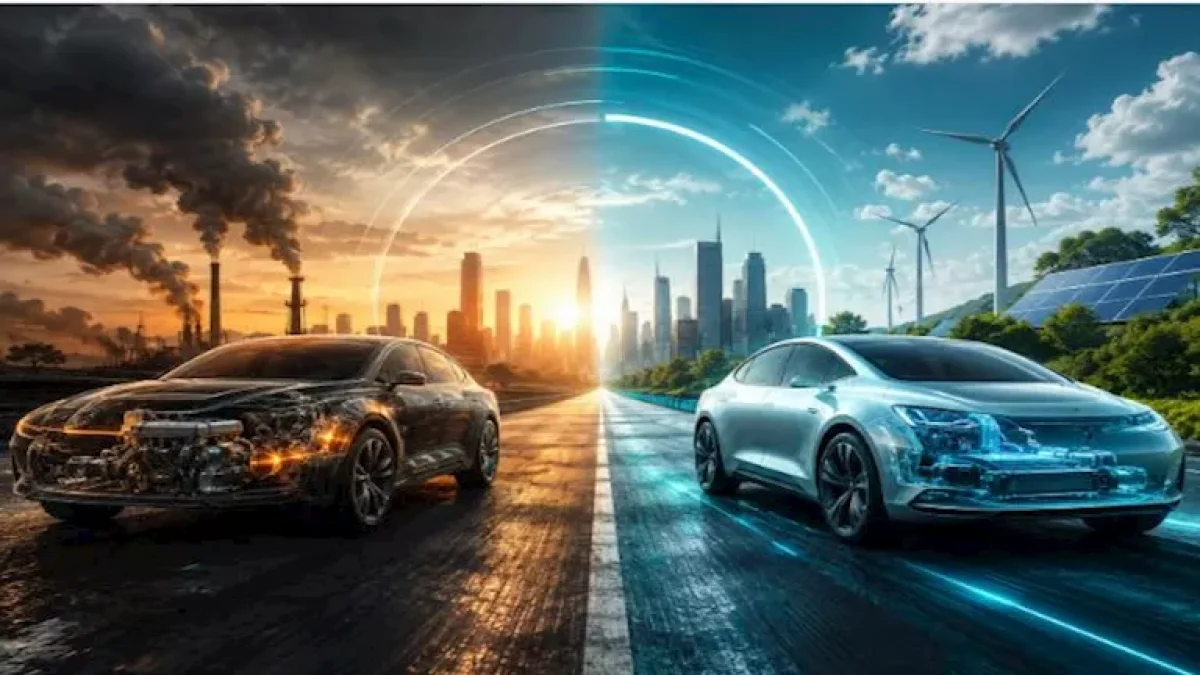
Comprehensive Comparison: REEV vs Traditional Hybrid – Which One Saves More?
The global automotive industry is undergoing a rapid shift toward electric and hybrid powertrains, gradually moving away from conventional internal combustion engines, driven by stricter emission regulations, rising fuel prices, and continuous advancements in battery technology. This transformation is no longer limited to European or Chinese markets but has extended to emerging markets, including Egypt, which has recently seen the introduction of models featuring modern technologies like DM-i and REEV alongside traditional hybrid vehicles.
REEVs: Electric Driving with a Gasoline Range Extender
Vehicles equipped with REEV (Range Extended Electric Vehicle) technology are attracting buyers seeking the benefits of an electric car without range anxiety or relying on a dense charging network. This system relies entirely on an electric motor to drive the wheels, while a gasoline engine serves solely as a generator to recharge the battery when its charge drops, without being mechanically connected to the drivetrain in most designs. The technology provides a quiet, smooth electric driving experience while enabling long-distance travel without frequent charging stops, which has driven its widespread adoption in the Chinese market in recent years.
Self-Charging Hybrid Vehicles
Traditional hybrid vehicles (HEV) combine a gasoline engine with an electric motor, alternating between the two or using both simultaneously depending on driving conditions to reduce fuel consumption and improve efficiency. These cars do not require external charging, as their batteries are recharged automatically through regenerative braking and the gasoline engine during driving, making their use similar to conventional cars without the need for charging infrastructure. Hybrids also offer good low-end torque during acceleration thanks to the electric motor, along with reduced noise and lower fuel consumption, particularly in city driving and heavy traffic.
Which Is More Cost-Effective?
When comparing economic efficiency, total cost depends heavily on usage patterns and driving conditions. REEV vehicles offer significantly lower fuel consumption for daily city driving, as regular electric charging can cover most distances without engaging the gasoline engine, substantially reducing fuel bills. Traditional hybrids, on the other hand, remain a practical choice for those without access to charging stations, as they can operate efficiently on fuel alone while still delivering lower consumption than conventional cars. The greatest savings depend on the frequency of long-distance versus urban driving, as well as local electricity and fuel prices.
Recent Developments in the Egyptian Market
The Egyptian market is currently witnessing growing demand for hybrid and electric vehicles, driven by increased awareness of their environmental and economic benefits. Some manufacturers have recently introduced REEV models in Egypt, offering consumers more diverse options between self-charging hybrids and range-extended electric vehicles. With continued improvements in charging infrastructure and rising fuel costs, these technologies are expected to see significant growth in the region, making the comparison between them increasingly important for potential buyers.
Related News
View All News
Why Carmakers Advise Against Using 95 Octane in Engines Designed for 92
Using 95 octane in an engine designed for 92 delivers no extra power, despite a widespread belief among drivers. Automakers determine the correct fuel based on compression ratio, ignition timing…

Signs of Spark Plug Failure in Your Car Engine — When to Replace Them
Spark plugs are essential engine components, and their failure causes difficulty starting, engine vibration, poor acceleration, and increased fuel consumption. Other signs include an illuminated check engine light and exhaust…

Your Complete Guide to Maintaining Car Tires as Winter Temperatures Drop
As winter approaches and temperatures fall, car tires need extra care to maintain grip and safety. Regular pressure checks, tread depth inspection, crack monitoring, and wheel alignment are essential steps.…
From Paper to Pavement: Inside the Making of a New Car
Developing a new car begins in the design studio with initial sketches that become a 3D digital model and then a full-size clay model. Engineering teams work in parallel to…
Tesla Drops 'Self-Driving' Name in Europe, Calls It 'Driver Assistant'
Tesla has renamed its 'Autopilot' system to 'Tesla Driver Assistant' in Europe after misleading claims. This change follows legal disputes and a retreat from full self-driving promises. In the U.S.,…