

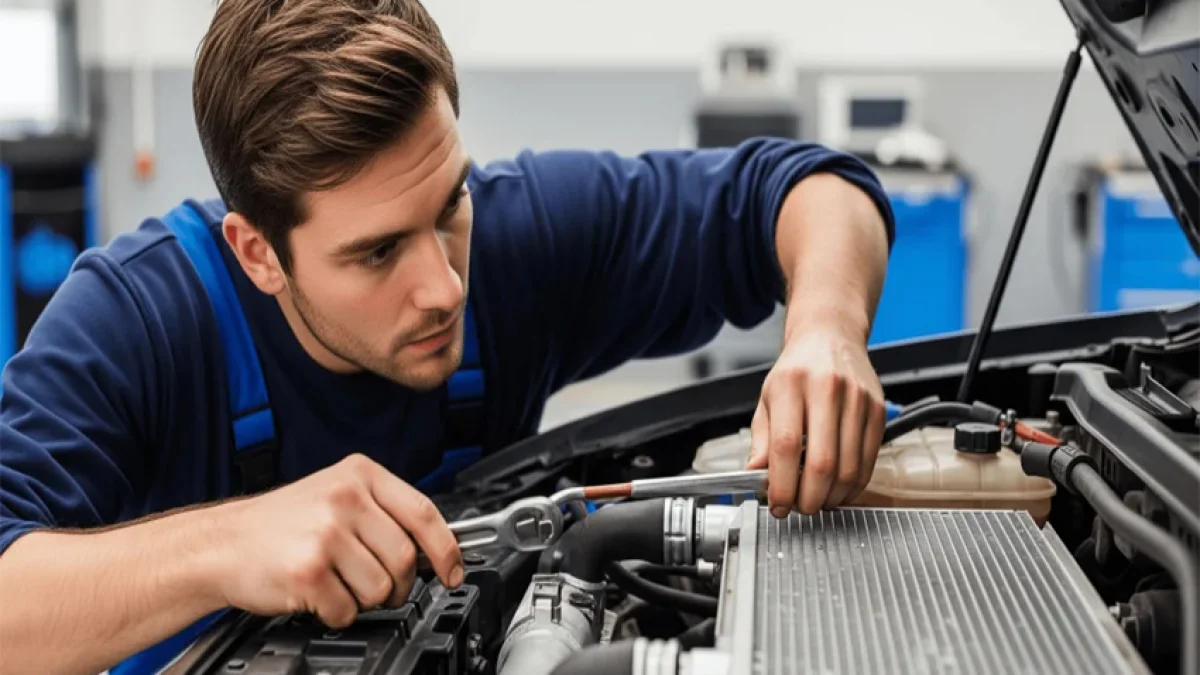
Radiator Cap: The Affordable Part That Helps Keep Your Car Engine Cool During Summer Heat
As temperatures rise during the summer months, car engines are exposed to greater thermal stress, increasing the likelihood of unexpected mechanical problems that can result in expensive repair bills. While many drivers pay close attention to the coolant level, a small component that costs around EGP 100 is often overlooked despite playing a vital role in maintaining the efficiency of the engine cooling system and helping prevent excessive engine temperatures.
The Role of the Radiator Cap in the Cooling System
The radiator cap is one of the key components of a vehicle's cooling system. Its primary function is to help maintain cooling efficiency while preventing coolant from escaping during vehicle operation. By supporting the proper operation of the cooling circuit, the radiator cap contributes to keeping the engine operating within its intended temperature range, particularly during hot weather and extended driving conditions.
How a Faulty Radiator Cap Affects Engine Temperature
If the radiator cap becomes damaged or loses its effectiveness, coolant may leak or evaporate, directly reducing the cooling system's ability to regulate engine temperature. This issue becomes more noticeable during long-distance driving, heavy traffic, or periods of extreme heat, when the engine is subjected to greater thermal loads and efficient cooling becomes even more critical.
Using the Correct Radiator Cap
One of the most common mistakes made when replacing a radiator cap is purchasing a part that is not designed for the specific vehicle. Every car is equipped with a radiator cap that matches the specifications of its cooling system, and using an incorrect replacement may negatively affect overall cooling performance even if the part is brand new.
Routine Inspection Helps Prevent Costly Repairs
Regular inspection of the entire cooling system can help identify potential issues before they develop into more serious mechanical failures. It is recommended to check the condition of the radiator cap periodically and replace it immediately if any signs of wear or damage appear. Using genuine replacement parts that match the vehicle's specifications is also recommended, especially during the summer season, to reduce thermal stress on the engine, maintain cooling system efficiency, and minimize the risk of unexpected breakdowns while driving.
Related News
View All News
Signs of Spark Plug Failure in Your Car Engine — When to Replace Them
Spark plugs are essential engine components, and their failure causes difficulty starting, engine vibration, poor acceleration, and increased fuel consumption. Other signs include an illuminated check engine light and exhaust…

Your Complete Guide to Maintaining Car Tires as Winter Temperatures Drop
As winter approaches and temperatures fall, car tires need extra care to maintain grip and safety. Regular pressure checks, tread depth inspection, crack monitoring, and wheel alignment are essential steps.…

From Paper to Pavement: Inside the Making of a New Car
Developing a new car begins in the design studio with initial sketches that become a 3D digital model and then a full-size clay model. Engineering teams work in parallel to…

Tesla Drops 'Self-Driving' Name in Europe, Calls It 'Driver Assistant'
Tesla has renamed its 'Autopilot' system to 'Tesla Driver Assistant' in Europe after misleading claims. This change follows legal disputes and a retreat from full self-driving promises. In the U.S.,…

Chery Tiggo 9 CSH Survives Brutal Safety Tests: Saltwater Immersion and Underbody Impacts
Chery conducted extreme safety tests on the Tiggo 9 CSH, including a 24-hour saltwater immersion of its high-voltage battery and an underbody scraping test against a solid obstacle. Results showed…

