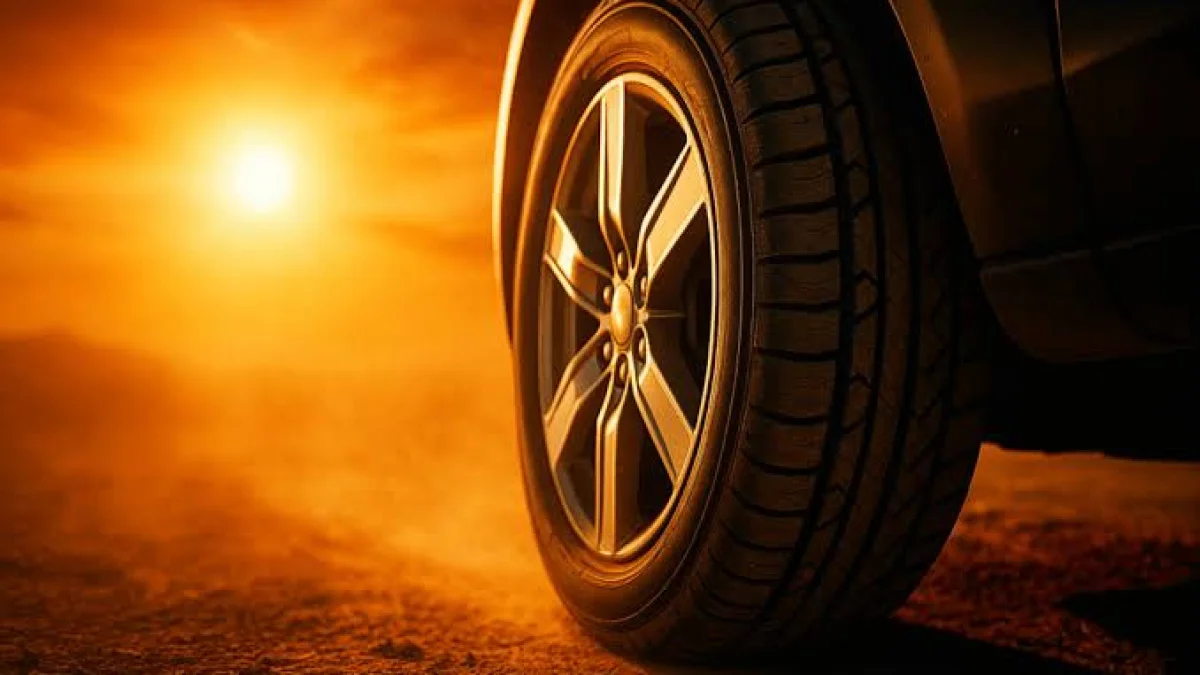
How Do Industrial Tires Withstand Temperatures Over 1500°C? A Design Unlike Car Tires
While all tires may look similar from the outside, they are in fact designed according to their specific operating environment. If regular car tires face challenges from heat generated by high-speed driving or hot weather, the situation is entirely different inside iron and steel factories. Here, heavy machinery moves across floors surrounded by molten metal and hot slag at temperatures that can exceed 1500 degrees Celsius. These industrial tires are not just oversized rubber, but a product of highly specialized engineering that differs radically from those found on passenger vehicles. According to a recent American report, the tires used in these harsh environments are specifically built to withstand conditions that would be impossible for conventional tires to endure.
Why Standard Tires Fail in High-Heat Industrial Settings
Traditional tires experience gradual heat buildup from friction during driving, but most begin losing efficiency when the rubber temperature rises to around 85 degrees Celsius. At this point, the rubber becomes softer, wear rates increase dramatically, and the risk of tire blowout or loss of traction rises significantly. Inside steel plants, the scenario is drastically different; blast furnaces reach temperatures of approximately 1600 degrees Celsius, while slag exiting the smelting process is about 1500 degrees Celsius. These temperatures are sufficient to destroy any conventional tire in a short time. The same report, citing specialized sources, confirmed that such industrial environments require tires engineered with a completely different approach to thermal resistance.
The Secret Lies in Solid Construction and Heat-Resistant Materials
Strength does not come from thicker rubber alone but from a completely different manufacturing approach. Instead of the pneumatic tires used in cars, steel plant equipment typically relies on solid tires that contain no air, eliminating the risk of blowouts caused by extreme heat or massive loads. These solid tires are made from a special blend combining natural and synthetic rubber with heat-resistant chemical additives. Additionally, they feature a multi-layer internal design that helps distribute and dissipate heat quickly, while reinforced sidewalls minimize deformation when carrying heavy loads. Industry reports on industrial tire technologies indicate that such designs maintain tire rigidity and extend operational lifespan even in continuously high-temperature environments.
Heat: The Greatest Enemy of Any Tire, from Cars to Factories
Tire experts universally agree that heat represents the biggest threat to tire lifespan and safety, whether in automobiles or industrial machinery. As temperatures rise, the chemical bonds in rubber begin to break down, leading to loss of flexibility and structural strength. In regular car tires, high-speed driving or underinflation can push temperatures to dangerous levels. However, the challenge is far greater in the industrial sector, demanding innovative materials and designs capable of withstanding thousands of degrees. This evolution in industrial tire technology makes them one of the most advanced and crucial components in modern manufacturing and heavy industry.
Related News
View All News
Signs of Spark Plug Failure in Your Car Engine — When to Replace Them
Spark plugs are essential engine components, and their failure causes difficulty starting, engine vibration, poor acceleration, and increased fuel consumption. Other signs include an illuminated check engine light and exhaust…

Your Complete Guide to Maintaining Car Tires as Winter Temperatures Drop
As winter approaches and temperatures fall, car tires need extra care to maintain grip and safety. Regular pressure checks, tread depth inspection, crack monitoring, and wheel alignment are essential steps.…

From Paper to Pavement: Inside the Making of a New Car
Developing a new car begins in the design studio with initial sketches that become a 3D digital model and then a full-size clay model. Engineering teams work in parallel to…

Tesla Drops 'Self-Driving' Name in Europe, Calls It 'Driver Assistant'
Tesla has renamed its 'Autopilot' system to 'Tesla Driver Assistant' in Europe after misleading claims. This change follows legal disputes and a retreat from full self-driving promises. In the U.S.,…

Chery Tiggo 9 CSH Survives Brutal Safety Tests: Saltwater Immersion and Underbody Impacts
Chery conducted extreme safety tests on the Tiggo 9 CSH, including a 24-hour saltwater immersion of its high-voltage battery and an underbody scraping test against a solid obstacle. Results showed…