From Reckless Driving to Saving Lives: GTA Game Helps AI Develop Accident-Avoiding Cars
Researchers from universities worldwide are using GTA V to test human behavior and develop technologies that warn of road hazards, as well as train AI systems to avoid collisions. A Dutch team used eye-tracking to study cyclist attention, while German researchers developed vibration-based devices that warn of vehicles approaching from behind. This virtual environment offers a realistic and cost-effective alternative to real-road testing.
Grand Theft Auto V isn't just violent entertainment. Researchers are now using it to develop systems that warn drivers of collisions and save lives on real roads — a surprising twist for one of the most controversial video games. The idea is strange but it works.
How virtual cars became a research tool
Instead of exposing volunteers to dangerous traffic situations on actual roads, researchers from universities and scientific institutions worldwide are using the game's environment to test human behavior and develop technologies that warn of hazards, as well as train AI systems to avoid collisions. The vast virtual cities, streets, traffic lights, vehicles, and pedestrians, along with diverse weather conditions and times of day, make it a suitable environment for simulating traffic situations that are difficult or costly to reproduce in traditional simulators. The setup is ideal for testing.
Pavlo Bazilinskyy, a researcher in human factors engineering at Delft University of Technology in the Netherlands, believes that big-budget games provide more advanced and realistic environments than many conventional research simulators. This view opens the door to wider adoption of games in academic research. Research is expanding.
Studying cyclist attention inside virtual cars and streets
His team used GTA V, along with eye-tracking technology, to study how cyclists notice hazards, such as a car pulling out of a parking spot, a door suddenly opening, or approaching a busy intersection. This data can help researchers understand road user behavior and inform the design of streets and future mobility systems. The results are precise.
In Germany, researchers from Osnabrück University of Applied Sciences used the game to test wearable devices aimed at warning cyclists and pedestrians of vehicles approaching from behind. The team developed a model mounted on the bicycle handlebars that emits vibrations that increase in intensity as a car approaches, along with a vest equipped with vibration technology that gives the user an extra sense of an approaching vehicle. Early warning could save a life.
This research relies on massive data from the game, allowing researchers to simulate thousands of scenarios quickly. Prototypes show promising results, but the bigger question remains: will these technologies reach production cars soon? Companies are watching closely.
Frequently Asked Questions
3 questions answered
Related News
View All News
Long Idling Warm-Up Ruins Your Engine — The Right Way Is to Drive Off After Seconds
Idling your car for long periods is no longer necessary for most modern vehicles with electronic fuel injection systems. According to AAA guidelines, a few seconds of engine operation is…
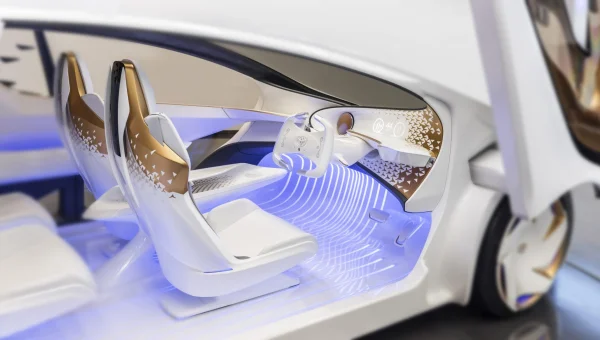
Toyota Combines Professional Driver Expertise with AI to Advance Assisted Driving
Toyota has unveiled a plan to integrate real-world driving data and professional driver expertise with AI to develop advanced driver assistance systems. The company aims to deliver L2++ technology in…
Baidu Trains Robotaxis on 100,000 Virtual Kilometers Daily
Baidu has launched Apollo World, a virtual simulation system for training robotaxis. The system generates 100,000 virtual kilometers per day, equivalent to roughly three years of real-world testing. The tech…
Your Tesla Hides 5 Features That Change Everything — One Locks It Even With the Key
Tesla vehicles include five hidden software features most owners overlook, led by PIN to Drive, which prevents driving even with the original key. The list also includes Glovebox PIN for…
Mercedes Unveils Holo Display: The Windshield That Becomes a Targeted Holographic Screen
Mercedes-Benz is developing Holo Display, a technology that turns the windshield into a transparent holographic screen displaying information to specific occupants inside the car. The system uses a projector integrated…