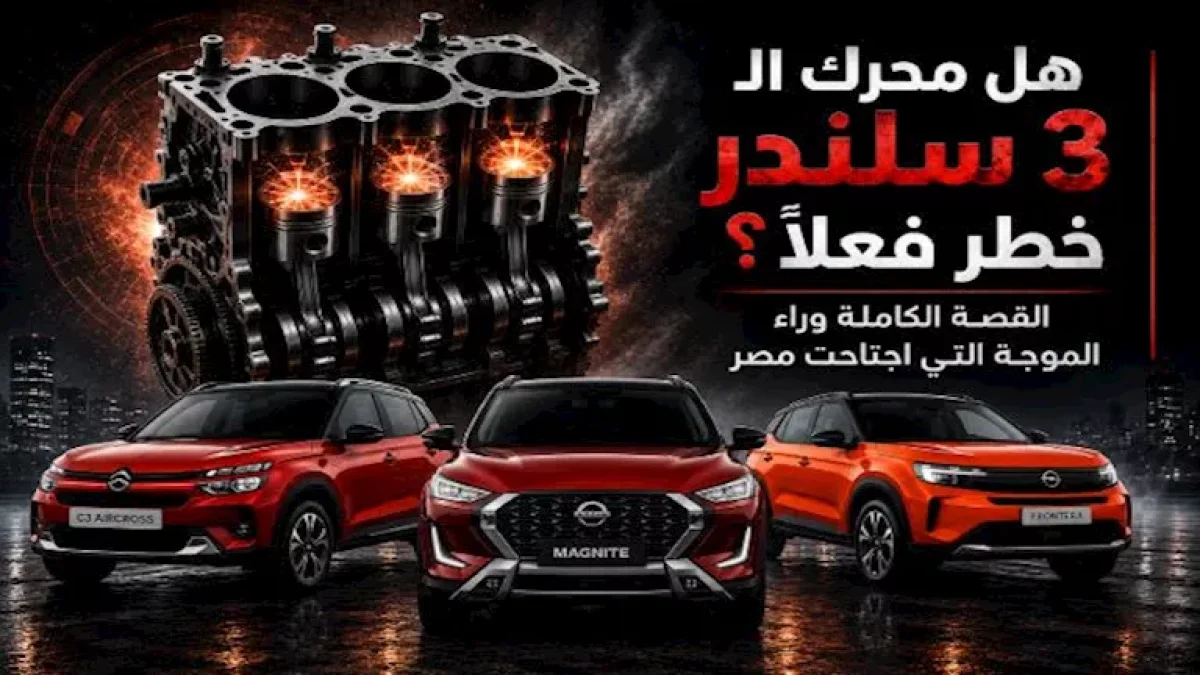
3-Cylinder Engines in Egypt: The Full Story Behind the Wave
The Egyptian car market has seen a wave of debate over three-cylinder engines, coinciding with the arrival of new models that rely on them. The local auto scene is witnessing a notable shift, with cars like the Nissan Magnite, Citroen C3 Aircross, and Opel Frontera entering the market.
Is the 3-Cylinder Engine a New Technology?
The truth is, this technology isn't new; it's part of a global trend that started years ago under the downsizing strategy. The goal is simple: cut fuel consumption and emissions while maintaining performance via turbocharging and direct injection. With advanced engine control systems, small-displacement engines now deliver impressive power and torque.
The current debate in Egypt focuses on durability and lifespan, especially given local driving conditions and high temperatures. But experts argue these fears are exaggerated, as the technology has proven itself globally over many years.
Nissan Magnite: The Turning Point
The Nissan Magnite can be seen as the icon of the current debate, featuring a 1.0-liter turbocharged three-cylinder engine producing 99 horsepower and 152 Nm of torque, paired with a CVT gearbox. The car is already being produced locally at Nissan Egypt's plant since June 2026, reflecting the brand's commitment to this tech in the compact crossover segment.
The wave isn't coincidental; it mirrors a global shift that's gradually reaching Egypt. While major automakers downsize engines worldwide, Egyptian buyers increasingly face options powered by three-cylinder units.
What Does This Mean for Local Buyers?
The growing presence means buyers have fewer traditional-engine choices, especially in compact and economy crossover classes. Three-cylinder engines offer a balance of fuel efficiency and acceptable performance, but they raise questions about long-term maintenance costs and parts availability.
Global experience suggests these engines can cover long distances if regular maintenance schedules are followed. The gap between perception and reality is vast, and consumers need accurate information before deciding.
Outlook and Predictions
The landscape points to continued growth for three-cylinder engines in Egypt over the coming years, driven by stricter emissions and fuel economy targets. Citroen C3 Aircross and Opel Frontera are just the beginning of a broader wave of small cars with these engines.
In short, fears about three-cylinder engines aren't based on solid evidence but on preconceptions. Technological advancement has moved beyond the experimental stage, making these engines a reliable choice for millions of drivers worldwide.
Related News
View All News
Key, Gauges, and Mirrors: Familiar Car Details That May Vanish from Your Next Vehicle
Modern cars are rapidly going digital, and traditional features drivers have used for decades are gradually disappearing. Analog instrument clusters are being replaced by screens, start buttons are giving way…
Batteries, Fuel Cells, or Hydrogen Combustion? 3 Technologies Racing for the Future of Cars
Three technologies are competing for the future of automobiles: battery electric vehicles, hydrogen fuel cells, and hydrogen combustion engines. Global EV sales surpassed 20 million units in 2025, roughly a…
Best Engine Oils for Your Car in Summer
As summer temperatures rise, choosing the right engine oil becomes critical to protect your car's engine. Experts recommend full synthetic multi-grade oils like 5W-30 or 10W-40. Trusted brands such as…

Over 1 Billion Connected Cars by 2035 — Can Mobile Networks Keep Up?
Omdia Research projects that connected cars using cellular networks will exceed 1.05 billion by 2035, up from 473.7 million in 2025. The study warns that 4G shutdowns expected from 2030…

Don't Turn Off Your Car's AC This Winter — Experts Explain Why
Germany's TÜV NORD inspection authority recommends running your car's air conditioning at least once a week for 10 minutes, even in cold weather. Regular operation keeps compressor oil and seals…