Can Helwan Diesel Engines Shape Egypt's Auto Localization Future?
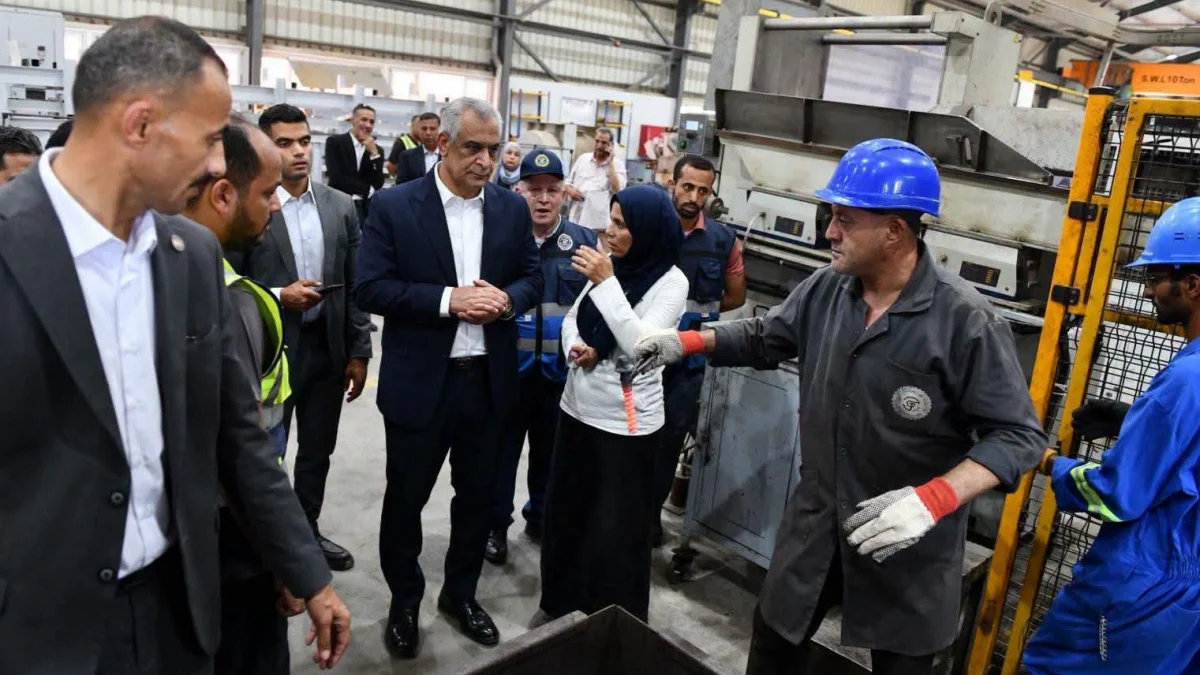
Egypt's State Minister for Military Production conducted a surprise visit to Helwan Diesel Engines Company to inspect diesel engine production and fastener lines. The tour highlighted advanced manufacturing technologies including robotics, CNC machines, and hot/cold forming processes. These efforts aim to deepen local manufacturing of automotive components and reduce dependency on imports.
Helwan Diesel Engines Company 'Military Factory 909' holds manufacturing capabilities that could shift the automotive game entirely. State Minister for Military Production Eng. Salah Soliman Jumblatt conducted a surprise inspection tour across production lines, aiming to maximize the use of available technological capacities to deepen local manufacturing.
Diesel Engines: A Strategic Industrial Base
The Minister's tour began with the diesel engines and spare parts factory, a cornerstone supporting engineering industries tied to vehicles and transport. These engines are vital for commercial vehicles and transport applications, making the development of local engine manufacturing a key axis for reducing reliance on imported components.
It doesn't stop at engines alone. The field visit also covered fasteners production lines, which rely on hot and cold forming technologies — critical techniques for producing precision components used across construction and automotive sectors.
CNC and Robotics: Backbone of Modern Manufacturing
The adoption of robotics and advanced CNC machines inside production lines signals a genuine strategic shift within Factory 909. These modern technologies aren't just line upgrades; they represent the optimal path to significantly boost precision and efficiency in manufacturing metal components and spare parts that demand strict quality standards.
Hot forming produces large bolts with complex designs, offering high durability to withstand loads and shocks. Cold forming achieves exceptional dimensional accuracy, a prerequisite for modern car parts needing advanced mechanical properties. These precise tolerances separate a competitive local component from an imported one.
Can these efforts finally realize Egypt's automotive localization dream? Early indicators from the factory floor are promising, confirming the technological infrastructure is ready for this challenge. Long industrial expertise combined with modern digital control and manufacturing systems presents a winning equation — one that could see the military production sector play a central role in Egypt's automotive industry, particularly as localization policies continue to gain momentum.
Frequently Asked Questions
3 questions answered
Related News
View All News
Key, Gauges, and Mirrors: Familiar Car Details That May Vanish from Your Next Vehicle
Modern cars are rapidly going digital, and traditional features drivers have used for decades are gradually disappearing. Analog instrument clusters are being replaced by screens, start buttons are giving way…

Batteries, Fuel Cells, or Hydrogen Combustion? 3 Technologies Racing for the Future of Cars
Three technologies are competing for the future of automobiles: battery electric vehicles, hydrogen fuel cells, and hydrogen combustion engines. Global EV sales surpassed 20 million units in 2025, roughly a…
Best Engine Oils for Your Car in Summer
As summer temperatures rise, choosing the right engine oil becomes critical to protect your car's engine. Experts recommend full synthetic multi-grade oils like 5W-30 or 10W-40. Trusted brands such as…

Over 1 Billion Connected Cars by 2035 — Can Mobile Networks Keep Up?
Omdia Research projects that connected cars using cellular networks will exceed 1.05 billion by 2035, up from 473.7 million in 2025. The study warns that 4G shutdowns expected from 2030…

Don't Turn Off Your Car's AC This Winter — Experts Explain Why
Germany's TÜV NORD inspection authority recommends running your car's air conditioning at least once a week for 10 minutes, even in cold weather. Regular operation keeps compressor oil and seals…