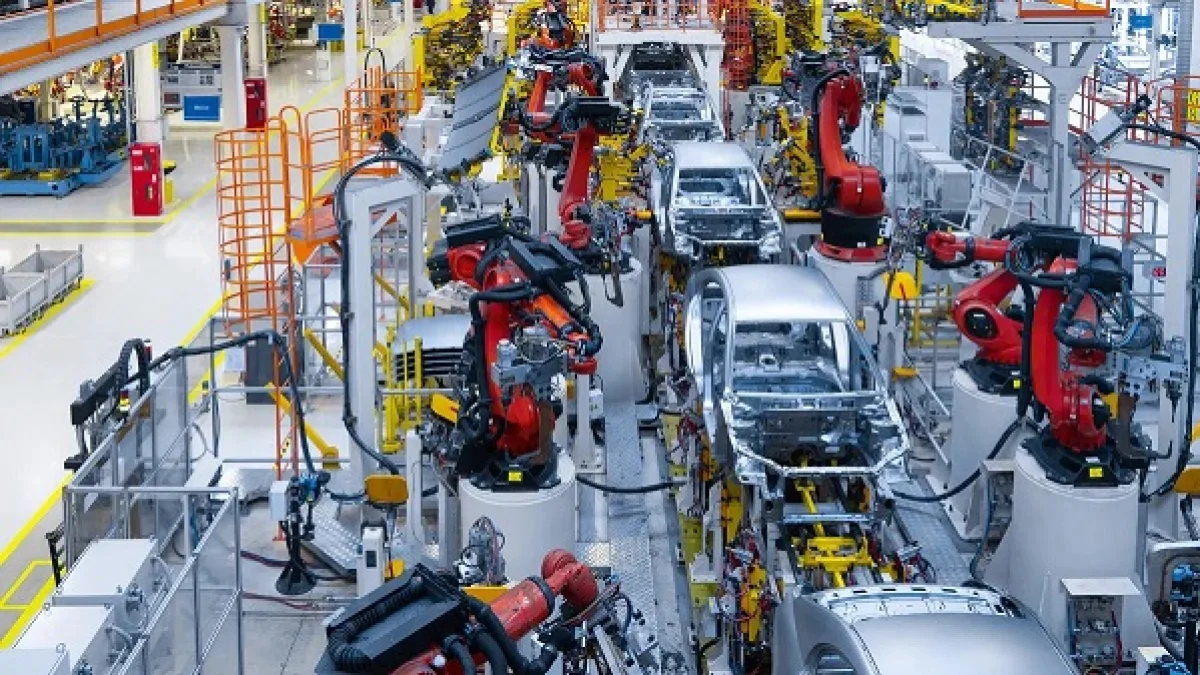
German Auto Giants Face Existential Threat: End of 'Made in Germany' Era
BMW recently issued a major profit warning, signaling that the German automotive industry's business model is now suffering from a structural flaw. With reports that top executives at Volkswagen are worried about existential threats facing the company, it is clear that BMW's problems are not an isolated case.
Chinese Competition Disrupts the German Automotive Sector
Fierce competition from Chinese companies has crushed the ambitions of the German automotive sector, leaving these companies with no choice but to scale down their operations. Although recovery is not guaranteed, the US market at least offers a glimmer of hope. For decades, German automakers formed a cornerstone of Germany's exports, and their engineering excellence was a source of national pride. A weak euro, rising global wealth, and expanding free trade helped turn German luxury cars, SUVs, and sports cars into global status symbols.
The massive profits earned from overseas customers, especially in China, supported high-paying manufacturing jobs within Germany. However, those boom days are now in the past. Sales of German cars in China have declined sharply as the economy there slows down and local consumers increasingly view high-priced internal combustion engine vehicles as outdated or overpriced.
Chinese Electric Vehicles Invade Global Markets
In contrast, companies like Xiaomi and BYD, among others, are offering attractive electric vehicles at more competitive prices. German companies are losing their foothold, with their market share of EV sales in China falling to just 2% in the first quarter of 2026. Chinese electric and hybrid vehicles are also beginning to invade European markets, at a time when the European car market remains smaller than before the COVID-19 pandemic, while competition intensifies.
Additionally, German car exports to the United States now face a 15% import tariff, making shipping from Europe less profitable. It was expected that the new CEO of Porsche, Michael Leiters, would say during the company's annual meeting on Tuesday that the phrase "Made in Germany" sometimes "seems like a hindrance" due to protectionism, rising costs, and stricter regulations.
Related News
View All News
LUXEED Prepares for Global Launch on October 21 in Wuhu, China
LUXEED is preparing to hold its global launch event on October 21 in Wuhu, Anhui Province, China, under the theme 'Intelligence, Enlightened.' The event will feature the world premiere of…

Avatr CONCEPT T09 with 1000+ HP Challenges Maybach and Rolls-Royce at Paris Show
Avatr unveils the CONCEPT T09 at the 2026 Paris Motor Show, a large luxury SUV with over 1000 horsepower and massive dimensions (5285 mm length). It features a hybrid powertrain…

Morocco Produces 700,000 Cars Annually, Surpassing Italy with $16 Billion in Export Revenue
Morocco has solidified its position as an African manufacturing power, producing 700,000 vehicles annually and generating over $16 billion in automotive export revenue, outpacing Italy. Industrial activity spans 150 zones…

Opel CEO: Adam Small Car Out of Plans Until 2030 Due to EU Regulations
Opel CEO Florian Huettl has confirmed the Adam small car is not in the company's product plans until 2030 due to stringent European regulatory requirements. Speaking at the 2026 Paris…
Tesla Roadster Jumps Mid-Air with SpaceX-Inspired Rocket Technology
Tesla has revealed the next-generation Roadster in a Texas demonstration where the car jumped into the air and rotated before landing, using thrusters inspired by SpaceX rockets. The system relies…