Chinese Investments in Morocco Trigger European Fears of an Auto Market Invasion
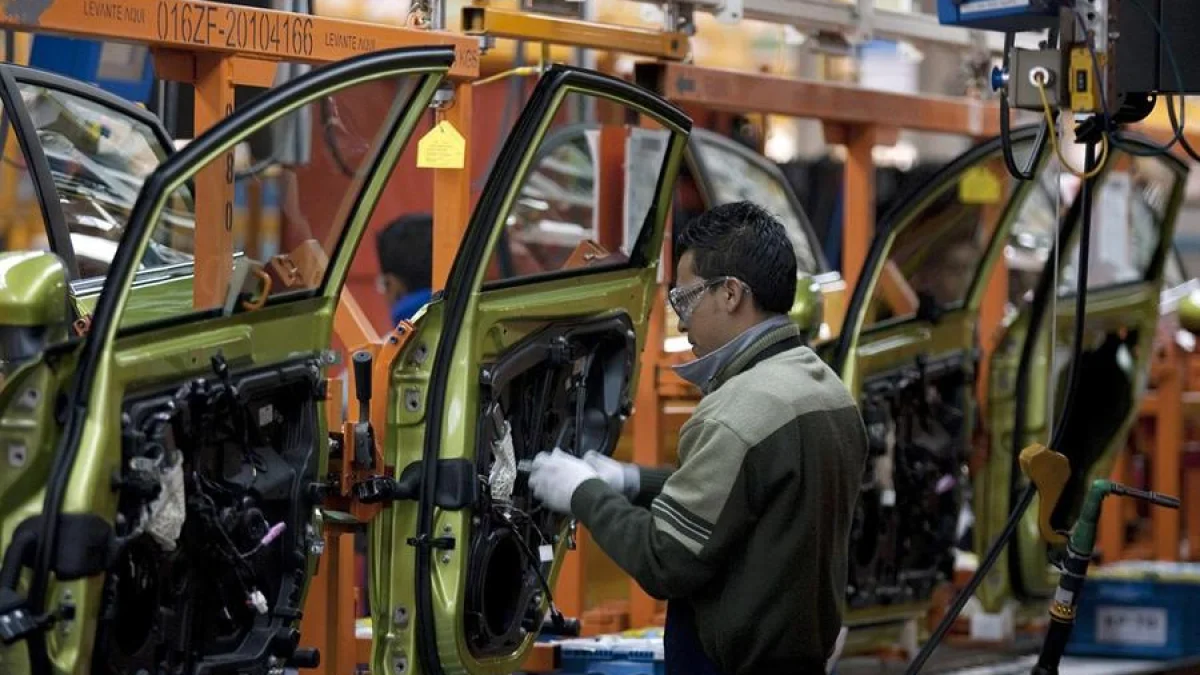
Chinese investments in Morocco have turned into a sensitive file inside the European Union's corridors. Paris and Brussels are anxiously watching the expansion of Chinese auto parts factories near their borders, fearing the kingdom could become a gateway to penetrate European markets away from trade restrictions. The question isn't whether China will invest more, but how far these factories will go in invading the continent's markets.
Tangier Tech: The New Hub for Chinese Investments
Mohammed VI City "Tangier Tech" is leading this major industrial shift, becoming a key destination for Chinese companies specializing in battery production and electric vehicle components. The massive industrial project spans 500 hectares near Tangier, embodying Beijing's ambition to build a strategic export base just kilometers from European coasts. Chinese companies are racing to pump new investments into the kingdom, capitalizing on the trade agreements signed between Rabat and Brussels.
European concern isn't theoretical. Chinese companies can use their factories in Morocco to export products to the European Union, benefiting from the trade advantages the kingdom enjoys. This situation could undermine the effectiveness of customs duties imposed by Brussels to protect local industries from Chinese competition. European Trade Commissioner Maros Sefcovic confirmed that the Union is closely following developments, noting that Beijing aims to use its foreign investments to address its industrial overcapacity.
Stunning Numbers: $6 Billion in Announced Investments
Data from the Rhodium Group reveals the scale of the Chinese investment boom in Morocco. Since the coronavirus pandemic, announced investments have exceeded $6 billion, including projects for battery, tire, and EV component production. The most prominent project is a $1.3 billion battery plant being built by Gotion High-Tech in Kenitra, reflecting the scale of China's bet on Morocco as a regional industrial hub.
Mehdi El Iraki, head of the Moroccan-Chinese Business Council, confirms that the flow of Chinese investment delegations continues, with two to three delegations arriving weekly. This momentum reveals Chinese companies' interest in expanding their industrial presence in the kingdom, placing Morocco in an advanced position on the global automotive map. Yet the biggest challenge remains how Europe will handle this industrial expansion. That could reshape competition in the automotive sector in the coming years.
Morocco has become one of the most important automotive manufacturing centers in Africa and the Arab region in recent years, thanks to global production plants and an advanced supplier network. This position strengthens its role within supply chains linked to the European market and gives it significant negotiating power amid growing Chinese interest. But Europe's pressing question remains: will customs duties protect local industries, or will Morocco be the gateway for Chinese products toward the heart of the old continent?
Related News
View All News
Porsche Brings Petrol Power Back to Macan Class with New SUV in 2028
Porsche is preparing to reintroduce petrol and hybrid engines to the compact SUV segment through a new standalone model planned for around 2028. The move follows the end of combustion…

Tarek Masoud: Africa Has a Historic Opportunity to Build a Global Auto Industry Hub
Tarek Masoud, President of the African Association of Automotive Manufacturers, called on governments and the private sector to accelerate concrete industrial projects rather than just policies. Speaking at the Africa…

General Motors Sales Drop 5.5% in Q3 as EV Demand Cools
General Motors announced a 5.5% drop in Q3 sales to 670,974 vehicles. Electric vehicle sales plummeted after federal incentives ended, with Equinox EV falling 92.4%. Meanwhile, Toyota's electrified vehicle sales…
Alfa Romeo Unveils the Only 33 Stradale Perla Nera in the World at Arese Museum
Alfa Romeo has unveiled the only unit in the world of its 33 Stradale Perla Nera, featuring a fully exposed carbon fiber body with a matte finish. The car is…
China Faces Crisis as 4 Million Unsold Cars Pile Up — Experts Warn of Golden Era's End
China's automotive industry is grappling with a mounting crisis as more than 4 million unsold vehicles pile up in the world's largest car market. Production stands at 33 million cars…