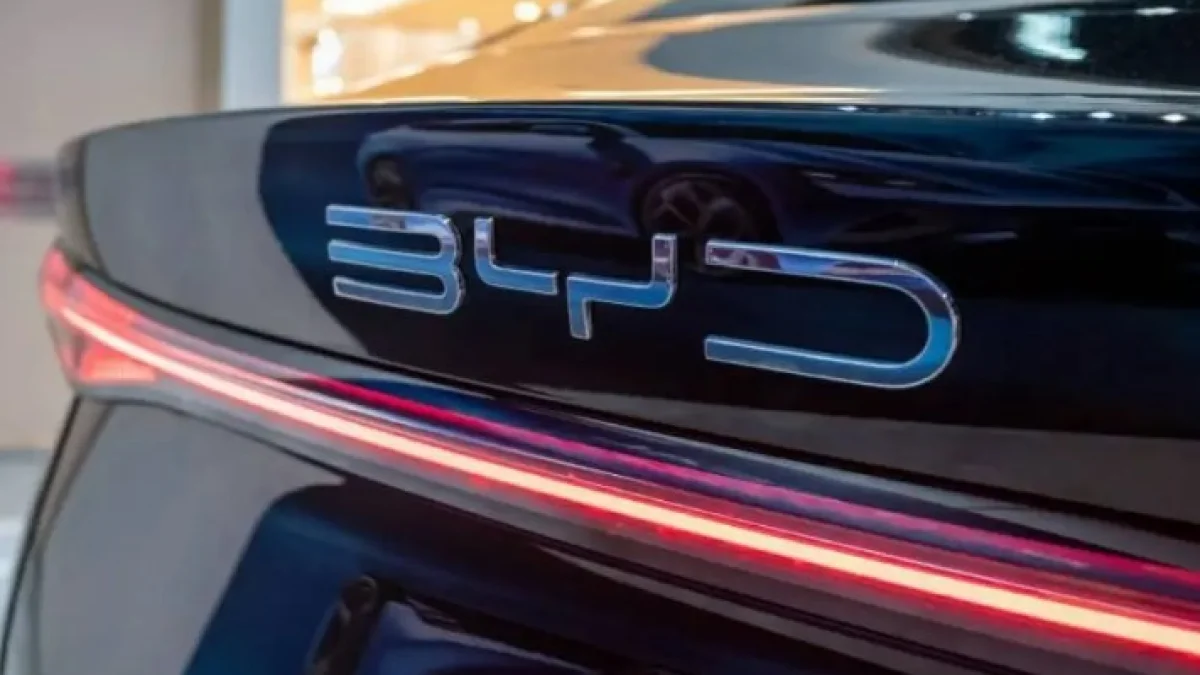
BYD Targets 2.5 Million Annual EV Exports by 2027
Chinese EV maker BYD aims to exceed 2.5 million annual vehicle exports by 2027. The company projects overseas shipments reaching 1.9-2 million cars during 2026. Expanding local production outside China, particularly in Hungary, could generate savings of around 40,000 yuan per vehicle while avoiding steep import tariffs in the EU and Brazil.
Chinese electric vehicle giant BYD has set an ambitious goal to push annual exports past the 2.5 million vehicle mark by 2027. The company revealed its plans during a closed-door meeting with management, details of which were relayed by major investment banks including Deutsche Bank and Citigroup.
Projected Export Growth Numbers
Shipments to overseas markets are expected to reach between 1.9 and 2 million vehicles during 2026. That figure nearly doubles last year's levels, reflecting an unprecedented acceleration in the Chinese automaker's global expansion strategy.
Yet the company acknowledges real logistical hurdles. Shipping constraints have limited overseas sales volumes this year, meaning higher export numbers could be achieved if additional transport capacity becomes available. The commercial fleet dedicated to car transport has become a critical priority in the growth roadmap.
Local Manufacturing Beyond China
The 2027 target rests on two pillars: expanding market share abroad and widening the factory network outside China. Production at BYD's Hungary plant is expected to begin vehicle assembly in November or December of next year, according to Deutsche Bank's readout of the management meeting.
The Hungarian facility is only the beginning. The company is studying additional production sites in other key markets, a calculated move to circumvent the tariff barriers that Western markets impose on Chinese-built EVs.
The numbers here are decisive. Import duties on battery-electric vehicles in the European Union reach roughly 27%, while Brazil applies an import tariff as high as 34%. Local manufacturing eliminates those burdens entirely, making BYD pricing far more competitive in these regions.
Local Production Savings
Citigroup estimates that localized production in target markets could generate savings exceeding 40,000 yuan (approximately $5,950) per vehicle. That substantial figure would gradually offset the startup and operational costs of new factories, according to the company's management perspective.
The bet on local manufacturing has shifted from strategic preference to urgent necessity in the global EV race. With the car transport fleet hitting its ceiling, overseas industrial expansion appears to be the real key to unlocking that 2.5 million vehicle goal by 2027.
Frequently Asked Questions
3 questions answered
Related News
View All News
"Rox" Begins Producing Rox Adamas in Abu Dhabi with "Made in UAE" Label
Rox has started local production of Rox Adamas vehicles in Abu Dhabi, with the first 3 units rolling off the line bearing the 'Made in UAE' label. The move follows…

Icons of Speed and Glory: The Story of the Most Expensive Porsches Ever Auctioned
On the anniversary of Ferdinand Porsche's birth, the most expensive Porsches ever sold at auction are back in the spotlight. The 1970 Porsche 917K leads with $14.08 million, followed by…
Trump's Shocking Plan: Chinese EV Invasion of US — Only with American Workers
US President Donald Trump has expressed openness to allowing Chinese electric vehicle companies like BYD and Geely to manufacture inside the United States, provided they hire American workers. His remarks…
China Sets New Record: New Energy Vehicle Production Exceeds 1.65 Million Units in August
China's new energy vehicle production and sales exceeded 1.65 million and 1.64 million units respectively in August, up 20% year-on-year, according to the China Association of Automobile Manufacturers. NEVs captured…

Software Glitch Hides Tire Pressure Drop: Jeep Recalls Over 200,000 Vehicles
Chrysler, part of Stellantis, is recalling 201,976 Jeep vehicles in the United States due to a software glitch in the radio frequency module that may prevent the tire pressure monitoring…