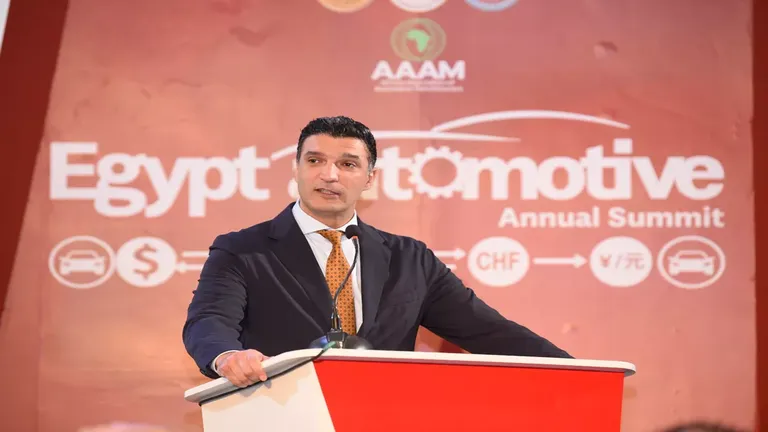
Egypt to Start EV Battery Production in May 2027, Industry Minister Says
Industry Minister Khaled Hashem announced that Egypt's EV battery plant with China's CATL will begin actual operation in May or June 2027. The project, contracted by Egyptian company BME in September 2026, carries initial investments exceeding EGP 2 billion and a first-phase capacity of 1 gigawatt-hour annually. It targets 40% local content and a shift from vehicle assembly to component manufacturing. The project aims to position Egypt as a regional hub for EV battery production and export.
Egypt's electric vehicle battery plant will begin actual operation in May or June 2027, according to Industry Minister Khaled Hashem. The project, developed in partnership with China's CATL, carries initial investments exceeding EGP 2 billion and a first-phase capacity target of 1 gigawatt-hour per year. Hashem made the announcement during the opening session of the 11th Egypt Automotive Summit, setting a concrete timeline for a plan that goes well beyond vehicle assembly.
CATL Partnership Anchors EV Battery Localization in Egypt
The Chinese partner is no minor player. CATL ranks as the world's largest manufacturer of electric vehicle batteries, giving the partnership real technical weight in a market still reliant on imported core components. Hashem said the collaboration reflects the importance of localizing battery manufacturing, the foundation on which any long-term EV expansion depends. The project forms part of the state's push to cut import dependence and draw on global expertise in battery systems production.
The plant construction contract was signed by Egyptian company BME and CATL in September 2026, attended by Prime Minister Mostafa Madbouly and Hashem. Phase one targets heavy commercial vehicle batteries, while phase two expands into passenger car batteries and energy storage solutions with capacity rising to 5 gigawatt-hours annually. Does that scale change the market equation? The 40% local content target offers a clearer signal than any statement.
From Assembly to Manufacturing: A Goal Beyond Batteries
The minister did not hide the larger ambition. The state aims for a new leap in the automotive industry that goes beyond assembling models locally to manufacturing components and parts and building a network of local suppliers. That shift separates a plant that bolts together imported parts from one that builds a genuine industrial base, supporting Egypt's transformation into a regional production and export hub. The direction feeds directly into future pricing for electric vehicles, since local battery production could ease pressure on final vehicle costs.
Production aimed at the domestic market and export expansion form the project's commercial core. Egypt wants to build and export its own batteries, not remain a consumer market for technology made beyond its borders. The road is long. Yet the announced May or June 2027 date places the first clear milestone on that path, making execution of phase one a genuine test of promises to localize the electric vehicle industry in Egypt.
Frequently Asked Questions
3 questions answered
Related News
View All News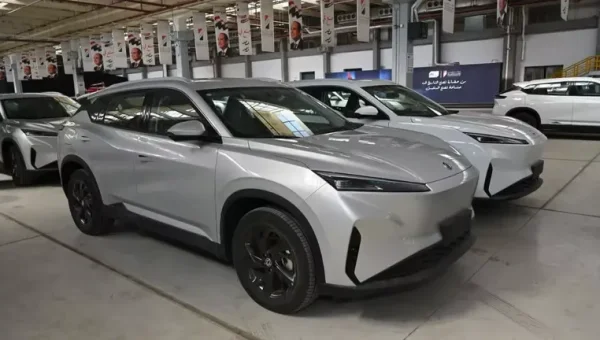
Egypt's EV Replacement Initiative: Jetour and Kaiyi Lead the Charge
Egypt's government has unveiled a vehicle replacement initiative to swap old combustion-engine cars for electric and hybrid models, launching in 2027. Three brands have announced participation, including Jetour and Kaiyi…
Dongfeng BOX Becomes Egypt's Cheapest EV.. Prices Start at EGP 770,000
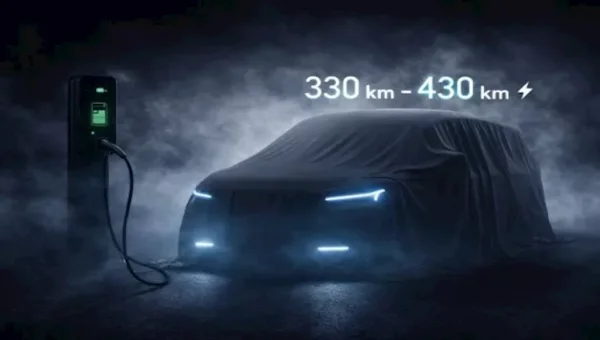
The Dongfeng BOX has become Egypt's cheapest conventional electric passenger car after rivals raised prices. Pricing starts at EGP 770,000 for the BOX 330 and reaches EGP 870,000 for the…
China Accelerates EV Charging Network with 36% Growth in 10 Months
China's National Energy Administration reported 25.39 million EV charging connectors by end-October 2026, up 36.2% year-on-year. Private chargers accounted for 20.1 million units with 42.5% growth, while public chargers reached…
REEV Cars in Egypt: How They Work and How They Differ from Hybrids and PHEVs
Range-extended electric vehicles, or REEV, rely entirely on an electric motor to drive the wheels while a petrol engine acts as a generator when the battery runs low. They differ…

Egypt EV Sales Jump 30% Despite Rising Prices
Electric vehicle sales in Egypt rose 30% in the first quarter, surpassing expectations despite price increases. The growth is driven by lower running costs compared to petrol cars and new…