

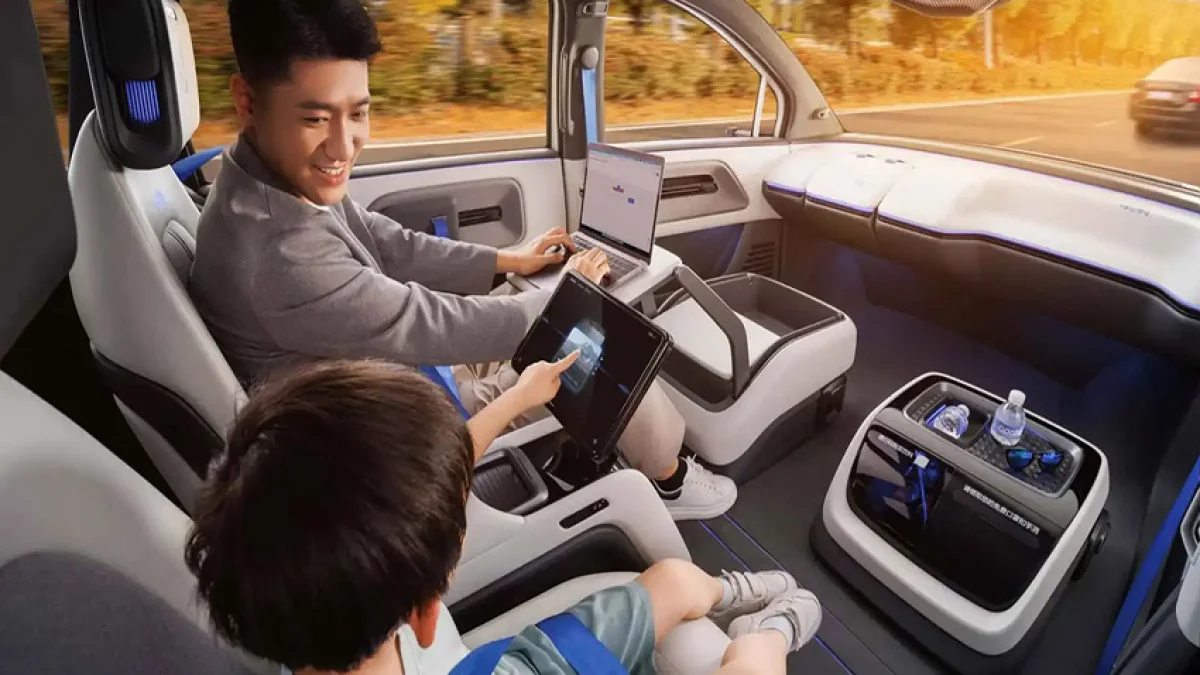
US Turns the Future Turquoise: NHTSA Proposes New Lights to Identify Self-Driving Cars
The National Highway Traffic Safety Administration (NHTSA) has proposed turquoise lights to identify self-driving cars in the United States. The proposal allows companies like Tesla to design vehicles without steering wheels or pedals and sets an optional standard for steady lights visible from all directions. The goal is to give pedestrians, police, and other drivers a clear way to recognize autonomous vehicles.
Self-driving cars in the US are about to get a new visual identity. The National Highway Traffic Safety Administration (NHTSA) has proposed new lighting standards that would allow turquoise lights to identify vehicles operating without direct human supervision, alongside relaxed manual control requirements for cars designed without a steering wheel or pedals. The move is a game-changer.
Why Turquoise? A New Global Signal
The blue-green color sends a simple message: this car is driving itself. Tesla and other companies working on robotaxi projects stand to benefit from a uniform signal that pedestrians, other drivers, and police can easily recognize — no more guessing. NHTSA requires the lights to be steady and visible from the front, rear, and sides, with strict controls on placement, brightness, and timing to avoid confusion with brake lights or turn signals. The proposal is optional, not mandatory.
Design Flexibility for Manufacturers
This isn't a mandate. The proposal sets a voluntary standard for companies that choose to equip their vehicles with the turquoise lights. That gives automakers like Toyota and Hyundai a clear regulatory option. The amendments also open the door to vehicles designed without steering wheels or pedals, potentially accelerating fully autonomous taxi development. Will American streets become safer thanks to this color? The answer may lie in how quickly companies adopt it.
Direct Impact on Robotaxi Projects
With robotaxi projects expanding, companies need a clear regulatory framework. This proposal could pave the way for a new generation of vehicles designed from the ground up for autonomous driving, such as those being developed by Tesla and others. The bigger challenge remains ensuring pedestrians understand how these cars operate — and that's where turquoise lights become a universal visual communication tool.
The Future of Autonomous Mobility in the US
NHTSA will set precise specifications for the lights, but the key question is whether companies will adopt the standard voluntarily. Past experiences with Toyota and Hyundai in autonomous driving suggest that clear regulation often speeds up adoption. Turquoise lights may soon become a familiar part of the American road scene. For now, the road ahead is clearer.
The bottom line: the US is laying a visual and regulatory foundation for self-driving cars. Toyota prices and other brands may be affected later if this standard moves to mass production, but the immediate takeaway is that the path is now better defined.
Frequently Asked Questions
3 questions answered
Related News
View All News
5 Car Noises You Should Never Ignore — Some Signal Costly Repairs
Five common car noises can indicate serious failures if ignored. Brake squealing may mean worn pads, engine knocking points to low oil or internal issues, and steering clicking is linked…
Volkswagen Tests Level 3 Autonomous Driving in China Ahead of 2027 Target
Volkswagen has secured a permit to test Level 3 autonomous driving technology on public roads in Anhui province, China. The company has invested over 3.5 billion euros in Hefei, home…

3 Valves That Protect Your Gas-Converted Car From Leaks and Overpressure
Specialists at Gastec explained that the natural gas conversion system relies on 3 main valves. The gas solenoid prevents flow when the engine stops, the filling valve secures refueling and…

NVIDIA Launches Halos SAFE Framework to Test Autonomous Driving Safety Before Trust
NVIDIA announced on October 21, 2026, the Halos SAFE framework to evaluate autonomous driving safety by combining virtual simulation, real-world testing, and fleet data analysis. The framework aims to produce…

Rivian Acquires Third Dimension AI to Accelerate Self-Driving Development
Rivian has acquired UK-based Third Dimension AI, a startup that uses AI to turn images and video into controllable 3D environments. The technology allows engineers to simulate rare and dangerous…

