

Tesla's New Roadster Jumps in the Air — But It's Not a Plane, and Regulators Are Scratching Their Heads
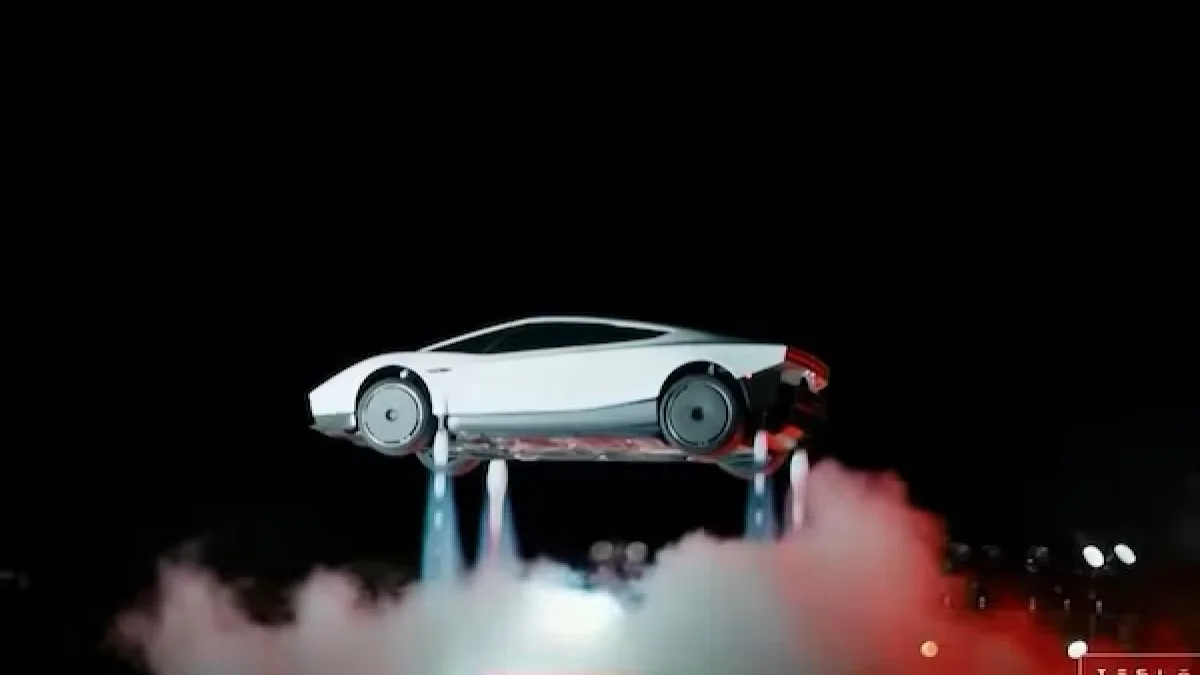
Tesla has revealed a new Roadster generation capable of short airborne jumps using cold-gas and compressed-air thrusters at a demonstration in Texas. The Federal Aviation Administration confirmed the vehicle does not meet its definition of an aircraft, meaning it does not fall under the aviation certification framework. The lineup includes three versions: Performance, Thrust, and Rocket — the latter not approved for public roads. The question of which authority regulates the vehicle remains unanswered.
Tesla has unveiled a new-generation Roadster capable of executing short airborne jumps using cold-gas and compressed-air thrusters — and the stunt has triggered an unusual regulatory debate in the United States. The Federal Aviation Administration has already weighed in. The agency confirmed the vehicle doesn't meet its definition of an aircraft.
What exactly did the Roadster do?
At a recent demonstration held at a SpaceX facility in Texas, Tesla showcased the next-generation Roadster equipped with cold-gas and compressed-air thrusters. The car launched into the air, performed a brief rotation, and landed on its wheels — it also jumped over a row of Tesla vehicles. This was not sustained flight. The car demonstrated no long-range aerial capability and did not hover like conventional aircraft or electric vertical takeoff vehicles. Short, controlled hops only.
Three performance tiers — and a Rocket trim that stays off public roads
Tesla revealed more than one version of the new car. The lineup starts with a Performance trim built for sport driving, moves up to a Thrust variant that adds rear thrusters for improved acceleration. Tops out with the extreme Rocket edition. The Rocket version carries a set of thrusters distributed around the vehicle body, enabling short airborne movements and directional control during those maneuvers. Tesla confirms the Rocket trim isn't currently approved for use on public roads.
FAA settles the debate: not an aircraft
A spokesperson for the Federal Aviation Administration stated that "the Tesla vehicle doesn't meet the agency's definition of an aircraft." That means the FAA isn't currently treating it as an aerial vehicle requiring an airworthiness certificate like conventional planes or eVTOL models. This classification doesn't mean the car has been cleared for flight or has passed any aviation safety tests. It simply confirms the agency doesn't classify it among vehicles that fall directly under the aircraft certification framework. The distinction is narrow but critical.
So who regulates it, then?
That is where things get genuinely complicated. If it isn't an aircraft under FAA rules, who sets the licensing and safety standards for it on the road? The initial answer points to conventional ground-vehicle regulations, but the car's ability to jump into the air creates a regulatory gap that current legislation was never designed to handle. Tesla has not announced a timeline for bringing the Rocket trim to public use, meaning the regulatory discussion is likely to drag on before the full picture becomes clear.
What this means in practice: a jump-capable electric car exists, but the legal framework governing it doesn't. The Texas demonstration proved the technology works — it did not answer the bigger question of how such a vehicle would be registered, insured, or driven. The FAA has closed one door. The others remain wide open.
Frequently Asked Questions
3 questions answered
Related News
View All News
3 Valves That Protect Your Gas-Converted Car From Leaks and Overpressure
Specialists at Gastec explained that the natural gas conversion system relies on 3 main valves. The gas solenoid prevents flow when the engine stops, the filling valve secures refueling and…

NVIDIA Launches Halos SAFE Framework to Test Autonomous Driving Safety Before Trust
NVIDIA announced on October 21, 2026, the Halos SAFE framework to evaluate autonomous driving safety by combining virtual simulation, real-world testing, and fleet data analysis. The framework aims to produce…

Rivian Acquires Third Dimension AI to Accelerate Self-Driving Development
Rivian has acquired UK-based Third Dimension AI, a startup that uses AI to turn images and video into controllable 3D environments. The technology allows engineers to simulate rare and dangerous…

Agentic AI Set to Dominate Automotive Engineering: 68% of Carmakers Target Expansion Within 3 Years
A Capgemini Research Institute report reveals that 68% of automotive companies aim to increase reliance on agentic AI for non-core engineering activities to 68% within two to three years, up…

68% of Carmakers Adopt Agentic AI in Vehicle Development, Capgemini Report Finds
A Capgemini Research Institute report found that 68% of automotive companies are using or testing agentic AI in product development, with 33% in active use and 35% in pilot phases.…

