


Agentic AI Set to Dominate Automotive Engineering: 68% of Carmakers Target Expansion Within 3 Years
A Capgemini Research Institute report reveals that 68% of automotive companies aim to increase reliance on agentic AI for non-core engineering activities to 68% within two to three years, up from 26% currently. 33% are actively deploying the technology while 35% are in pilot phases, yet only 5% have fully mature governance. Leading firms accelerate development cycles by 17%, boost engineering productivity by 19%, and cut time-to-market by 19%.
The number speaks for itself. 68% of automotive companies aim to increase their reliance on agentic AI for non-core engineering activities within two to three years, up from just 26% today, according to a new report from Capgemini Research Institute. This isn't about adding another software tool — it's about rewriting how products are developed inside factories at Toyota and every other major automaker.
Agentic AI Moves From Pilot to Production
The report, titled 'Reinventing Automotive Product Development: Winning the AI Race,' reveals that 68% of industry firms are already using or testing agentic AI — 33% in actual deployment and 35% in pilot phases. Yet only 5% possess a fully mature governance model for the technology. That gap between adoption and readiness is wider than most executives admit.
Engineers Focus on Design as Admin Work Fades
A staggering 83% of executives say the technology helps engineers concentrate on core engineering tasks instead of administrative and coordination work. That means an engineer at BMW or Mercedes could shift from chasing reports to designing suspension systems and battery architectures. Data quality, governance, and accountability challenges still block broader rollout, though.
The Numbers Behind the Winners and Laggards
Companies that deploy AI most effectively see real results. They accelerate product development cycles by 17%, boost engineering productivity by 19%, and cut time-to-market by 19%. Those figures suggest a new model from Hyundai could reach showrooms nearly a fifth faster than a rival's offering developed without the same AI infrastructure.
It's Not Just About the Technology
The report attributes this advantage to more advanced databases, clear commercial use cases. More efficient operating and governance models — not simply AI adoption. Put differently, Volkswagen might buy the same AI tools as Kia, but the outcome diverges sharply based on data quality and processes. Only 5% have full governance — that's the real dividing line.
What This Means for the Auto Market
Within three years, we could see vehicles developed with agentic AI handling routine engineering and testing tasks. Companies like Nissan and Ford are now racing to build data infrastructure before they race on tools. Whoever owns better data and defines accountability clearly will ship new products faster — and get closer to the consumer.
Frequently Asked Questions
3 questions answered
Related News
View All News
3 Valves That Protect Your Gas-Converted Car From Leaks and Overpressure
Specialists at Gastec explained that the natural gas conversion system relies on 3 main valves. The gas solenoid prevents flow when the engine stops, the filling valve secures refueling and…

NVIDIA Launches Halos SAFE Framework to Test Autonomous Driving Safety Before Trust
NVIDIA announced on October 21, 2026, the Halos SAFE framework to evaluate autonomous driving safety by combining virtual simulation, real-world testing, and fleet data analysis. The framework aims to produce…

Rivian Acquires Third Dimension AI to Accelerate Self-Driving Development
Rivian has acquired UK-based Third Dimension AI, a startup that uses AI to turn images and video into controllable 3D environments. The technology allows engineers to simulate rare and dangerous…

68% of Carmakers Adopt Agentic AI in Vehicle Development, Capgemini Report Finds
A Capgemini Research Institute report found that 68% of automotive companies are using or testing agentic AI in product development, with 33% in active use and 35% in pilot phases.…
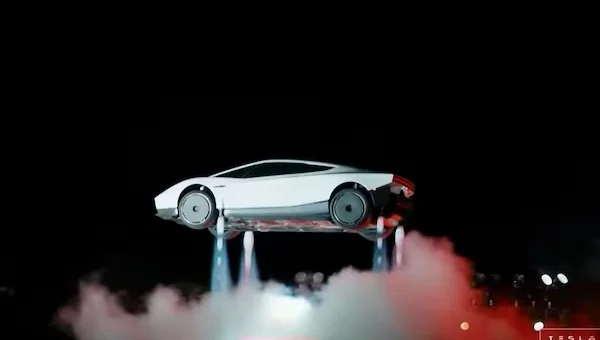
Tesla's New Roadster Jumps in the Air — But It's Not a Plane, and Regulators Are Scratching Their Heads
Tesla has revealed a new Roadster generation capable of short airborne jumps using cold-gas and compressed-air thrusters at a demonstration in Texas. The Federal Aviation Administration confirmed the vehicle does…

