

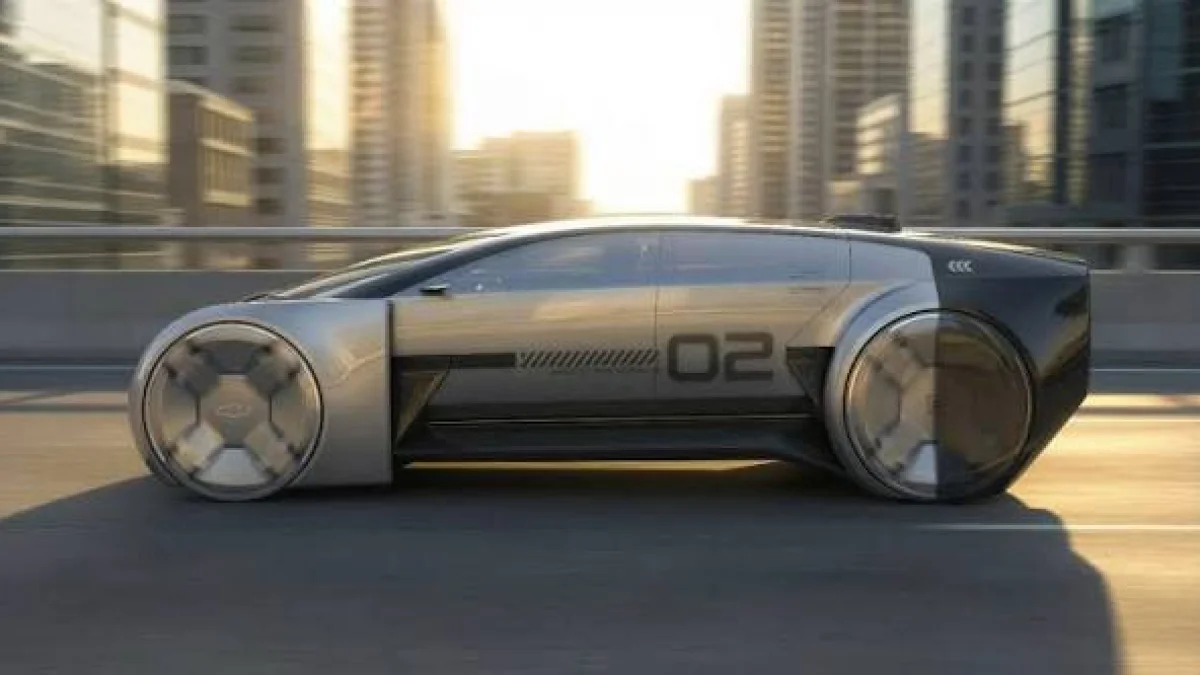
General Motors Embraces AI in Vehicle Development, Halves Production Time
General Motors has unveiled plans to integrate artificial intelligence into its vehicle development cycle starting in 2028, with a new centralized computing platform offering 40 times more power and reducing wire weight by 30%. The platform will first appear on the Cadillac Escalade IQ and later expand to SUVs, trucks, and crossovers. The company aims to cut development time from four to five years to nearly half using virtual simulation.
Cadillac, a brand of General Motors, has announced a major technological shift by integrating artificial intelligence into the entire vehicle development cycle starting in 2028. The new platform will debut on the Cadillac Escalade IQ, offering up to 40 times more computing power while reducing wire weight by 30%.
Centralized Computing Platform Changes the Game
The most significant change is moving from dozens of separate electronic control units to a single high-performance central computing unit. This new architecture allows the vehicle to run autonomous driving systems and in-cabin AI simultaneously. Cadillac is the first beneficiary of this technology, strengthening its position in the luxury car market.
The company confirms the platform will provide up to 50% faster cellular connectivity compared to previous systems, enabling over-the-air software updates and new feature additions after the vehicle leaves the factory. This flexibility will make cars capable of learning and evolving over time, fundamentally changing the concept of vehicle ownership.
Accelerating Development Cycles with AI
The transformation goes beyond the vehicle itself to how it's developed. General Motors aims to cut the traditional vehicle development cycle from four to five years down to nearly half. This is achieved through AI and virtual simulation in design, engineering. Manufacturing, allowing early problem detection and reducing time to production.
Instead of waiting for each stage to complete before moving to the next, the company is making design, engineering, and manufacturing stages more concurrent. This new approach could give Cadillac a significant competitive edge in the speed of introducing new models.
Platform Expansion to Cover All Models
The new platform is set to expand rapidly to other models including large SUVs, trucks. Crossovers, both electric and internal combustion engine powered. This means the technological shift won't be limited to luxury vehicles but will reach all Cadillac segments and other GM brands. With these new capabilities, we may see a radical change in the driving and maintenance experience in the coming years.
Frequently Asked Questions
3 questions answered
Related News
View All News
3 Valves That Protect Your Gas-Converted Car From Leaks and Overpressure
Specialists at Gastec explained that the natural gas conversion system relies on 3 main valves. The gas solenoid prevents flow when the engine stops, the filling valve secures refueling and…

NVIDIA Launches Halos SAFE Framework to Test Autonomous Driving Safety Before Trust
NVIDIA announced on October 21, 2026, the Halos SAFE framework to evaluate autonomous driving safety by combining virtual simulation, real-world testing, and fleet data analysis. The framework aims to produce…

Rivian Acquires Third Dimension AI to Accelerate Self-Driving Development
Rivian has acquired UK-based Third Dimension AI, a startup that uses AI to turn images and video into controllable 3D environments. The technology allows engineers to simulate rare and dangerous…

Agentic AI Set to Dominate Automotive Engineering: 68% of Carmakers Target Expansion Within 3 Years
A Capgemini Research Institute report reveals that 68% of automotive companies aim to increase reliance on agentic AI for non-core engineering activities to 68% within two to three years, up…

68% of Carmakers Adopt Agentic AI in Vehicle Development, Capgemini Report Finds
A Capgemini Research Institute report found that 68% of automotive companies are using or testing agentic AI in product development, with 33% in active use and 35% in pilot phases.…

